





Children with atopic dermatitis were shown to be at an increased risk of fractures compared with the general population, with systemic use of corticosteroid and antihistamine therapy cited as mediating factors.
Children with atopic dermatitis were shown to be at an increased risk of fractures compared with the general population, with systemic use of corticosteroid and antihistamine therapy cited as mediating factors.

A high comorbidity burden, including psychiatric, autoimmune, and systemic conditions, was found in US adult ambulatory populations with atopic dermatitis.

More than 1 in 3 patients with atopic dermatitis reported incidence of dupilumab-induced ocular surface disease (DIOSD), with asthma and family history of AD shown to further increase the risk of developing DIOSD.

Moderate-to-severe disease, childhood onset, and systemic treatments were all associated with a greater risk of conjunctivitis in patients with atopic dermatitis, whereas use of soft and hard contact lenses were linked with risk of keratitis.

Findings of a machine learning-based deep phenotyping approach found a myriad of factors associated with severe disease in atopic dermatitis, including age between 12 and 21 years or older than 52 years, lack of physical activity, and incidence of alopecia areata.

Jonathan Silverberg, MD, PhD, MPH, associate professor of dermatology, director of clinical research and patch testing, George Washington University School of Medicine and Health Sciences, explains efficacy and safety implications of JAK inhibitor use for atopic dermatitis.

Adults with atopic dermatitis were shown to be at lower risk of developing asthma if they were vaccinated against influenza, particularly those who adhered to yearly shots.
Jonathan Silverberg, MD, PhD, MPH, associate professor of dermatology, director of clinical research and patch testing, George Washington University School of Medicine and Health Sciences, discusses the involvement of the JAK/STAT pathway in the pathogenesis of atopic dermatitis.

Children with severe atopic dermatitis were shown to be at nearly 2-fold greater risk of both depression and internalizing behaviors, with mild disease also associated with internalizing behaviors in those as young as 4 years of age.

Prenatal exposure to inorganic arsenic and coexposure to inorganic arsenic and cadmium was found to increase risk of atopic dermatitis by up to 2.42-fold in young Taiwanese children.
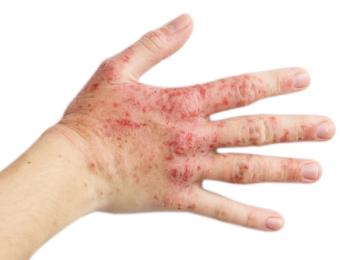
Ruxolitinib cream, to be sold under the name Opzelura, is the first topical Janus kinase inhibitor cream for the treatment of atopic dermatitis.

A review of therapies for atopic dermatitis (AD) found adequate net health benefit for new treatments. However, safety remains a concern for the Janus kinase (JAK) inhibitors.

Researchers assess mortality rates among those with just asthma, just atopic dermatitis, and individuals with both conditions in Denmark.

Dupilumab is effective for atopic dermatitis, asthma, and chronic rhinosinusitis with nasal polyps, but a recent presentation noted the payer challenge in placing the biologic in an optimal tier.
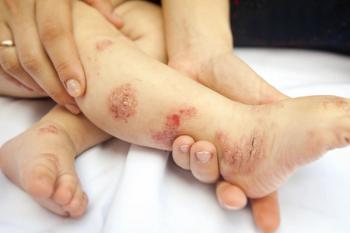
Patients had atopic dermatitis for nearly 10 years before starting the biologic therapy.

Children who were born to women with a history of asthma had a 45% increased risk of being diagnosed with atopic dermatitis/eczema up to age 8 years.

A survey in France found that systemic medications are used by only half of dermatologists in treating atopic dermatitis, with methotrexate used more than cyclosporine.
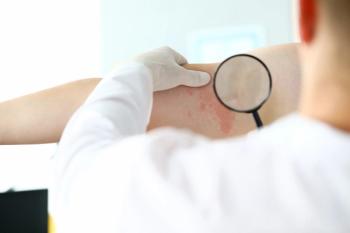
There is no consistent evidence showing clear benefit of various nutritional factors on the risk of atopic dermatitis.
Despite the level of disease severity of atopic dermatitis, children with the condition usually have at least 1 other inflammatory or atopic comorbidity, according to new study results.

Ohio dermatologist Matthew J. Zirwas, MD, offers his view on what step therapy would look like in patients with atopic dermatitis.

A new study of dupilumab indicates that the drug is a safe and effective treatment for atopic dermatitis (AD) in elderly patients, with efficacy comparable to that seen in younger patients.
Patients often ask how long they have to stay on biologic treatment for atopic dermatitis (AD), but there is a risk if therapy is stopped, says Matthew J. Zirwas, MD, a dermatologist in Ohio.