





Screening for colorectal cancer (CRC) is defined by racial differences, which could be explained through social context.

Screening for colorectal cancer (CRC) is defined by racial differences, which could be explained through social context.

Although mortality and disability-adjusted life-years remained stable, the prevalence and incidence of early-onset colorectal cancer (CRC) increased globally in individuals aged 40 to 49 years.

The FDA has granted 2 breakthrough therapy designations to trastuzumab deruxtecan for the treatment of patients with unresectable or metastatic HER2-positive solid tumors that have progressed after prior treatment and who have no satisfactory alternative treatment options, and for those with HER2-positive metastatic colorectal cancer who have received at least 2 prior lines of therapy.

A significant relationship between visceral obesity and anastomotic leakage was found, which indicates that visceral obesity could be a risk factor in surgery for colon cancer.

Circulating tumor DNA (ctDNA) status at the time of postoperative minimal residual disease assessment is a prognostic factor for disease-free survival (DFS) in patients with radically resected stage II to IV colorectal cancer (CRC).

An overview of data presented at ESMO GI 2023 on combined botensilimab and balstilimab therapy in heavily pretreated patients with microsatellite stable metastatic colorectal cancer.

Although HER2 amplification showed prognostic capabilities in patients with RAS wild-type metastatic colorectal cancer (mCRC), it was not predictive of survival benefit as a first-line treatment option in combination with panitumumab vs standard-of-care bevacizumab.

Three sessions of a semi-structured focus group were conducted to gain patient feedback on personalized screening for colorectal cancer (CRC).
Dr Marshall describes the impacts of microsatellite stability and instability on metastatic colorectal cancer.

Delays in time to treatment initiation may be associated with demographic and socioeconomic disparities, with care coordination, clinical, and socioeconomic factors representing potential predictors of time to treatment initiation.

Social determinants of health are associated with colonoscopy noncompletion in a Medicaid patient population at the Providence Community Health Centers.

Patients were twice as likely to get a colorectal cancer screening and 50% more likely to get a breast cancer screening in their first year of Medicare coverage.
Adults younger than 50 years with colorectal cancer (CRC) who experience postpresentation delays in treatment did not appear to have worse outcomes, according to a study in Ontario, Canada.

The FDA approved trifluridine and tipiracil (Lonsurf) plus bevacizumab (Avastin) for patients with metastatic colorectal cancer who had previously been treated based on data from the phase 3 SUNLIGHT trial.
A systematic, mixed methods “sludge audit” identified novel health system delivery targets for improving colorectal cancer screening services.
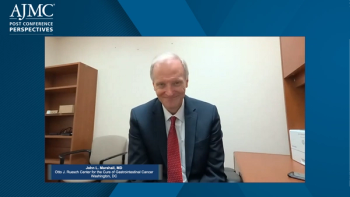
Dr Marshall shares insights directed at the use of real-world evidence [RWE] and its impact on unmet needs in colorectal cancer [CRC] treatment.
John L. Marshall, MD, provides insight into the SUNLIGHT study findings presented during the 2023 ASCO Gastrointestinal Cancers Symposium.

Under the agreement, Takeda will pay Hutchmed $400 million up front and up to $730 million in additional potential payments relating to regulatory, development, and commercial sales milestones, as well as royalties on worldwide net sales, with the exception of mainland China, Hong Kong, and Macau.

The combination of tucatinib and trastuzumab received accelerated approval from the FDA to treat adults with RAS wild-type, HER2-positive unresectable or metastatic colorectal cancer (mCRC) that advances after treatment with specific types of chemotherapy.
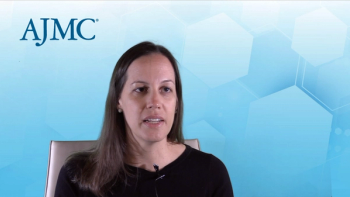
Kristen K Ciombor, MD, MSCI, associate professor at Vanderbilt University, explains that results of neoadjuvant immunotherapy in colorectal cancer are promising, but long-term data is still needed.

A recent genome-wide association study found hundreds of genes linked to risk for colorectal cancer among a diverse worldwide population.
Kristen K. Ciombor, MD, MSCI, associate professor at Vanderbilt University discusses why neoadjuvant immunotherapy is superior to other immunotherapy treatments in colorectal cancer.

Coverage from the Institute for Value-Based Medicine® event in Nashville, Tennessee, held November 17, 2022. The event was held in partnership with Vanderbilt-Ingram Cancer Center.

Kristen K. Ciombor, MD, MSCI, associate professor of medicine at Vanderbilt University, spoke on the need for precision medicine approaches in colorectal cancer.

Results show the presence of PD-L2 in the tumor may be an independent predictor of survival outcomes for patients with advanced stage colon carcinoma.