

Hematology
Latest Content
Advertisement
Advertisement

This decision tree model estimates the cost per response and incremental cost per additional responder for romiplostim, eltrombopag, and “watch and rescue” for immune thrombocytopenia.

Ixazomib taken twice weekly with lenalidomide and dexamethasone resulted in high overall response rate (ORR) and a durable response among patients with newly diagnosed multiple myeloma (MM).
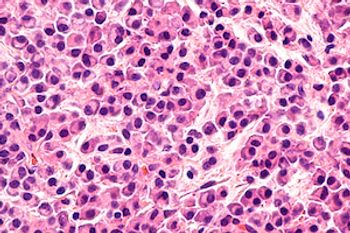
Research presented at the 2018 American Society of Clinical Oncology Annual Meeting identified predictors of long-term survival and health-related quality of life (QoL) in patients with newly diagnosed multiple myeloma (MM).

A review of studies found that the time from symptom onset to confirmation of diagnosis of multiple myeloma can be significantly reduced. Currently, many patients experience a more than 3-month delay until their diagnosis is confirmed.

Based on trial results that showed glasdegib, an investigational oral smoothened inhibitor, nearly doubled overall survival (OS) in patients with previously untreated acute myeloid leukemia (AML), the FDA has granted the Pfizer drug a Priority Review.

Cancer cells can take advantage of the BCL-2 protein to survive chemotherapy, but a drug that suppresses BCL-2 may have promise in patients with leukemia who produce too much of the protein.
Patients with myelofibrosis who were treated with Janus-kinase (JAK) 1/2 inhibitors have an increased risk for developing B-cell lymphoma. However, researchers believe there is a pre-existing B-cell clone that patients can be tested for before treatment.
An investigational drug has prolonged survival in patients with a rare and deadly form of acute myeloid leukemia (AML).
Michael Thompson, MD, PhD, FASCO, Aurora Advanced Healthcare, outlines novel therapies being used in the treatment of hematologic malignancies and identified biomarkers for deciding on a treatment approach.
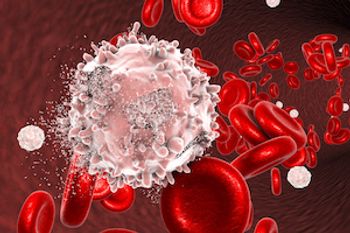
A new approach using gene editing technology could allow chimeric antigen receptor (CAR) T cells to target CD33 in patients with acute myeloid leukemia (AML) but prevent the cells from attacking healthy stem cells, too.

A stem cell mutation that leads to bacterial translocation may help identify patients at risk of developing leukemia.
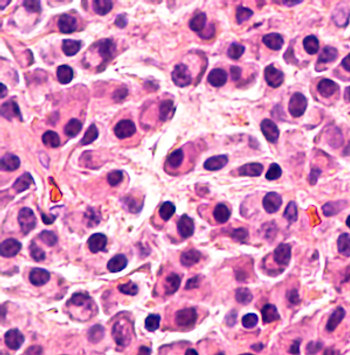
The interim analysis of the phase 3 A.R.R.O.W. trial found that once-weekly carfilzomib at 70 mg/m2 had superior progression-free survival and overall response rates compared with twice-weekly carfilzomib at 27 mg/m2.

An experimental drug for patients with acute myeloid leukemia (AML) with mutations in the gene encoding isocitrate dehydrogenase 1 (IDH1) was found to be safe with durable remissions.
Two abstracts presented at the International Society of Pharmacoeconomic and Outcomes Research Annual International Meeting highlighted patient experiences in blood cancers. One highlighted the worries of patients with acute myeloid leukemia, and the other analyzed economic burdens and resource utilization for patients with non-Hodgkin lymphoma.

Two study abstracts presented at the International Society of Pharmacoeconomics and Outcomes Research Annual International Meeting look at the cost burden of diffuse large B-cell lymphoma (DLBCL). One analyzed the lifetime cost of relapsed/refractory DLBCL, including third-line and subsequent treatments, and the other examined how being diagnosed with DBLCL can increase the cost burden of chronic conditions among Medicare beneficiaries.

A new study analyzed the burden of multiple myeloma around the world, as well as access to effective treatments. From 1990 to 2016, incident cases and deaths from the disease have grown substantially.

Analysis of patient-reported outcomes found patients with relapsed/refractory B-cell acute lymphoblastic leukemia who were treated with inotuzumab ozogamicin reported better quality of life, functioning, and symptom scores compared with patients receiving standard-of-care chemotherapies.
A phase III randomized trial, with results being presented in June at the American Society of Clinical Oncology Annual Meeting, found the addition of nelarabine to standard chemotherapy regimen in patients with T-cell malignancies can improve disease-free survival rates.

The FDA has approved Pfizer’s epoetin alfa-epbx (Retacrit), a biosimilar to epoetin alfa (Epogen), marking the first biosimilar approval of 2018 and the first biosimilar erythropoiesis-stimulating agent approved in the United States.
Advertisement
Advertisement
Trending on AJMC
1
Merck, Moderna Cancer Vaccine Cuts Melanoma Recurrence Risk by 42%
2
IDWeek Studies Tie RSV, Flu, and COVID-19 to Harm After Acute Illness
3
Former USAID Health Chief Says Aid Cuts Are Costing Children's Lives
4
It’s the Best of Times and Worst of Times for Cancer Care in Tampa
5