

Immuno-Oncology
Latest News
Advertisement
Advertisement

Yesterday, drug manufacturer Bristol-Myers Squibb announced that the FDA has approved the combination nivolumab (Opdivo) plus low-dose ipilimumab (Yervoy) for the treatment of adult and pediatric patients aged 12 years and older with microsatellite instability high (MSI-H) or mismatch repair deficient (dMMR) metastatic colorectal cancer (mCRC) that has progressed following a fluoropyrimidine, oxaliplatin, or irinotecan-based chemotherapy treatment.

The FDA has granted priority review for Keytruda (pembrolizumab) as a treatment for previously treated patients with advanced hepatocellular carcinoma (HCC).

The trial is designed to test chimeric antigen receptor (CAR) T-cell therapy in children and young adults with relapsed/refractory brain and central nervous system (CNS) tumors, wherein the modified CAR T cells will be directly injected at the site of tumor resection or into the ventricular system of the CNS.

Atezolizumab, in combination with chemotherapy, significantly reduced the risk of disease progression and mortality in patients with metastatic triple-negative breast cancer.
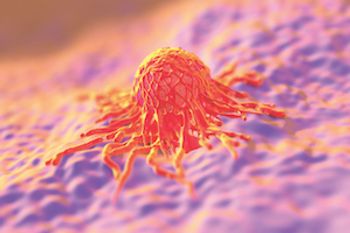
Drug manufacturer AbbVie, and a nonprofit drug discovery division of Scripps Research, Calibr, announced earlier this week that they are partnering to develop chimeric antigen receptor (CAR-T) cell therapies primarily aimed at treating cancer, particularly, solid tumors.

This week, drug maker Roche released positive data from its phase 3 IMpower133 study that investigated an immunotherapy-based combination of atezolizumab (Tecentriq) and chemotherapy in the treatment of extensive-stage small cell lung cancer (ES-SCLC).

First-line treatment with atezolizumab plus chemotherapy helped patients with previously untreated extensive-stage small cell lung cancer (SCLC) live significantly longer than those treated with chemotherapy alone.
In a statement released yesterday, the FDA has announced that it is restricting the use of pembrolizumab (Keytruda) and atezolizumab (Tecentriq) for patients with locally advanced or metastatic urothelial cancer who are not eligible for cisplatin-containing therapy.

Last week, Bristol-Myers Squibb announced that the China National Drug Administration approved the country’s first immuno-oncology and first PD-1 therapy, nivolumab (Opdivo), for the treatment of locally advanced or metastatic non-small cell lung cancer (NSCLC).
Last year, the FDA expanded the indications of rheumatoid arthritis (RA) drug tocilizumab (Actemra) to include the treatment of cytokine release syndrome (CRS) caused by CAR T-cell therapy. Recently, 2 studies have identified another rheumatoid arthritis drug that could be more effective in the treatment of CRS.

Yesterday, the FDA announced that it has expanded the indications of pembrolizumab (Keytruda) to include recurrent or metastatic cervical cancer with disease progression on or after chemotherapy whose tumors express PD-L1.
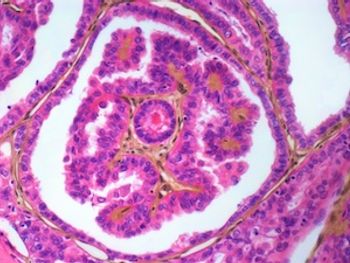
In April, researchers from the University of Colorado Cancer Center completed the largest study of thyroid cancer genetics to date, the results of which were published in Clinical Cancer Research.
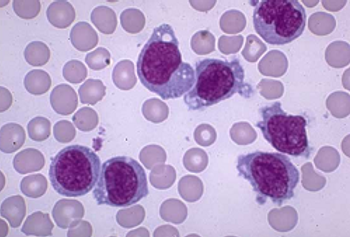
A study recently published in Cell investigated the deletion of the CD33 protein to enable CAR T-cells to more accurately target and attack cancerous cells in patients with n acute myeloid leukemia (AML).
Financial toxicity impacts a lot more than a patient's finances—it leads to nonadherence and poorer health outcomes. Financial navigators are increasingly being used to be proactive about addressing high healthcare costs and the resulting financial toxicity.
Every week, The American Journal of Managed Care® recaps the top managed care news of the week, and you can now listen to it on our podcast, Managed Care Cast.

This week, the top managed care stories include Senator Bill Cassidy's new plan to lower healthcare costs; policy recommendations from the American Diabetes Association on how to lower insulin prices; and coverage from the American Society of Clinical Oncology annual meeting.

A new immunotherapy referred to as the "Toca regimen" is being investigated in a phase 2/3 randomized, multicenter, open-label trial.
Pembrolizumab significantly improved overall survival (OS) and progression-free survival (PFS) as first-line treatment for squamous non–small cell lung cancer (NSCLC) in the pivotal phase 3 KEYNOTE-407 trial.

While immune checkpoint inhibitors significantly improve overall survival in both sexes, the magnitude of benefit is dependent on sex, according to new study findings.
In the 4 months following their approvals, pembrolizumab and nivolumab reached more than 60% of eligible patients with melanoma, non-small cell lung cancer, and renal cell carcinoma.

A new case study found that an acute myeloid leukemia patient has remained cancer free for 9 months following treatment with the chimeric antigen receptor (CAR) T-cell treatment, CYAD-01, and a bone marrow transplant.

Tisagenlecleucel, sold as Kymriah, has gained its second indication following the FDA's approval of the chimeric antigen receptor T-cell therapy for the treatment of adult patients with relapsed or refractory large B-cell lymphoma, the most common form of non-Hodgkin lymphoma.
Advertisement
Advertisement
Trending on AJMC
1
FDA Expands Finerenone Approval to CKD Associated With Type 1 Diabetes
2
A Patient-Centered Reconstruction of 340B in Oncology: Transparency, Equity, and Site-of-Care Accountability
3
Delayed Dupilumab Raises Asthma Costs 32%: Nicola Hanania, MD
4
Across the US, Obesity Care Still Lacks an Owner
5