



Immuno-Oncology
Latest News
Advertisement
Latest Videos








Advertisement
More News

Zahra Mahmoudjafari, PharmD, BCOP, clinical pharmacy manager at the University of Kansas Health System, explains some of the strategies that payers can use to improve cost management and increase patient access related to chimeric antigen receptor T-cell (CAR T) therapies.
Zahra Mahmoudjafari, PharmD, BCOP, clinical pharmacy manager at the University of Kansas Health System, catalogues the chimeric antigen receptor T-cell (CAR T) therapies that are coming down the pipeline.

Miruna Sasu, PhD, MBA, became president and CEO of COTA Healthcare in March 2022, not quite a year after joining the company as its chief strategy officer. As the importance of RWD grows, Sasu is ready to take its use in precision oncology to new levels. She spoke with Evidence-Based Oncology™ (EBO) about her new role.

Major adverse cardiac events are rare but serious in patients treated with immune checkpoint inhibitors (ICIs), and increased awareness is crucial to identify and treat these conditions in a timely manner.

Immune checkpoint inhibitors have changed the way certain cancers are treated, but more can be done to optimize treatment and improve patient responses.
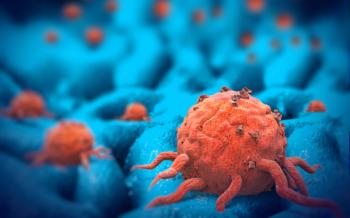
While no agents are approved just yet, a variety of promising drugs targeting CLDN18.2 are undergoing early research and clinical trials for several cancer types.

Moving chimeric antigen receptor (CAR) T-cell therapies outside of the hospital will bring training and safety challenges, said Aklilu Tedla, vice president, insights and engagement, regulatory science, cell and gene, Cardinal Health.
Allogeneic, or off-the-shelf, chimeric antigen receptor (CAR) T-cell therapies will bring new logistical challenges, said Aklilu Tedla, vice president, insights and engagement, regulatory science, cell and gene, Cardinal Health.
The logistics for storing chimeric antigen receptor (CAR) T-cell therapies remain a challenge, said Joel Wayment, vice president of operations for 3PL Services, Cardinal Health.

Treatment resistance is a significant challenge in immunotherapy, but it is not fully understood. A recent review summarized 5 tumor microenvironment traits that may inhibit therapy effectiveness and potential strategies to improve therapy responses.

Miruna Sasu, PhD, MBA, president and CEO of COTA Healthcare, discusses the medicines discovery process and how real-world data can be used to evaluate patient and tumor response to treatment regimens.

The study of constructed αROR1‐CAR T cells showed an increase of PD-L1 expression when exposed to elevated pressure, driving resistance to CAR T cell-mediated cytotoxicity. However, the findings also suggest that adding PD-1/PD-L1 inhibitors to CAR T-cell therapy could help address this.

The researchers highlighted a need for the detection of more relevant markers and guidance on how to treat adverse events (AEs), the types and severity of which vary based on disease type.
So far, the wonders of chimeric antigen receptor (CAR) T-cell therapy have only been seen in blood cancers. Investigators at Moffitt Cancer Center report findings that show a potential target in solid tumors.

With further research, a selection of combination therapies could increase patient response in various cancer types.

Pacritinib is now included as a recommended treatment for myeloproliferative neoplasms with specificity for JAK2 and IRAK1 in the latest National Comprehensive Cancer Network (NCCN) Clinical Practice Guidelines.

Accenture’s 2021 report, “The Future Is Now: How to Drive Precision Oncology Adoption," adds to the chorus calling for greater sharing of data and improved standardization, so that academic centers and community practices alike can continually improve data sets used worldwide.

Camille Hertzka, vice president, head of oncology, US Medical, AstraZeneca, clarifies testing for the HRR mutation in metastatic castrate-resistant prostate cancer (mCRPC) and the predictive importance of radiographic progression-free survival (rPFS) for overall survival in this setting.

Therapy resistance remains a challenge with immune checkpoint inhibitors, and a new study proposes targeting ligand-dependent corepressor (LCOR) in addition to known immune targets to improve outcomes.
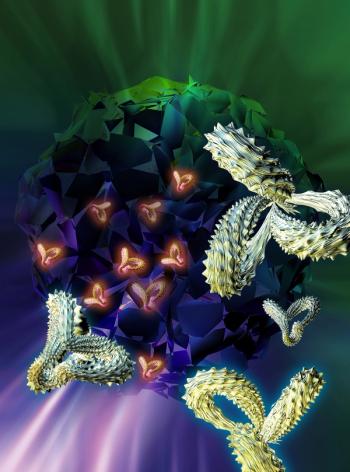
Immune checkpoint inhibitors have changed the treatment landscape of certain cancer types, and a recent study aims to provide new insight on why treatment response varies so much from patient to patient.

The expanded use of axi-cel, sold as Yescarta, while not unexpected, nonetheless represents uncharted territory in cancer care.
Camille Hertzka, vice president, head of oncology, US Medical, AstraZeneca, discusses why so much excitement has been generated for the use of olaparib (Lynparza) in the first line for patients with metastatic castrate-resistant prostate cancer.
Despite progress in chimeric antigen receptor (CAR) T-cell therapy, further research is needed to fully understand and overcome CAR T-cell exhaustion and improve outcomes.

Mantle cell lymphoma is a difficult cancer type with high relapse rates, but novel targeted approaches such as CAR T-cell therapy hold promise for more successful response rates in the future.

Despite current challenges in targeting pancreatic cancer with CAR T-cells, novel targets and strategies hold promise in this difficult disease setting.
Advertisement
Advertisement
Trending on AJMC
1
MASH Fibrosis, Not Resolution, Predicts Mortality: Zobair Younossi, MD
2
FDA Approves Once-Monthly Subcutaneous Olanzapine for Schizophrenia
3
Multi-Hit TP53 Linked to Shorter Survival in Chronic-Phase MPN Cohorts
4
Navigating GLP-1 Access & Prior Authorizations: Amanda Velazquez, MD
5