



Myeloproliferative Neoplasms (MPN)
Latest News

Advertisement
Latest Videos






Advertisement
More News

John Mascarenhas, MD, discusses phase 1 data showing that INCA33989 is a well-tolerated therapy for calreticulin–mutant essential thrombocythemia, with early signs of efficacy and potential disease modification.
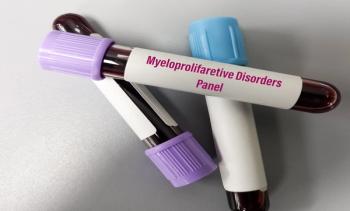
Multi-hit TP53 mutations significantly worsened survival in patients with myeloproliferative neoplasms (MPNs) and acute myeloid leukemia (AML), revealing critical prognostic insights.
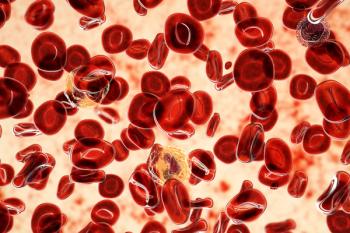
A new report suggests a noninvasive means to evaluate portal hypertension in patients with BCR::ABL1-negative myeloproliferative neoplasms.
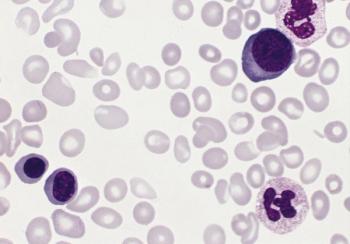
Adding rusfertide to standard of care more than doubled the share of patients with polycythemia vera (PV) who did not meet criteria for a phlebotomy, according to data from the VERIFY trial.
The findings highlight the limits of risk stratification algorithms based on data from older patients.

New findings suggest that reducing the variant allele frequency of JAK2V617F should be a goal of treatment for polycythemia vera.

Machine learning identifies key biomarkers predicting hydroxyurea resistance in polycythemia vera, enhancing early treatment strategies and patient outcomes.

The results offer some of the first glimpses into real-world findings of the Janus kinase inhibitor in patients with myelofibrosis (MF) and anemia.
Cardiovascular risk factors increase the risk of arterial and venous thrombosis in patients with myeloproliferative neoplasms, a study found.

Charleston Area Medical Center (AMC) Vandalia Health was among 3 participants in the Association of Cancer Care Centers' Quality Improvement Program for myeloproliferative neoplasms.

Besides Kent Hospital, the Association of Cancer Care Centers worked with Perlmutter Cancer Center at NYU Langone Hospital and Charleston Area Medical Center Vandalia Health in Charleston, West Virginia.

Perlmutter Cancer Center at NYU Langone was 1 of 3 sites to take part in the Association of Cancer Care Centers quality improvement initiative in myeloproliferative neoplasms (MPNs).

For several years, investigators have been studying combinations that include ruxolitinib, sold as Jakafi, to treat myeloproliferative neoplasms (MPNs).

A new study evaluating the quadratic phenotypic optimization platform shows it can accurately predict personalized drug combination sensitivities, paving the way for improved treatment strategies and outcomes in acute myeloid leukemia (AML).

The individual behavior of a patient’s myeloproliferative neoplasm (MPN) will determine how the disease is monitored and managed in the long term, explained Jennifer Vaughn, MD, of The Ohio State University Comprehensive Cancer Center.
While treatment options may be fairly straightforward for high-risk patients with polycythemia vera, it’s less clear for patients who are considered low risk, explained Jennifer Vaughn, MD.

Articles on myeloproliferative neoplasms (MPNs) covered the debate over how early to use cytoreductive therapies instead of phlebotomy in younger patients with polycythemia vera, the promise of vaccines, and the unmet potential of pegylated interferons.

A Yale School of Medicine team has created lists of criteria to help clinicians determine when next-generation sequencing (NGS) is appropriate for a patient with a myeloid neoplasm (MN), and when it is not.
Two posters presented at the 2024 American Society of Hematology meeting bolster evidence supporting the long-term clinical benefits of ruxolitinib for polycythemia vera and chronic graft-vs-host disease.

Research presented at the 66th American Society of Hematology Annual Meeting revealed that a genetic variant enriched in Andean populations, associated with reduced inflammation and improved response to ropeginterferon-α, could guide more precise treatments for polycythemia vera (PV) and essential thrombocythemia.
A decade after the discovery of CALR, the results are the first for a possible therapy for CALR-mutated MPNs to reach the clinic.
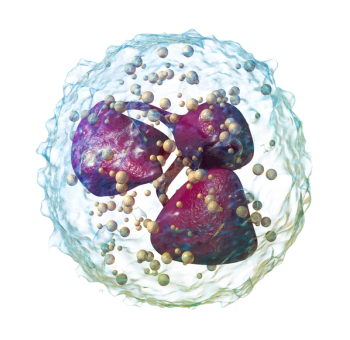
The key driver in both sets of findings is the relationship between neutrophils and inflammation.

Authors found the pharmacy costs for momelotinib were $11,095 higher per month, too much to offset higher transfusion costs for ruxolitinib.

Symptomatic improvement on therapy for myeloproliferative neoplasms (MPNs) is very much based on the individual. Data does show momelotinib not only improved spleen size and anemia but also improved symptomatic burden.

Being married and having insurance can offer emotional support and financial stability to lead to early diagnosis and effective treatment, the authors found.
Advertisement
Advertisement
Trending on AJMC
1
5 Things to Know About the FDA's Peptide Reversal
2
Moderna, Merck mRNA Cancer Vaccine Succeeds in Late-Stage Trial
3
Student Mental Health, Success Tied to Future Health and Affordability
4
FDA Approves First Orexin Agonist for Narcolepsy Type 1
5