





Oncology
Latest News
Advertisement
Latest Videos





Shorts

0:43
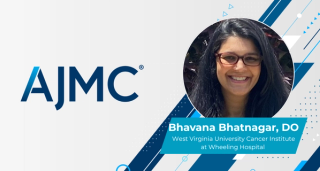
Stopping the Exodus of Women Physicians: Bhavana Bhatnagar, DO
10 days ago
by
Bhavana (Tina) Bhatnagar, DO(+1 more)

1:49
Metastatic Cancer Drives Higher Medicaid Spending Across Payment Models: Anuraag R. Kansal, PhD
a month ago
by
Brooke McCormick(+1 more)

1:13
Rethinking When and How to Use CAR T in ALL: Nitin Jain, MD
a month ago
by
Maggie L. Shaw(+1 more)

0:55
CD19, a Smart Target With a Trade-Off: Martin Schrappe, MD, PhD
a month ago
by
Maggie L. Shaw(+1 more)

0:32
How SkinIO's Full Body Scan Caught Melanoma: Steve Bonner
a month ago
by
Giuliana Grossi

0:32
Paving the Way to a Myeloma Cure: Ajay K. Nooka, MD, PhD
a month ago
by
Maggie L. Shaw(+1 more)
0:46
Supporting Families Requires Recognizing the Full Financial Impact of Pediatric Cancer: Cherie Daly, MD
2 months ago
by
Brooke McCormick(+1 more)

1:57
Policy, Technology Misalignment Slows NSCLC Genomic Testing: Robert Kratzke, MD
2 months ago
by
Brooke McCormick(+1 more)

0:41
Human-Centered Approach Needed to Reduce Pediatric Cancer Financial Toxicity: Danielle Fragalla, MSE
2 months ago
by
Brooke McCormick(+1 more)

0:51
How the OCM Reshaped Oncology Practice Conversations: Kathy Oubre, MS
2 months ago
by
Maggie L. Shaw(+1 more)
Podcasts







Advertisement
More News

County-level CRC mortality fell substantially since 2000, but some counties still had rates more than 13 times the Healthy People 2030 target in 2019.

The FDA approved daraxonrasib, the first targeted therapy for metastatic pancreatic adenocarcinoma, citing a survival benefit vs chemotherapy.

Lifetime colorectal cancer (CRC) risk was highest in highly developed countries, according to a global population-based study.

The AACR roadmap spotlights LDCT screening, ctDNA MRD monitoring, and new NSCLC/SCLC therapies like DLL3 tarlatamab to close survival gaps.

County-level CRC mortality was higher in areas with limited broadband access, higher smoking rates, and rurality.

Intismeran autogene plus pembrolizumab significantly improved recurrence-free and distant metastasis-free survival compared with pembrolizumab alone in resected stage IIB-IV melanoma.

Fecal immunochemical tests (FITs) generate substantially fewer emissions than colonoscopy or CT colonography, driven largely by transportation.

The increasingly complex CLL treatment landscape will require continued real-world study to guide sequencing decisions.

A gene tied to poor sarcoma prognosis also rose fastest in pazopanib-sensitive sarcoma cell lines, a new exploratory study suggests.

Genetic ancestry was linked to differences in colorectal cancer (CRC) burden and age-specific risk, with implications for screening.
Bridget Keenan, MD, PhD, of UCSF, stresses close communication across clinical, industry, and lab teams to run safe CAR T-cell trials.

It also flagged persistent gaps in biomarker testing and the limits of cross-trial comparisons for treatment selection.
CAR T remains Madhav Seshadri, MD's top pick for eligible relapsed/refractory DLBCL, though bispecific antibody regimens are viable alternatives.
The disparity in outcomes between pediatric and young adult patients with ALL is multifactorial, explained Emily K. Curran, MD.

Oyepeju Abioye-Akintola, MD, MSc explains how the Protocol & People initiative revealed unreadable consent forms as a fixable barrier to clinical and equitable trial enrollment.

July AJMC author Anuraag R. Kansal, PhD, explains how metastatic cancer diagnoses drive Medicaid spending and why earlier screening could lower costs.

All from July, these 5 novel therapeutics each claimed a “first” in their category.

Phase 3 SOLARIS found high-dose vitamin D3 added to standard chemotherapy did not significantly improve progression-free survival in metastatic CRC.

OpenEvidence plugs into OneOncology tools, delivering fast oncology evidence, genomic context and clinical-trial matches at the point of care.

Peter Forsberg, MD, discusses referral pathways, payer barriers, and expanding access to CAR T-cell and bispecific therapies.

Novartis says it can deliver doses to treatment sites with 5 days of order.

Panelists emphasized coordinated care, biomarker testing, innovative therapies, and clinical trial access to advance precision oncology.

New data suggest acalabrutinib appears to reduce the target that macrophages are supposed to recognize in patients with CLL.

An unanswered question: will an additional 7 minutes translate into fewer postcolonoscopy cancers and lower downstream costs?

These findings reinforce that matching therapy intensity and type to genetic and treatment-history profile is likely to be the next lever for improving outcomes.
Advertisement
Advertisement
Trending on AJMC
1
Multiagonists Outpace Older GLP-1 Drugs for Weight Loss
2
How Long-Acting Injectables Are Changing HIV Care
3
FDA Approves Ropeginterferon Alfa-2b in Essential Thrombocythemia
4
The Next Frontier in Hepatitis B Functional and Virologic Cure
5