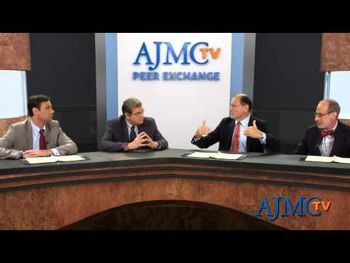
Peter B. Bach, MD, MAPP, Director, Center for Health Policy and Outcomes, Attending Physician, Memorial Sloan-Kettering Cancer Center, states that any organizational change that shifts payment and risk to providers will improve quality.


Peter B. Bach, MD, MAPP, Director, Center for Health Policy and Outcomes, Attending Physician, Memorial Sloan-Kettering Cancer Center, states that any organizational change that shifts payment and risk to providers will improve quality.

Automated telephone calls can increase colorectal cancer screening rates at a cost of about $40 per additional screen.

Dr. Mark Fendrick, MD, Professor of Medicine and Health Management and Policy, Schools of Medicine and Public Health, University of Michigan, Co-Editor-in-Chief, The American Journal of Managed Care, says that there are levers organizations and stakeholders can pull to achieve the goal of improving quality and value in cancer care.

Michael Chernew, PhD, Professor of Health Care Policy, Harvard Medical School, Vice Chairman, MEDPAC, Co-Editor-in-Chief, The American Journal of Managed Care, says that patients want access to expensive drugs that can help expand and improve their lives.

Ira Klein, MD, MBA, FACP, Chief Medical Officer, National Accounts Clinical Sales & Strategy, Aetna, addresses measurement programs used in oncology.

Dennis Scanlon, PhD, Professor of Health Policy and Administration, The Pennsylvania State University, says it is very important to bridge the gap between providers and payers in oncology management.


Fecal immunochemical testing resulted in higher colorectal cancer screening rates than did guaiac fecal occult blood tests, with less dependence on office visits.

In this video, Aimee Tharaldson, PharmD, discusses some of the current trends in the specialty pharmacy market. In addition, Dr. Tharaldson specifically comments on the oncology pipeline, which currently has the most activity.


The role of the pharmacist in the care of patients with cancer is evolving. Pharmacists can help optimize treatment outcomes for each patient through use of patient-specific and disease-specific strategies.


State-level estimates of the number of people treated for cancer and the average cost of their treatment by state from 2010 through 2020.


Targeted Therapies to Further Improve Outcomes