





Oncology
Latest Content
Advertisement
Latest Videos









Advertisement
More News

An analysis using mixed quantitative and qualitative methods, as well as site visits to 7 US oncology practices, identified 13 attributes within 5 themes that potentially contribute to high-quality care at a relatively low total cost.
The evolution of the navigator role has been an important development in cancer care, according to panelists who offered various perspectives on helping patients along the cancer journey.
With the growing shift to community-based and patient-centered care, the National Quality Forum (NQF) and the Center to Advance Palliative Care (CAPC) have launched initiatives to ensure that patients with serious illness receive safe, effective, and high-quality care. At the same time, professionals in the healthcare industry are highlighting the importance of integrating this type of care into the oncology practice.

With an expansion that includes immunotherapy combination treatments, the American Society of Clinical Oncology (ASCO)’s Targeted Agent and Profiling Utilization Registry (TAPUR) Study has now grown to 500 participants and 16 therapies.
High chemotherapy costs are only one reason for the rising cost of cancer care. End-of-life care and hospitalizations are within an oncologist's control and must be better managed given new reimbursement structures.

Authors of the study found that the mean total, chemotherapy, and physician costs were all lower in community settings compared with hospital-based settings for patients with breast, lung, and colorectal cancer. There were also fewer emergency department visits both 3 and 10 days following treatment.

FDA on Thursday authorized a faster approval path for a next-generation sequencing assay developed at Memorial Sloan Kettering Cancer Center (MSK) that represents both a scientific and regulatory breakthrough at the agency.
A mathematical model may help providers better understand which patients will benefit from certain immunotherapy.

Cyclin-dependent kinase 4/6 inhibitors may have proven benefits for treating metastatic breast cancer, but the therapies are associated with hematological toxicities and febrile neutropenia.

As oncology moves toward more deep diagnostic testing and as standard of care continues to quickly evolve, technology advancements are necessary to continue to improve patient access to clinical trials, explained Amy Abernethy, MD, PhD, the chief medical officer, chief scientific officer, and senior vice president of oncology at Flatiron Health.

According to a new analysis by Stacy Dusetzina, PhD, and colleagues, state oral parity laws—devised to equate out-of-pocket (OOP) spending for patients, irrespective of whether their treatment is an oral agent or an infusion—are not consistent with reducing patient OOP costs for oral anticancer agents.
We determine a specialist physician phenotype responsive to financial incentives that may be leveraged to identify physicians and markets well-suited for participation in alternative payment models.

A new white paper from the Network for Excellence in Health Innovation encourages the use of outcomes-based contracting for novel oncology drugs.

Every week, The American Journal of Managed Care® recaps the top managed care news of the week, and you can now listen to it on our podcast, Managed Care Cast.

This week, the top managed care stories included a vote in Maine to expand Medicaid and other election day 2017 results; CMS issued final rules for the DIabetes Prevention Program; and a report from the American Society of Clinical Oncology highlighted the link between alcohol consumption and cancer.

A specific mutation has been linked with acquired resistance in immunotherapy drugs used to treat non–small lung cancer (NSCLC).

Leading healthcare innovation officer to share information about digital health, managed services, and provider sectors in the healthcare arena.

Biosimilars for core therapeutics in cancer are starting to come out, and community oncologists need to understand what that means for their business, as well as what proposed policy changes could mean for reimbursement, explained Tesh Khullar,

Roche had 2 drugs approved by the FDA—one that is the first approved treatment for a rare blood disease and the other is approved as a first-line treatment for anaplastic lymphoma kinase-positive metastatic non–small cell lung cancer.

According to evidence gathered by the American Society of Clinical Oncology (ASCO), alcohol consumption is linked with an increased risk of cancer and can negatively impact cancer treatment.
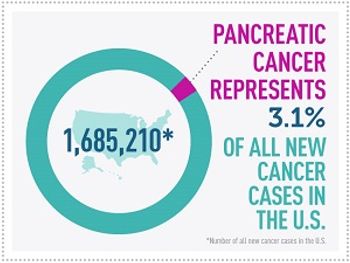
Rising rates of diabetes and obesity have been cited in the fact that pancreatic cancer is expected to be the second-leading cause of cancer death by 2020.

With the ACA putting emphasis on preventive care, there has been an immediate increase in breast and coloreactal cancer screenings. A recent study found that incidence rates of early-stage breast and colorectal cancer increased in 2014, but did not vary for late-stage breast and colorectal cancer.

Recent advancements in technology, specifically in detection methods, have demonstrated significant improvement in how early patients are diagnosed with breast cancer and treated.
In a pair of interviews, experts discuss neutropenia resulting from treatment of metastatic breast cancer with CDK4/6 inhibitors.

This week, the top managed care news included the first day of open enrollment; data from CMS that indicate the progress accountable care organizations are making; and findings that most people with obesity aren't get screened for it or getting care.

Increased fiber, especially from cereal, intake after the diagnosis of non-metastatic colorectal cancer (CRC) is associated with lower CRC-specific and overall mortality.

Mantle cell lymphoma is an aggressive type of non-Hodgkin lymphoma. Acalabrutinib (Calquence) is a kinase inhibitor that works by blocking an enzyme the cancer needs to multiply and spread.
The FDA has granted Priority Review designation for Eli Lilly and Company’s New Drug Application (NDA) for Verzenio (abemaciclib), a cyclindependent kinase 4 and 6 inhibitor for metastatic breast cancer. The decision was based on the MONARCH 3 study, which examined abemaciclib as an initial endocrine-based therapy.
As cancer care becomes more expensive and complex, the role of the pharmacist is expanding, from managing the shift to greater use of oral therapies to navigating the revenue cycle, as explored in the new issue of Evidence-Based Oncology™, a publication of The American Journal of Managed Care.®

Strong chemotherapy may be part of the treatment plan for patients diagnosed with cancer, but it also comes with risks. A new campaign will empower patients with cancer to better understand and navigate risks such as febrile neutropenia that are associated with strong chemotherapy.
Advertisement
Advertisement
Trending on AJMC
1
Bepirovirsen Approval Offers New Option for Chronic HBV Treatment
2
Inhaled Amikacin Raises Culture Conversion in New MAC Lung Disease
3
Bronchiectasis GWAS Highlights Candidate Targets Shared With COPD
4
Extension Studies in TPIP Show Promise in PAH, PH-ILD
5