




Tumor slices provide a useful platform for studying the tumor microenvironment and evaluating the preclinical efficacy of cancer therapeutics, according to a recent study.
Tumor slices provide a useful platform for studying the tumor microenvironment and evaluating the preclinical efficacy of cancer therapeutics, according to a recent study.

Researchers in North Carolina reported discoveries that may lead to further understandings about how pancreatic cancer can become resistant to treatment.

Precision medicine may offer new hope to children with high-risk cancer, but only if families and healthcare professionals are fully educated on the benefits and limitations of precision medicine trials, according to a study in Journal of Clinical Oncology.

Genomic profiling of tumors has become standard in oncology, but tumors in children often do not have actionable DNA aberrations, requiring another way to effectively target treatment for these patients. A study in JAMA Network Open found that RNA sequencing from pediatric and young adult patients may be a feasible approach.

A team of researchers led by Memorial Sloan-Kettering Cancer Center Thursday published work describing how they used machine learning, a form of artificial intelligence (AI), to predict tumor type from targeted DNA sequence data to predict tissue of origin, in a finding that may have implications to improve diagnostic and clinical care.

The evidence shows that chimeric antigen receptor (CAR) T-cell therapies are effective, but the price tags on these treatments are high and have raised concerns about how many patients will get treated. During a discussion at The American Journal of Managed Care®’s Patient-Centered Oncology Care® meeting, held Friday in Philadelphia, panelists outlined the efficacy of the 2 FDA-approved therapies, Medicare reimbursement for CAR T-cell therapies, and the pace of innovation in healthcare.

A recent study sought to identify an mRNA biomarker that predicts chemosensitivity across multiple solid tumor subtypes, given the significant heterogeneity in response among patients to chemotherapies.

Microsoft is partnering with an independent, nonprofit biomedical research institution on an artificial intelligence, machine learning tool to process the vast amount of data flowing out of genomic research.

Broad population-based genomic screening has the potential to improve patient care by detecting genetic causes of disease before they occur; however, the economics behind this approach have not fully been validated, according to a session on the clinical and economic utility of whole-genome sequencing at the AMCP Nexus 2019 meeting.

With increasing awareness of genetic testing and advancements in precision medicine, more patients are seeking counsel from clinicians about what steps they should take if mutations are found. This requires physicians to become more informed, and a recent article discusses the hypothetical case of an Ashkenazi Jewish woman with breast cancer.

Pairing a cyclin-dependent kinase 4 and 6 (CDK4/6) inhibitor with fulvestrant significantly improved overall survival (OS) for women with hormone receptor (HR)-positive, human epidermal growth factor 2 (HER2)-negative advanced breast cancer, according to 2 abstracts presented at the European Society of Medical Oncology 2019 Congress.
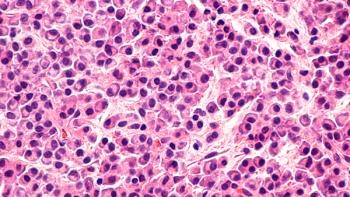
A recent study described the use of multiparameter flow cytometry to detect minimal residual disease, with an 8-color flow cytometric method with a 105 sensitivity, using monoclonal antibodies in dried formulation.

While measurement of minimal residual disease (MRD) at the end of induction is an important prognostic factor in acute lymphoblastic leukemia (ALL), there is a gap in education among community oncology providers, according to an abstract presented at the Society of Hematologic Oncology 2019 Annual Meeting.

Lee Schwartzberg, MD, FACP, executive director, West Cancer Center, discusses exclusion of men from the US Preventive Services Task Force's (USPSTF's) updated BRCA screening recommendation update.

Although minimal residual disease (MRD) is increasingly being used to predict treatment outcomes and as a surrogate marker of progression-free survival, there remains controversy over whether it is ready to be used in treatment decision making.

Nina Chavez, MBA, FACMPE, chief operating officer, New Mexico Oncology Hematology Consultants, Ltd., explains how expensive therapies like chimeric antigen receptor (CAR) T-cell therapy are creating reimbursement challenges.
While current guidelines recommend that only women with breast cancer who have a family history or who meet clinical criteria undergo genetic testing, a new cost-effectiveness analysis suggests that genetic testing should be expanded to all women with breast cancer.
As minimal residual disease (MRD) and other measures to detect cancer burden are increasingly used to predict outcomes and direct future treatment decisions, Amgen has chosen to partner with Adaptive Biotechnologies to use the clonoSEQ product to assess MRD across multiple drug development programs.
Lee Schwartzberg, MD, FACP, executive director, West Cancer Center, offers his view on the US Preventive Services Task Force's (USPSTF's) updated recommendation for risk assessment, genetic counseling, and genetic testing for BRCA-related cancer.

Researchers found that post-chemotherapy minimal residual disease (MRD) subtypes were associated with a pattern of failure and time to failure.

Oncologists may be able to use circulating tumor DNA (ctDNA) to guide treatment decisions and predict which patients will have disease recurrence, according to 2 studies in JAMA Oncology.

The clinical significance of minimal residual disease (MRD) status was recently highlighted in The American Journal of Managed Care®’s Peer Exchange series “A Review of the Treatment for Multiple Myeloma.” During the series, key opinion leaders discussed the clinical implications and significance of MRD testing in patients with multiple myeloma.

All patients with metastatic breast cancer should undergo genetic testing based on the prevalence of P/LP variants in patients with metastatic breast cancer, which can have therapeutic implications.

Offering patients genetic counseling before and after they receive genetic testing is crucial for making sure they understand what the results mean, explained John Fox, MD, MHA, vice president of Clinical Transformation at Spectrum Health.

Monoclonal gammopathy of undetermined significance is a diagnosis of exclusion, but even once it has been identified, patients should not obsess over this precancerous condition, said Ajai Chari, MD, associate professor of medicine, Hematology and Medical Oncology, Mount Sinai Hospital.