






Chronic Kidney Disease
Latest News
Advertisement
Video Series
Latest Videos









Shorts

1:19
Atacicept's Favorable Safety Profile May Distinguish It Among IgA Nephropathy Therapies: Richard Lafayette, MD
2 months ago
by
Brooke McCormick(+1 more)
1:52
What Sets Atacicept Apart From Other IgA Nephropathy Treatments: Richard Lafayette, MD
2 months ago
by
Brooke McCormick(+1 more)

1:27
Focus Turns to Real-World Use, Access as Sparsentan Moves Into FSGS Care: Kirk Campbell, MD
5 months ago
by
Brooke McCormick(+1 more)
0:42
Sparsentan Approval Marks Historic Step Forward for Patients With FSGS: Kirk Campbell, MD
5 months ago
by
Brooke McCormick(+1 more)

0:52
How Remote Blood Pressure Monitoring Helps Manage Patients With CKD: Anitha Vijayan, MD
a year ago
by
Sabrina McCrear(+1 more)
Podcasts




Advertisement
More News

A higher weight-adjusted waist index (WWI) was independently linked to greater all-cause and CVD mortality in CKD, partly via inflammation.

Low fruit and vegetable intake alongside high sodium consumption remain top dietary drivers of CKD burden, with disparities by region, age, and income.

ORIGIN trial data suggest atacicept (Trutakna; Vera Therapeutics) is well tolerated in IgA nephropathy, with follow-up needed to assess long-term kidney outcomes.
The FDA approval of atacicept introduces the first BAFF/APRIL dual inhibitor for IgA nephropathy, with trial data showing significant proteinuria reduction.

Paricalcitol shows more consistent parathyroid hormone control and a stronger survival signal than calcitriol in chronic kidney disease, though evidence for hard outcomes remains limited.

The meta-analysis of 17 studies found that frailty was strongly associated with cognitive impairment in CKD, highlighting the need for further research to determine a causal relationship.

Global early-onset CKD mortality declined from 1990 to 2021, but incidence rose, highlighting persistent disparities and prevention needs.

Vera's atacicept (Trutakna) wins FDA accelerated approval after a 46% proteinuria drop in the ORIGIN 3 trial.

OLC's second complete response letter reflects an unresolved third-party manufacturing inspection, not new efficacy or safety concerns from the FDA.

Caregivers of patients with CKD report social withdrawal, strained relationships, and stigma, according to a new qualitative evidence synthesis.

Worse kidney function and higher proteinuria at biopsy predicted significantly greater health care use over 2 years in patients with IgA nephropathy.
This publication was developed with the support of Boehringer Ingelheim Pharmaceuticals, Inc.

Systematic review finds SGLT2 inhibitors and newer CKD drugs boost QALYs and often save costs by delaying dialysis and transplant.

Kirk Campbell, MD, discusses why FSGS is traditionally difficult to treat, the significance of the sparsentan approval, and future access needs.

The benefits of exercise are particularly notable for patients who are dependent upon dialysis, a new review suggests.
At 24 months, patients receiving iptacopan had approximately half the decline in estimated glomerular filtration rate slope compared to those receiving placebo.

Focal segmental glomerulosclerosis can lead to protein leakage in urine and hypertension; the condition is not considered curable at present, only manageable.

New strategies and therapies are being developed to try and decrease the risk of bone disease and cardiovascular complications among people with severe kidney disease.

A machine learning model using routine clinical data more accurately predicted 5-year heart failure risk in patients with CKD than traditional tools.
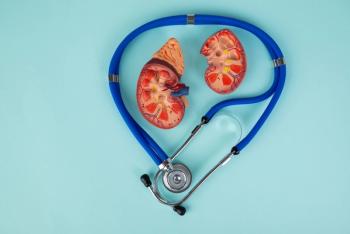
A program in Detroit identified hundreds of patients with chronic kidney disease.

GLP-1s and SGLT2s were associated with improved kidney outcomes and no increased safety risks in patients with T1D and CKD.
The studies provide a clearer picture of how CKD affects everyday life for those managing the disease.
Patients with both a low estimated glomerular filtration rate and a high protein-to-creatinine ratio were at particularly high risk of cognitive impairment, a new study has found.
Machine learning–based risk prediction models, particularly gradient boosting, can accurately identify early clinical indicators of CKD.

Many older HFpEF patients appear to have CKD from aging and obesity; visceral adiposity drives kidney risk more than intrinsic damage or low eGFR.
Advertisement
Advertisement
Trending on AJMC
1
MASH Fibrosis, Not Resolution, Predicts Mortality: Zobair Younossi, MD
2
A New Mechanism for DME in the BRUNELLO Trial: Donald J. D’Amico, MD
3
Full POLARGO Data Reveal OS, Safety for Pola-R-GemOx in DLBCL
4
FDA Approves Once-Monthly Subcutaneous Olanzapine for Schizophrenia
5