
Findings from CRISPR-edited stem cell–derived islets suggest SMOC1 functions as a physiological stabilizer of NKX6.1-positive β-cell identity.
Findings from CRISPR-edited stem cell–derived islets suggest SMOC1 functions as a physiological stabilizer of NKX6.1-positive β-cell identity.
Two studies identify molecular targets that could help preserve insulin-producing cell function.
As presented at EHA 2026, AGAVE-201 showed no significant bone health safety signals with axatilimab in chronic graft-versus-host disease (cGVHD).
The AGAVE-201 analysis found no significant bone health concerns with axatilimab in chronic GVHD, showing stable biomarkers and no increased fractures.

Chemo-free zanubrutinib plus rituximab in phase 3 MANGROVE cuts progression/death risk 43% vs BR for frontline mantle cell lymphoma.

ASCO: City of Hope investigator highlights mosunetuzumab plus polatuzumab vedotin ADC/bispecific combo boosting PFS in LBCL with manageable adverse events outpatient.
Bridget Vazquez, PsyD, breaks down how cancer-related PTSD manifests, why it goes unrecognized, and what patients, caregivers, and clinicians can do.
Trauma after cancer is underdiagnosed and often persists into survivorship, with experts urging trauma-informed screening in oncology care.
An NCCN Policy Summit webinar on May 7 warned that cancer care is failing patients, as poor health literacy, misinformation, and digital overload widen gaps in understanding.

Experts examined oncology care innovation, access gaps to CAR T-cell therapy, advances in myeloma care, and partnerships in value-based care.
Mosunetuzumab, a bispecific, plus polatuzumab vedotin, an antibody-drug conjugate, deliver high response rates in relapsed MCL, potentially enabling outpatient community oncology treatment and wider patient access.
Joseph Mikhael, MD, has spent decades advancing the treatment of multiple myeloma, and he’s been witness to a remarkable shift in outcomes among older adults.

Delivering value-based oncology care requires both scientific breakthroughs and deliberate system redesign, experts concurred during this February IVBM in Los Angeles.

Obesity enlarges organs, adding cells that raise liver, kidney, and pancreatic cancer risk, such that organ size may predict danger better than body mass index.
Smarter therapies, evolving frailty tools, and more inclusive trials are finally extending myeloma's survival gains to older adults.
Presenters shared their personal highlights of attending ASCO GI 2026.

Dani Castillo, MD, sheds light on the evolving landscape of first-line therapy in advanced gastric cancer.
Yuman Fong, MD, discusses the evolution of colorectal liver metastases management from historical neglect to multimodal approaches.
Enrique Velazquez Villarreal, MD, PhD, MPH, MS, reveals how AI is being used to identify early-onset CRC and enhance precision oncology.

A groundbreaking in vivo CAR T-cell therapy shows promise for treating multiple myeloma, potentially revolutionizing cancer care with quicker, safer treatments.

Amivantamab plus lazertinib enhances survival in NSCLC but requires complex care compared with osimertinib, explained Danny Nguyen, MD, of City of Hope.
The combination of amivantamab and lazertinib in first-line non–small cell lung cancer (NSCLC) significantly reduces resistance mechanisms with implications for second-line treatment, said Danny Nguyen, MD, of City of Hope.
Joanne Mortimer, MD, FACP, FASCO, discusses the practical applications and limitations of circulating tumor DNA (ctDNA) testing in breast cancer, highlighting its role in guiding targeted therapy, challenges in patient communication and payer coverage, and unique barriers for male patients.
Christina Poh, MD, of City of Hope National Medical Center, highlights the benefit of tafasitamab in improving progression-free survival for heavily pretreated patients with relapsed or refractory (R/R) follicular lymphoma.
AZD0486 demonstrated encouraging safety and dose-dependent efficacy in heavily pretreated adolescent and adult patients with relapsed/refractory B-cell acute lymphoblastic leukemia (ALL), according to early findings from the phase 1/2 SYRUS trial and Ibrahim Aldoss, MD, of City of Hope.
Ibrahim Aldoss, MD, discusses the potential of AZD0486 for treating relapsed or refractory B-cell acute lymphoblastic leukemia (ALL) and outlines the SYRUS study objectives.

Dr Rugo discusses the promising outcomes of trastuzumab deruxtecan for HER2+ breast cancer, addressing interstitial lung disease risks and retreatment strategies.
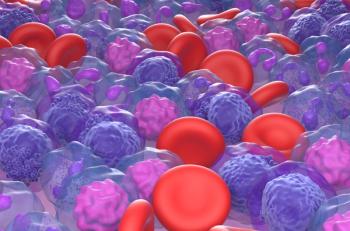
Revumenib shows promise for high-risk patients with acute myeloid leukemia (AML) with specific genetic mutations, demonstrating efficacy with no new safety signals.
Ibrahim Aldoss, MD, associate professor, City of Hope, explores recent findings on ponatinib as a first-line treatment for Philadelphia chromosome–positive acute lymphoblastic leukemia (Ph+ ALL).
Kimlin Tam Ashing, PhD, explores how strengthening community engagement can enhance cancer research and inform more effective policy development.