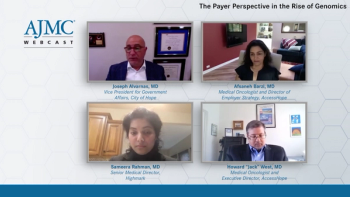
In part 3 of the Oncology Value Coalition webinar, experts from City of Hope and Highmark discussed the payer perspective in the rise of genomics.
In part 3 of the Oncology Value Coalition webinar, experts from City of Hope and Highmark discussed the payer perspective in the rise of genomics.
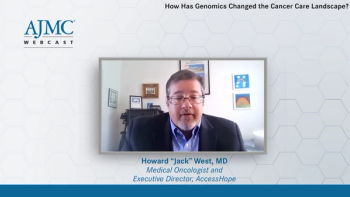
In part 2 of the Oncology Value Coalition webinar, experts from City of Hope and Highmark discussed how genomics have changed the cancer care landscape.
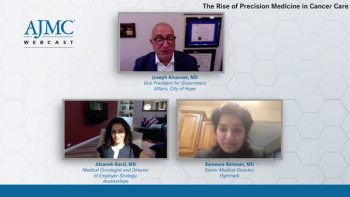
In the latest Oncology Value Coalition webinar, experts from City of Hope and Highmark discussed designing genomic testing in cancer care.

May 18 is HIV Vaccine Awareness Day. Here we explore just a few of the many reasons why a vaccine that is effective at preventing the acquisition of HIV and at reducing the viral load in those currently living with HIV remains an elusive goal.


Tanya Siddiqi, MD, director of the chronic lymphocytic leukemia program at Toni Stephenson Lymphoma Center provides insights on what the arrival of liso-cel could mean in the treatment landscape.

A CAR T-cell therapy that promises fewer side effects, and possibly lower hospital costs, wins approval after lengthy delays.

Employers have the focus, innovative mindset, analytical tools, and drive to partner effectively with innovative cancer care entities to bring better care to their respective members.

In an interview with Evidence-Based Oncology™, City of Hope's Harlan Levine discussed the rising interest of employers in cancer care and how AccessHope can help them deliver better care where their employees live.

An oncolytic virus called CF33 developed at City of Hope shows potential for colon cancer treatment and tumor regrowth immunity in mouse models.

A precision oncology tumor board at City of Hope identified colorectal cancer patients with possible hereditary predisposition who were not referred for cancer genetics evaluation previously.
Creativity is just connecting things--Steve Jobs

The KRAS mutation occurs in 13% of non–small cell lung cancers (NSCLC) and leads to worse outcomes in NSCLC.

Social reform to eliminate health disparities is necessary so that Black people, the most vulnerable group for advanced colorectal cancer, get the care they need for a disease that is curable if caught early, says City of Hope expert.
Clinical trials for the new machine that might one day change the way metastatic cancer patients are treated expected to open next year.
References: Humility and Hope: Evolution of the HIV Pandemic, From ART to Today’s Cancer Cures
Known as a gene therapy pioneer, Zaia has spent almost 40 years at City of Hope, in Duarte, California. He was first drawn by the promise of studying cytomegalovirus. Over the decades, his groundbreaking research has encompassed HIV/AIDS, cellular gene transfer therapy, immunotherapy, bispecific antibodies, and now hyperimmune globulin for workers on the frontlines of the coronavirus disease 2019 (COVID-19) pandemic.