




Clinical
Latest News
Advertisement
Latest Videos




CME Content


Advertisement
More News

Experts share their thoughts on payer and provider perceptions surrounding affordable HF care, as well as strategies to manage care-associated costs.
Multiple comorbidities lead to an emphasis on multidisciplinary care management when determining the most effective HF treatment strategies.
IMpower010 trial data may influence a significant evolution in treatment of non–small cell lung cancer.

Morbidity and mortality remain high for patients with acquired hemophilia A, and advances in immunotherapy and hemostatic therapy are needed to improve outcomes.
Dr Noble, MD provides and overview of the treatment landscape surrounding ILD, specifically examining IPF, PPF, and SSc-ILD antifibrotic therapy.
Dr Paul Noble, MD discusses updates and changes in ATS-directed guidelines for the treatment of ILD.

With these new findings coming from the EMPOWER-Lung 3 trial, the anti-programmed cell death-1 inhibitor cemiplimab is now just the second of its kind to show efficacy in these patients as both monotherapy and as a combination regimen, regardless of histology.

A new study looks at the balancing act physicians and families must carry out when managing expectations at a time of great scientific advancement in spinal muscular atrophy (SMA) and Duchenne muscular dystrophy (DMD).

Dr Agarwal provides a deep dive into the use of nonsteroidal mineralocorticoid receptor antagonists in CKD therapy.
Dr Feldman concludes the treatment landscape overview by discussing glycemic control, SGLT2 inhibitors, and other important management techniques.

Danielle Carnival, PhD, addressed the National Comprehensive Cancer Network Policy Summit on Friday.

Key stakeholders involved in the delivery of cancer care in New Jersey discuss strategies driving innovation in oncology and remaining challenges impeding their integration at the 70th Annual Roy A. Bowers Pharmaceutical Conference.
At 12 weeks, nearly 8 in 10 patients had significant improvement.

The gene therapy is the first treatment for active cerebral adrenoleukodystrophy, a fatal neurodegenerative disease that affects boys.

The case involved a 69-year-old man who presented with lupus nephritis.

The findings, produced over a 4-year period, indicate the protein sulfatase-2 (Sulf-2) may be a therapeutic target in rheumatoid arthritis (RA).
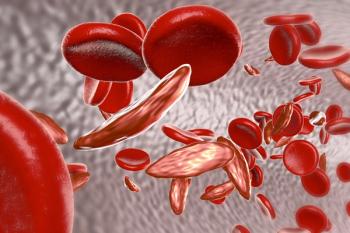
The review discusses hydroxyurea and 3 additional drugs approved by the FDA—L-glutamine, crizanlizumab, and voxelotor—as well as agents currently being investigated to treat sickle cell disease (SCD).

Despite $2.5 million placeholder price tags, the Institute for Clinical and Economic Review draft evidence report considers gene therapy cost-effective versus comparators in both hemophilia A and B.

Sutimlimab demonstrated rapid efficacy in the study cohort, and platelet level improvements were sustained for the duration of treatment in nearly half of the participants.

The review highlights current strategies for myeloid cell targeting and novel agents targeting myeloid cells for cancer treatment.
Dr Millie Das, MD opens a discussion surrounding updates regarding non-small cell lung cancer (NSCLC) as presented at the 2022 World Conference on Lung Cancer (WCLC).

Being able to use minimal residual disease (MRD) negativity to make treatment decisions, such as stopping maintenance therapy, can have savings related to cost and quality of life (QOL) for patients, said Ajay Nooka, MD, MPH, FACP, associate professor, Winship Cancer Institute.

This randomized, multicenter study of children and adolescents with new-onset type 1 diabetes (T1D) investigated the effect on glucose control of a closed-loop system, using C-peptide levels to gauge response
Carl Schmid and Lynne H. Milgram, MD, MBA, CPE, conclude with sharing ideas that can provide more substantial access to PrEP and battle unmet needs in PrEP management.

Drs Palella Jr and Milgram explains the disconnect between PrEP and patient education and comments on how to fix it.
Advertisement
Advertisement
Trending on AJMC
1
TrumpRx Launch Brings Savings—and Uncertainty
2
How Do GLP-1 Agonists Fit Into Stroke Care?
3
Addressing Disparities at Every Step of the Stroke Care Pathway: Luke Messac, MD, PhD
4
5 Things to Know About the Oral GLP-1 Era
5