



Clinical
Latest News

Advertisement
Latest Videos






Advertisement
More News
This year's most-read inflammation articles included ones about Janus kinase inhibitors and the impact of biologics or systemic corticosteroids on severe COVID-19.

This year’s most-read articles on Fabry disease touched on advancements in therapy, health risks of the disease, and keys to improved diagnosis.

Data from the GLOW study of minimal residual disease evaluation following chemotherapy for chronic lymphocytic leukemia (CLL) show the kinase inhibitor/B-cell lymphoma-2 inhibitor pair produced superior outcomes compared with the alkylating agent/monoclonal antibody combination.

Results of a meta-analysis and systematic review indicate rosacea is significantly associated with depression and anxiety.

Despite being the seventh adalimumab biosimilar approved in the United States, there are none on the market yet.

Readers were most interested in articles about cost of therapy, drug efficacy, and a unique case related to COVID-19.

Epigenetics has a role in choosing the right medicine in lung cancer, artificial intelligence can predict outcomes in a highly aggressive cancer, and more.

A study of the adult Korean population found high salt intake was associated with an increase in major adverse cardiovascular events (MACE) in patients with rheumatoid arthritis (RA).

Research using data from the ASH Research Collaborative COVID-19 Registry for Hematology identified risk factors for severe infection and mortality for patients with blood cancers who were infected with COVID-19.
Risk factors for more severe COVID-19 and potentially protective factors appear on this year’s list of most-read clinical COVID-19 articles.

This year’s most-read articles on endocrinology posted at AJMC.com were concentrated in 3 areas: hormone therapy, treatment for growth hormone deficiency among pediatric patients, and outcomes among women with polycystic ovary syndrome.

The FDA this week approved cabotegravir (Apretude), the first and only long-acting injectable pre-exposure prophylaxis option to reduce the risk of sexually acquired HIV-1.

Patients with spinal muscular atrophy often present with severe scoliosis but face an elevated risk of complications from corrective surgery.

A study carried out in Taiwan found that a family history of type 2 diabetes (T2D) may increase the risks of diabetes-related complications in those with type 1 diabetes (T1D).

Secukinumab is approved for use among patients with enthesitis-related arthritis (ERA) aged 4 years and up, and those with psoriatic arthritis (PsA) who are at least 2 years old.
Although the pandemic continued to rule health care headlines, a few other stories were noteworthy in 2021 for the AJMC.com audience, including articles about a wider indication for the glucagon-like peptide-1 receptor agonist semaglutide and the heart failure drug Entresto.

Jason Starr, DO, explains circulating tumor DNA’s (ctDNA) role in oncology and its role in MRD.
Jason Starr, DO, provides an overview of molecular residual disease (MRD) in the hematological and oncological treatment landscapes.

Two posters presented at The Liver Meeting evaluated nonalcoholic fatty liver disease (NAFLD)–associated hepatocellular carcinoma (HCC) to understand the burden and identify the risk for developing HCC.

This year the United States only approved 2 biosimilars, but the FDA did grant interchangeable status to the first biosimilar.

Those with episodic migraine receiving erenumab can evaluate the treatment's efficacy after 3 months, according to a post hoc analysis.

Updated results of the MajesTEC -1 phase 1/2 study on teclistamab showed the treatment resulted in an overall response rate of 62% among heavily pretreated patients with multiple myeloma.
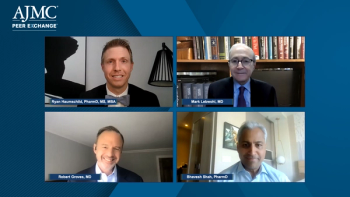
Mark Lebwohl, MD, details how he extrapolates clinical data in his decision-making when trying to treat patients with psoriasis.
Drs Groves and Lebwohl discuss payer considerations for ensuring treatment with the appropriate agent for patients with psoriasis and metabolic syndrome.
New research on semaglutide and empagliflozin appear on this year’s list of most-read diabetes articles.
Advertisement
Advertisement
Trending on AJMC
1
CMS Rule Ends Medicaid, CHIP Funding for Pediatric Gender Care
2
Oral JAK Inhibitors Boost Hair Regrowth Odds in Alopecia Areata
3
Medicare Drug Price Negotiations Yield Uneven Out-of-Pocket Savings
4
Panel Calls for Earlier Detection, Clearer Pathways in Rare Glomerular Disease
5