





Coverage of our peer-reviewed research and news reporting in the health care and mainstream press.

A Timeline of COVID-19 Vaccine Developments for the Second Half of 2021
Coverage of our peer-reviewed research and news reporting in the health care and mainstream press.

A new study comparing intensive care unit stays among patients with Parkinson disease and controls without the disease found the former have more severe illness, but both groups have similar survival rates.

COVID-19 at-home test kits are in short supply; 2021 is on track to surpass 2020's death toll; hospitals report patient surges.

In an interview conducted before the highly transmissible Omicron coronavirus variant began driving another wave of infections, Peter Hotez, MD, PhD, FASTMH, discussed the struggle public health officials and scientists have in fighting false beliefs about vaccinations.

The editors of The American Journal of Managed Care® and The American Journal of Accountable Care® reflect on the past year and discuss the themes and topics they expect to see in 2022.
This year's most-viewed content in infectious disease was dominated by COVID-19, as the Delta variant continued to strain the US health care system. It also included news about Clostridioides difficile.

The top 5 most-read ophthalmology articles of 2021 on AJMC.com evaluated the effectiveness of novel therapies in several ophthalmic diseases, racial/ethnic disparities in clinical trial participation, and the impact of the COVID-19 pandemic on childhood nearsightedness.

CDC data shown to overstate US vaccination rates; school-based cognitive behavioral therapy for overwhelmed children; Moderna to develop Omicron-specific COVID-19 booster dose.
The top 5 most-read psoriasis articles of 2021 on AJMC.com covered risk factors involved in the pathogenesis and treatment of psoriatic disease and cost considerations for treatment.

As the pandemic wore on, fewer patients with sickle cell disease who did contract COVID-19 needed to be hospitalized.

Interest in the use of digital inhalers is growing, as they may provide real-world evidence about how patients monitor and treat their chronic obstructive pulmonary disease (COPD) and asthma at home, but additional questions need to be answered, according to a recent review.

When a flu season is mild, it can make developing a vaccine for the following season a bit more difficult as it can be hard to find the right match, but on the other hand, the US health system could benefit from less stress this winter given the unrelenting demands posed by COVID-19, says Leslie Kantor, PhD, MPH, chair and professor of the Department of Urban-Global Public Health, Rutgers School of Public Health.

Research presented at the Revolutionizing Atopic Dermatitis (RAD) Virtual Conference said dupilumab (Dupixent) is an effective and safe therapeutic option in adults, adolescents aged 6 to 11 years, and young children aged 6 months to 5 years with moderate-to-severe atopic dermatitis.

The findings come from an algorithm that was based on 4 criteria-based tools, including 2 widely-used measures designed to ferret out inappropriate medication prescribing in older adults.


The oral polymerization inhibitor, a first-in-class therapy for sickle cell disease, was first approved by the FDA for adults and pediatric patients 12 years of age and older in 2019.

Daniel Greer, PharmD, BCPP, clinical assistant professor, Rutgers Ernest Mario School of Pharmacy, speaks on how capabilities of cognitive behavioral therapy have evolved to a more user-friendly approach in the management of chronic insomnia.

Robert J. Hopkin, MD, clinical geneticist, Cincinnati Children's Hospital Medical Center, provides an overview of the evolving treatment landscape in Fabry disease.
In a study published in our December issue, researchers analyzed how prescribing of the newly approved heart failure drug sacubitril/valsartan diffused across the nation.

Final results from the MASTER trial presented at this year’s 63rd Annual American Society of Hematology Annual Meeting and Exposition bear out the benefits of quadruplet therapy and using minimal residual disease (MRD) status among patients with newly diagnosed multiple myeloma (MM).

The CDC is recommending that people at risk of developing blood clots receive the Moderna or Pfizer/BioNTech vaccines instead of Johnson & Johnson (J&J); the FDA lifts restrictions on mail order access to abortion pills; US health care spending more than doubled during the first year of the pandemic.

Three policies to revamp insurance consumer protections for health care delivery are explored, with highlighted areas for improvement being maternal health coverage and loosening of network adequacy requirements.

Two doses of the Moderna COVID-19 vaccine have reduced efficacy against the Omicron variant; a federal appeals court reinstates the Biden administration’s health care worker vaccine mandate in 26 states; a new combination therapy may reduce breast cancer progression.

Pulmonary arterial hypertension is a rare form of pulmonary hypertension that poses diagnostic challenges and often comes with a delayed diagnosis.
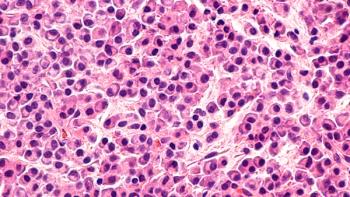
Subcutaneous (sub-Q) administration of isatuximab plus pomalidomide may provide survival advantages for patients with relapsed and refractory multiple myeloma, making it another treatment option for this patient group.