





Health Care Delivery
Latest News
Advertisement
Latest Videos









Advertisement
More News

This article explores late-life relocations in patients with dementia, hospital stays, and their implications for health care policy, geriatric care, and future research priorities.

Vaccine hesitancy grew more prominently in the wake of COVID-19 and the spread of misinformation. This flu season, seeking out reliable sources of health information will help individuals make the best decisions to protect themselves.

Investigators said the unique features of chimeric antigen receptor (CAR) T-cell therapy may warrant novel approaches to cost-effectiveness analysis.

Lower Diagnostic Error Rates Found Among Hospitalized Patients During Care Transitions
Published: | Updated:
Examining care transitions in hospitalized patients revealed lower diagnostic error rates compared with traditional methods, highlighting the effectiveness of this approach in identifying diagnostic challenges.
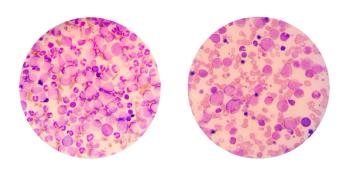
The case study, which showed prolonged disease control achieved with gilteritinib in a previously-treated patient with AML with an inv(2)(p23q13) translocation, indicates that gilteritinib can also be used as an anaplastic lymphoma kinase (ALK) inhibitor.

Viet Le, PA-C, Intermountain Health, gives insights into the benefits cardio-renal-metabolic care models provide for patients in need.
The Center on Health Equity & Access focuses on addressing disparities in health care access, exploring innovative solutions, policies, and research to improve health equity across diverse populations.

Navdeep Tangri, MD, PhD, FRCP, University of Manitoba, speaks to the value of population health strategies in clinical approaches to care delivery for patients with chronic kidney disease (CKD).

A recent study evaluates the dosing, safety, and efficacy of telaglenastat and azacytidine to treat advanced myelodysplastic syndromes (MDS), with promising results.

By attending multiple sclerosis (MS) support group meetings, getting to know members, and sharing their drug-company–sponsored meals, an author delves into the group’s culture and determination to resist being pigeonholed.

New findings show that undocumented Latinx immigrants, who make up 7% of the US population, face significant challenges in accessing health care due to uninsurance, limited access to care, language barriers, and fears surrounding their immigration status.

Patients aged 2-21 receiving apitegromab showed clinically meaningful motor function improvements, with a favorable safety profile consistent with long-term data, as Scholar Rock prepares for US and EU regulatory submissions in Q1 2025.

Research further shows a significant association between patients with psoriasis and an increased incidence of obstructive sleep apnea (OSA).

Seth Southwick, MHA, Intermountain Health, discusses in detail the power of leveraging community partnerships and advanced data analytic systems to optimize kidney care.

Amidst ambiguous international guidelines for first-line treatment of opioid use disorder, a new population-based study sheds light on the benefits of methadone vs buprenorphine/naloxone for holding off treatment discontinuation.

Artificial intelligence can revolutionize drug discovery by expediting development, reducing costs, and improving treatment options, but addressing its limitations is crucial for future success.

Miriam Godwin, CMMI, National Kidney Foundation, touches on the gaps in kidney care that public policy can address, as well as the importance of thinking about the long-term benefits of value-based care.

Access Has Improved for Diverse Patients Needing Umbilical Cord Blood Transplant, but Disparities Remain
Published: | Updated:
Despite advancements in umbilical cord blood transplants, social determinants of health, such as poverty and public insurance, continue to impact outcomes, underscoring the need for equitable access to lifesaving treatments.

Many talks at the Association of Cancer Care Centers (ACCC) 41st National Oncology Conference advocated for the adoption of culturally relevant care, the leveraging of community partnerships, and community engagement to build better trust with patients and improve outcomes.

The study showed that having pre-existing leukopenia and more favorable performance status was associated with a higher risk of rash.

Investigators say adding RNA interference (RNAi) therapy to current treatment modalities may improve outcomes in patients with acute myeloid leukemia (AML) with internal tandem duplication in the fms-like tyrosine kinase 3 (FLT3) gene.

At CHEST 2024, Cesar Davila-Chapa, MD, University of Nebraska Medical Center, brings awareness to the racial disparities demonstrated in his investigation of idiopathic pulmonary fibrosis (IPF) hospitalizations and outcomes.

The progress made to mitigate the opioid use crisis still pales in comparison with the crucial effort needed to address it, especially in regard to accessing medication.

Full-time caregivers to loved one's with Alzheimer disease or other dementias could earn over $100,000 annually if they were compensated for their time and responsibilities.

Financial toxicity and patient and staff wellness were well explored at the Association of Cancer Care Centers (ACCC) 41st National Oncology Conference, serving as the focal point of multiple posters and presentations.
Advertisement
Advertisement
Trending on AJMC
1
FDA Expands Finerenone Approval to CKD Associated With Type 1 Diabetes
2
Across the US, Obesity Care Still Lacks an Owner
3
GLP-1 Receptor Agonists Cut Ascites, Mortality in MASH
4
Twice-Yearly CD19 Therapy Targets MG Root Cause: Richard Nowak, MD, MS
5