






Policy
Latest News
Advertisement
Latest Videos






Shorts

1:02
Health Plan Policies Can Expand Access to Pharmacy-Based Contraceptive Care: Sally Rafie, PharmD
3 months ago
by
Sally Rafie, PharmD(+1 more)

0:44
Why You Should Be Getting a 12-Month Supply of Birth Control: Sally Rafie, PharmD
3 months ago
by
Sally Rafie, PharmD(+1 more)

0:39
How States Are Increasing Access to Contraception: Sally Rafie, PharmD
3 months ago
by
Sally Rafie, PharmD(+1 more)

0:54
Advocacy Is Not a Solo Endeavor: Rose Gerber, MS
4 months ago
by
Maggie L. Shaw(+1 more)
2:13
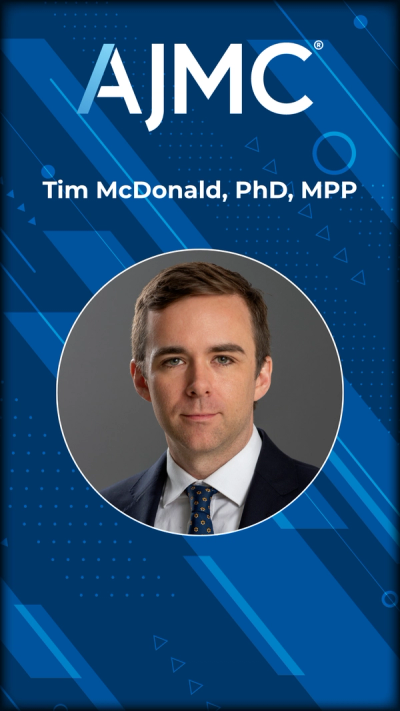
Study Finds Minimal Shifts in Primary Care Selection Following Benefit Design Changes: Tim McDonald, PhD, MPP
4 months ago
by
Brooke McCormick(+1 more)

1:33
Consumer Inertia, Information Gaps Contribute to Inefficiency in Health Care Markets: Bryan E. Dowd, PhD
4 months ago
by
Brooke McCormick(+1 more)

0:52
The State of Specialty Pharmacy Is Changing Fast
5 months ago
by
Laura Joszt, MA(+1 more)

0:53
Community Oncology Advocacy Difficult, but Not Impossible: Kathy Oubre, MS
5 months ago
by
Maggie L. Shaw(+1 more)

2:02
Managed Care Experts Return to Music City for AMCP 2026: Susan Cantrell
5 months ago
by
Brooke McCormick(+1 more)

0:45
ADAPs Providing HIV Drugs Face Budget Crisis Across the Country: Lindsey Dawson, MA
6 months ago
by
Julia Bonavitacola(+1 more)
Podcasts






Advertisement
More News

A large UK cohort study found atopic dermatitis raises the risk of shingles by 28%, with the steepest risk in severe disease and younger adults.

July AJMC author Anuraag R. Kansal, PhD, explains how metastatic cancer diagnoses drive Medicaid spending and why earlier screening could lower costs.

Moderna’s mRNA flu vaccine receives FDA approval after phase 3 data showed improved efficacy compared with standard flu vaccines.

CANN says the revised pilot reflects stakeholder input and aims to address accountability challenges in the more than $100 billion 340B program.

The former deputy surgeon general takes over an agency that has lacked permanent leadership since Susan Monarez, PhD, was ousted.

The accreditation body targets sourcing, testing, and marketing practices, as the FDA advisory panel recommends expanding access to compounded peptides.

Peter Forsberg, MD, discusses referral pathways, payer barriers, and expanding access to CAR T-cell and bispecific therapies.

The researchers of this study warn a mismatch could deepen care gaps for LGBTQ+ patients in restrictive states.

FAQs address Cyclospora recovery, high-risk populations, antibiotic use, C. difficile risk, and CDC/FDA outbreak response.

The Pharmacy Compounding Advisory Committee narrowly recommended BPC-157, KPV, TB-500, MOTS-c, Semax, and epitalon for the 503A Bulks List.

Researchers say the Trump administration has quietly shut down most Agency for Healthcare Research and Quality grantmaking, halting 100+ safety studies.

A federal judge heard arguments over whether CMS unlawfully narrowed the Medicaid work requirement exemption for medically frail beneficiaries.

The FDA's push for faster, more diverse trials misses the real fix: experts say AI simulation and readability, not red tape, close the gap.

Anosheh Afghahi, MD, explains how integrated health technologies can improve clinical trial matching, efficiency, and equity.
A July AJMC study found metastatic cancer diagnoses significantly increase Medicaid spending, highlighting the potential budget benefits of earlier detection.

New cancer drugs reached patients fastest, but overall access timelines remained lengthy across the US, France, Germany, and Switzerland.

Integrated specialty pharmacies have EHR access, faster prior authorizations, and built-in monitoring, Brooke Looney, PharmD, CSP, highlighted.
Anosheh Afghahi, MD, discusses biomarker testing, trial matching technology, and community-academic partnerships to improve enrollment.

Lack of stable reimbursement is negatively impacting clinical dermatological decisions, said Jane M. Grant-Kels, MD, FAAD.

June delivered 5 FDA firsts; FDA panel weighs peptide access; dermatology absorbs PA costs; Trump sets tariff timeline; digital QI trims LDL-C.

The Pharmacy Compounding Advisory Committee meets July 23-24 to discuss whether pharmacies may dispense BPC-157, TB-500, and 5 other peptides.

Dermatologists spend 13 hours weekly on prior authorization as health plans tout an 11% reduction in requests.

Trump said imported generic drugs will face no tariff for 2 years starting August 1, then a 100% rate in 2028 and 200% in 2029, extending his trade fight to the drugs most Americans actually take.

Public health groups sued the FDA, alleging its e-cigarette enforcement guidance violates federal tobacco law and risks youth nicotine addiction.

CMS proposes major Medicare reforms to ACOs, physician pay, and MIPS reporting, aiming to reward outcomes over service volume by 2029.
Advertisement
Advertisement
Trending on AJMC
1
Delayed Dupilumab Raises Asthma Costs 32%: Nicola Hanania, MD
2
Regorafenib Prescribing in Advanced GIST Deviates From Guidelines
3
Which Antibiotics Raise C. Diff Risk Most? Jason Pogue, PharmD
4
A Patient-Centered Reconstruction of 340B in Oncology: Transparency, Equity, and Site-of-Care Accountability
5