

Sonia T. Oskouei, PharmD, BCMAS, DPLA, navigates the impact of the VOLTAIRE-X study, the only published switching study for adalimumab, on biosimilar uptake.
Sonia T. Oskouei, PharmD, BCMAS, DPLA, navigates the impact of the VOLTAIRE-X study, the only published switching study for adalimumab, on biosimilar uptake.
Dr Noble, MD provides and overview of the treatment landscape surrounding ILD, specifically examining IPF, PPF, and SSc-ILD antifibrotic therapy.
Dr Paul Noble, MD discusses updates and changes in ATS-directed guidelines for the treatment of ILD.

Dr Agarwal provides a deep dive into the use of nonsteroidal mineralocorticoid receptor antagonists in CKD therapy.
Dr Feldman concludes the treatment landscape overview by discussing glycemic control, SGLT2 inhibitors, and other important management techniques.
Dr Millie Das, MD opens a discussion surrounding updates regarding non-small cell lung cancer (NSCLC) as presented at the 2022 World Conference on Lung Cancer (WCLC).
Carl Schmid and Lynne H. Milgram, MD, MBA, CPE, conclude with sharing ideas that can provide more substantial access to PrEP and battle unmet needs in PrEP management.

Drs Palella Jr and Milgram explains the disconnect between PrEP and patient education and comments on how to fix it.
Carl Schmid and Dr Milgram discusses the disparities in education and access to PrEP in the patient populations that need these medications the most.
Dr Uppal outlines population health management strategies directed to improve access to care and treatment management for patients with heart failure.
Dr Murillo navigates cost-saving strategies for heart failure treatment by emphasizing collaborative care between specialists and frontline primacy care teams.
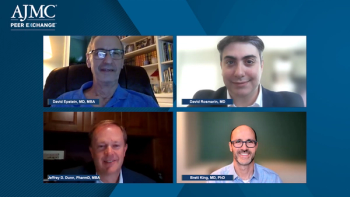
Navigating payer and provider considerations to ensure optimal care management for vitiligo.
A variety of treatment options for vitiligo are explored by Drs Dunn, Rosmarin, and King.
Drs Agarwal and Pitt begin an overview of the CKD treatment landscape, beginning with the importance of blood pressure management.
Jeffrey Feldman, MD, describes the treatment goals for patients with CKD.
Lynne H. Milgram, MD, MBA, CPE, speaks about the USPSTF Grade A recommendation for injectable cabotegravir and how it could affect emerging agents in the future.
Dr Milgram focuses on the cost-effectiveness of cabotegravir as a long-acting injectable PrEP therapy and how providers and payers use data and real-world evidence to create PrEP policies.
The impact of SGLT2 inhibitors in heart failure treatment is highlighted by the EMPEROR-Preserved and EMPEROR-Reduced trials.
Jaime Murillo, MD, outlines payer utilization management strategies identified by the PARADIGM-HF study.
Key opinion leaders discuss how diagnosing vitiligo can lead to myriad treatment options.
The panel of experts address the economic burden of vitiligo from payer and provider perspectives.
Paul Sapia, MHA, acknowledges the underdiagnosis in CKD and explains how payers can incentivize screening going forward.
Dr Rajiv Agarwal explains the screening process for patients with CKD, including those who are asymptomatic.
Experts discuss improving outcomes for patients with heart failure through appropriate and timely switches to ARN inhibitors.
The panel explores clinical evaluations, such as the PROVE-HF study and PARADIGM-HF trial.
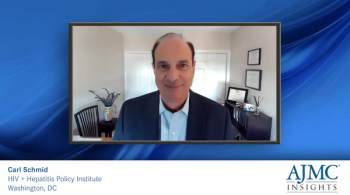
Frank J. Palella Jr, MD, and Carl Schmid continue the discussion of patient selection for long-acting injectable PrEP and its cost effectiveness in comparison with other PrEP modalities.

Dr Lynne H. Milgram starts the conversation on choosing the right candidate for long-acting injectable PrEP, as well as how findings show it is cost effective.
Dr Dunn leads a discussion outlining frontline therapies for the treatment of vitiligo.
Comorbidities and disease states associated with vitiligo are explored by a panel of key opinion leaders.
Jeffrey Feldman, MD, details the clinical burden of CKD management, and Bertram Pitt, MD, discusses the impact CKD can have on patients at risk for cardiovascular disease.