

Paul Sapia, MHA, explains the economic burden of treating chronic kidney disease.
Paul Sapia, MHA, explains the economic burden of treating chronic kidney disease.
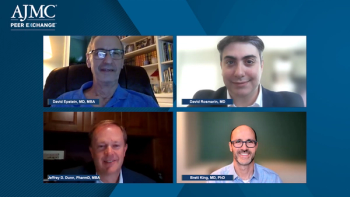
David Epstein, MD, MBA, an independent consultant, gives an overview of payer considerations surrounding vitiligo.
Vitiligo’s effects on clinical burden and patient quality of life are addressed by Brett King, MD, PhD, and David Rosmarin, MD.
A clinician, advocate, and payer provide their expert knowledge on the multiple modalities of PrEP therapy and how some can be more beneficial than others.
Frank J. Palella, Jr discusses cabotegravir, a recently approved injectable PrEP medication, that was test in the HTPN 083 and -084 trials.
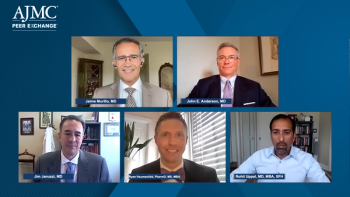
Jaime Murillo, MD, shares insight on the significance of early use of American College of Cardiology treatment guidelines to manage total cost of care for patients with heart failure.
Rohit Uppal, MD, MBA, SFH, outlines unique treatment strategies for various ejection fraction types in the presence of comorbidities.
Drs Feldman and Agarwal consider the health disparities commonly seen with patients that have CKD and their impact in the treatment landscape.
Paul Sapia, MHA, focuses on the gaps in care that are seen within CKD treatment.
Drs Kaddis and Alboustani conclude with their thoughts on contracting considerations for branded Humira in 2023, as well as what impact an interchangeable biosimilar could have in the future.
Dr Oskouei explains the indications for adalimumab and the impact of their extrapolation, as well as differences among adalimumab products.
An expert authority explains the treatment selection process for a patient, as well as the different ways to administer PrEP.
Lynne H. Milgram, MD, MBA, CPE, iterates the importance of PrEP as an HIV prevention tactic and how walk away and fill rates are evaluated.
Dr Januzzi analyzes preventive approaches for patients with pre-heart failure, including comorbidity considerations and preliminary testing.
David Rosmarin, MD, discusses the prevalence and incidence of vitiligo across a diverse patient population.
A panel of experts open a discussion surrounding vitiligo, including the definition and nature of the disease.
Edward Arrowsmith, MD, concludes with his thoughts on developing therapies and how they are implemented into clinical pathways for NSCLC treatment.
Dr Arrowsmith discusses the role immune checkpoint inhibitors play in NSCLC therapy, both as monotherapy and in combination therapy.
Dr Feldman describes the populations that are most at risk of developing CKD.
Jeffrey Feldman, MD, and Rajiv Agarwal, MD, MS, provide an overview of chronic kidney disease (CKD) and its prevalence.
Dr Palella Jr highlights how clinicians support patient access to PrEP and what his experiences have shown him about patient adherence with the available oral therapies.
Carl Schmid, an HIV/PrEP advocate, provides an overview of PrEP therapy; Frank J. Palella Jr, MD, a clinician focused on HIV and infectious disease, delves into the diagnostic process.
Kanwal Raghav, MD, MBBS, provides his closing insights, with a focus on HER2-targeted therapy uptake in metastatic colorectal cancer.
HER2+ targeted therapy outcomes are evaluated, particularly when combined with prior or subsequent chemotherapy.
Dr Haumschild leads an overview of updates to ACC guidelines directing treatment of patients with heart failure.
Drs Uppal and Januzzi explore benefits of population health programs for treating chronic conditions associated with heart failure.
Drs Oskouei and Alboustani discuss implications of multiple biosimilars for adalimumab and how indications are extrapolated for a biosimilar.
Drs Atheer Kaddis and Mariam Alboustani delve into biosimilar conversion programs, including switching policies for interchangeability.
Kanwal Raghav, MD, MBBS, references several HER2 clinical trials, each presenting unique drug combinations to address metastatic colorectal cancer.
Kanwal Raghav, MD, MBB, examines unmet needs in next-generation sequencing and barriers to coverage in this metastatic colorectal cancer discussion.