
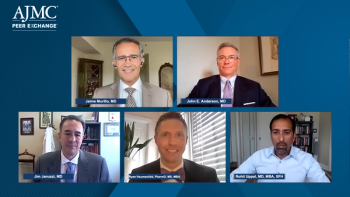
Panelists discuss treatment for heart failure in the presence of comorbid disease impacting payer considerations.
Panelists discuss treatment for heart failure in the presence of comorbid disease impacting payer considerations.
Ryan Haumschild, PharmD, MS, MBA, leads a conversation regarding value statements and their alignment with cost-effective care.
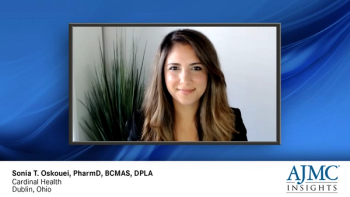
Dr Sonia T. Oskouei focuses on automatic substitution in both the pharmacy setting and in patients’ health plans.
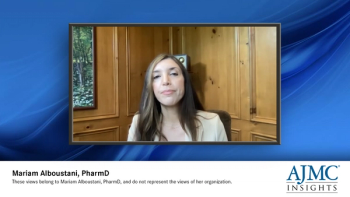
Mariam Alboustani, PharmD, discusses the one published example of a switching study and the implications of interchangeability for pharmacists, as well as payers.
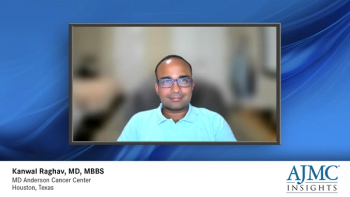
Kanwal Raghav, MD, MBBS, discusses appropriate candidates for HER2 testing and current utilization strategies for biomarker testing in mCRC.
Testing prioritization and frequency are highlighted in Dr Ciombor’s final insights for this HER2 biomarker focus.
Drs Kaddis and Oskouei define interchangeable biosimilars, their FDA requirements, and switching studies.
Atheer Kaddis, PharmD, and Sonia T. Oskouei, PharmD, BCMAS, DPLA, provide an overview of biosimilars and the preparation for future launches on the horizon.
Jim Januzzi, MD, outlines a multitude of drug treatment options for heart failure revolving around patient ejection fraction (EF) status.
A panel of medical experts open a discussion surrounding heart failure and its prevalence in health care.
Dr Ciombor provides her insight on determining appropriate testing strategies for patients with metastatic colorectal cancer.
In his final thoughts, Dr Haumschild outlines opportunities for next-generation sequencing in treatment for metastatic colorectal cancer.
Dr Haumschild aligns payer considerations with molecular testing and biomarker application for treatment of patients with mCRC.
Our experts conclude with their final thoughts on the future of NSCLC treatment.
Three medical professionals recommend educational needs for both payers and providers within the NSCLC treatment landscape.
Drs Sabari and Spira comment on the use KRAS inhibitors in both frontline and combination therapies.
Dr Kristen Ciombor discusses utilization of biomarkers and molecular testing in the treatment of patients with CRC.
The panel concludes by offering key takeaways for viewers and listeners on ILD therapy.
The panel participants relay unmet needs they have found when treating ILD, and discuss promising therapy developments that could improve the treatment landscape.
Dr Dietrich discusses patients acquiring and providers managing resistance to KRAS inhibition.
Alexander Spira, MD, PhD, FACP, and Joshua Sabari, MD, detail possible therapeutic options for KRAS-mutated NSCLC, focusing on adagrasib and treating brain metastases.
Dr Kristen Ciombor explores clinical impacts during the treatment of patients with metastatic or nonmetastatic colorectal cancer.
Ryan Haumschild, PharmD, MS, MBA, reviews risk factors for colorectal cancer, including social determinants and at-risk demographics.

Our experts conclude by interpreting ways to better educate both payers and providers on PDTs.
Diana Brixner, RPh, PhD, comments on how incorporating value-based pilot programs would impact her decision-making with PDT coverage as a payer.
Dr Sabari highlights typical outcomes for patients with NSCLC vs KRAS G12C-mutated NSCLC, as well as challenges associated with targeted treatments.
Martin Dietrich, MD, PhD, explains what KRAS G12C mutations in NSCLC are and how common they are within the NSCLC landscape.
Drs Podesta and Brixner discuss possible ways to improve access to PDTs for every party involved—patient, payer, and provider.
Two medical experts relay their ideas on how to better improve the payer-provider relationship surrounding PDT use.
Daniel Culver, DO, details how COVID-19 has impacted the treatment of ILD.