
Opinion|Videos|November 3, 2026
First-Line Vitiligo Treatment: Topical JAK Inhibitors and Phototherapy
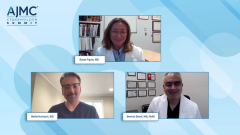
Topical JAK inhibitors, phototherapy, and combination strategies now anchor first-line vitiligo treatment. Drs. Desai and Hamzavi compare their approaches and the evidence shaping how aggressively they treat localized disease.
Advertisement
Episodes in this series
In "First-Line Vitiligo Treatment: Topical JAK Inhibitors and Phototherapy," our experts compare notes on first-line treatment, from topical JAK inhibitors to phototherapy.
Dr. Desai opens the treatment discussion by describing topical JAK inhibitor therapy as his default first-line option for localized vitiligo, whether the disease is stable or unstable, noting his own involvement in the studies that supported its approval. He calls it the only FDA-approved topical therapy for repigmenting non-segmental vitiligo, with particularly strong efficacy on the head and neck, and cites up-to-two-year data showing some patients continue responding well past six months of treatment. Because the topical is limited to one sixty-gram tube per month in the United States, he caps its use at roughly ten percent body-surface area and layers in other therapies for any remaining involvement.
Combination therapy is central to his approach. He and Dr. Taylor discuss phototherapy and the eczema laser, which Dr. Desai uses routinely alongside topical JAK inhibitors despite label language cautioning against combining topical ruxolitinib with artificial UV light. He argues that widespread data now show narrowband UVB and the eczema laser do not raise skin-cancer risk, though he still limits light exposure for patients with a melanoma history.
Dr. Hamzavi describes a similar first-line preference for JAK inhibitors when access and age allow, followed by calcineurin inhibitors as second line, agents he says are effective but greasier, harder to apply, and more prone to a burning sensation. Ultra-potent topical steroids, used on alternate days, serve as his third line when cost blocks access to the first two options. He counsels patients up front that visible repigmentation can take three to six months, and he adds phototherapy early when possible, since it roughly doubles both the proportion of patients who respond and the speed of repigmentation once treatment begins.
Up next, in "Long-Term Topical Steroid Use in Vitiligo: Safety Concerns," Dr. Hamzavi examines the risks that come with long-term topical steroid use.
This video was supported independently by Pfizer.
Advertisement
Related to this article

Invivyd presented preclinical IDWeek 2026 data on VMS063, an investigational antibody that neutralized B3 and D8 measles variants in vitro.

Sphingolipid profiles in plasma and breath condensate differed between IPF and f-HP and tracked with disease severity, CHEST 2026 data show.

The FDA granted accelerated approval to the first plasmid DNA-based immunotherapy for adults with recurrent respiratory papillomatosis (RRP).
October's FDA approvals included the introduction of 5 non-oncology treatment options across specialties.

A phase 4 study found 69% of patients with OAB were consistently satisfied with vibegron at 12 months, with exploratory persistence of 59.8%.

Initial frontal fibrosing alopecia treatment was largely similar in Black and White patients, though tetracycline use was higher in Black patients.

From taladegib to admilparant and inhaled treprostinil, here are the key 2026 advances in idiopathic pulmonary fibrosis care.
HHS does not intend to take enforcement action against pharmacies compounding BPC-157 and 5 other unapproved peptides if they meet 10 conditions.
Advertisement
Advertisement
Trending on AJMC
1
As Employers Pull Back on GLP-1s, Andel and Novo Offer a Workaround
2
Enlicitide LDL-C Lowering Holds Across Risk Levels Up to 2 Years
3
FDA Approves First Plasmid DNA-Based Immunotherapy for Adults With RRP
4
Occasional Cannabis Use Linked to 40% Higher Odds of Stroke
5