

Vitiligo begins with oxidative stress and ends with CD8-positive T cells destroying melanocytes that cannot easily regenerate. Dr. Hamzavi maps the autoimmune cascade and the disease associations clinicians should watch for.
President of the American Academy of Dermatology
Vitiligo begins with oxidative stress and ends with CD8-positive T cells destroying melanocytes that cannot easily regenerate. Dr. Hamzavi maps the autoimmune cascade and the disease associations clinicians should watch for.
Vitiligo affects up to two percent of the population worldwide, yet payers and patients alike still misread it as cosmetic. Dr. Desai explains the autoimmune biology, systemic comorbidities, and diagnostic pitfalls that argue otherwise.
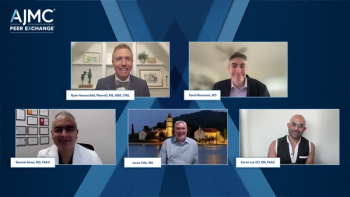
As the panel closes, cautious optimism prevails: new mechanisms, expanding access, and a deeper understanding of vitiligo's psychosocial toll all point toward meaningful, if gradual, progress for patients across every skin tone.
Will vitiligo treatment settle into a clear sequencing algorithm, or remain individualized? Dr. Lal and Jason weigh the absence of clinical guidelines against the reality that professional consensus typically lags well behind new therapies.
With three oral JAK inhibitors advancing through Phase 3 trials, Dr. Rosmarin calls for consensus guidelines, while Dr. Desai details the practical advocacy, documentation, and coverage groundwork needed to get patients access.
As treatment options multiply, Jason and Dr. Lal weigh localized versus systemic delivery against body surface area, safety, and real-world absorption risk, questioning whether cost alone should keep topical therapy as the default choice.
Black box warnings drawn from a distinct, higher-risk population have colored perceptions of JAK inhibitor safety in vitiligo. Dr. Desai argues for contextualized risk communication, appropriate screening, and recognizing genuine comorbidity benefits.
Two years of ruxolitinib cream data show continued gains rather than a plateau, and Dr. Rosmarin argues that early initiation prevents a repigmentation gap patients never fully close. Jason explains why payers remain cautious regardless.
Repigmentation unfolds over months, not weeks, and Dr. Desai argues that managing expectations from the first visit matters as much as the medication itself. Dr. Lal adds that clinical-trial consistency rarely mirrors real-world adherence.
Without a head-to-head trial, comparing JAK inhibitors requires care. Dr. Rosmarin urges matching time points before drawing conclusions, while Jason explains how payers weigh incomplete data, member churn, and documentation when building coverage exceptions.
Age shapes more than pill-swallowing ability in pediatric vitiligo care. Dr. Lal explains how activity level, motivation, and comorbidities guide the choice between topical and oral therapy in younger patients, more than any single BSA threshold.
Trial enrollment ranges become policy boundaries in practice. Dr. Desai explains how broader BSA inclusion supports patients with widespread disease, while Jason describes how narrower criteria let payers manage the bulk of cases through topical therapy first.
Different inclusion criteria, different primary endpoints, different eras of the pandemic: Dr. Rosmarin unpacks why the pivotal topical and oral vitiligo trials resist direct comparison, and where a meta-analysis might still help.
A payer's view of competing JAK mechanisms centers less on selectivity data and more on price. Jason explains why a wide cost gap between topical and oral therapies will likely keep the topical option as first-line policy.
JAK inhibitors mark a genuine shift in vitiligo care, offering stabilization before repigmentation and color that matches native skin tone. Dr. Desai and Dr. Lal weigh their promise against the patience and compliance they demand.
From corticosteroids and calcineurin inhibitors to phototherapy, oral supplements, and emerging JAK inhibitors, Dr. Rosmarin walks through a treatment landscape defined by combination therapy rather than any single modality working alone.
A recent JAMA Dermatology analysis refines mild-moderate-severe cutoffs for vitiligo, but Dr. Desai and Dr. Lal argue that psychosocial burden, anatomic site, and cultural context can make even limited disease profoundly severe for patients.
Halting progression early is more achievable than reversing it. Dr. Rosmarin details how oral steroids control active disease while payer barriers persist for later-line options, and Jason explains how benefit design and step therapy shape access.
Body surface area offers a simple starting point for gauging vitiligo severity, but the panel argues that phenotype markers, anatomic location, and disease activity carry more weight in shaping treatment urgency than surface area alone.
Vitiligo's clinical course splits into segmental and non-segmental presentations, each carrying a distinct prognosis. Dr. Rosmarin explains how disease activity, not just extent, determines whether a patient needs urgent intervention or watchful monitoring.

Seemal R Desai, MD, FAAD, president of the American Academy of Dermatology (AAD), emphasized his commitment to enhancing the upcoming 2025 annual meeting by introducing new events and expanding educational offerings to better serve and engage members.