
Opinion|Videos|September 10, 2026
Counseling Vitiligo Patients on Time to Repigmentation
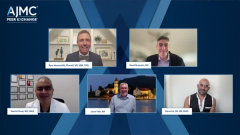
Repigmentation unfolds over months, not weeks, and Dr. Desai argues that managing expectations from the first visit matters as much as the medication itself. Dr. Lal adds that clinical-trial consistency rarely mirrors real-world adherence.
Advertisement
Episodes in this series
In "Counseling Vitiligo Patients on Time to Repigmentation," Dr. Desai and Dr. Lal discuss how to counsel patients through the long wait for repigmentation.
Dr. Desai emphasizes that every vitiligo conversation must set realistic timelines from the outset, since meaningful results unfold over months to years rather than single visits. Fast repigmentation is the rare exception, he says, making tools like standardized photography and consistently encouraging follow-up visits essential to keeping patients engaged and compliant. He normalizes treatment breaks when patients grow tired or financially burdened, reassuring them that pausing for three to six months before restarting is reasonable, unlike cases of unstable, actively progressing disease, which he calls a vitiligo emergency requiring continuous treatment. He describes seeing seven vitiligo patients in a single day, each conversation entirely different in tone and content, underscoring how individualized this disease's management must be. From the first visit, he tells patients plainly that he cannot cure them, only help manage their condition, distinguishing that framing clearly from a cure to avoid disappointing expectations shaped by other clinicians.
Dr. Lal then discusses a post-hoc analysis of the topical cream studies showing that ninety-six percent of enrolled patients had more extensive disease, twenty-seven percent had progressive disease, and twenty-five percent had both, yet repigmentation rates stayed consistent across these subgroups. He cautions that clinical trial participants generally do better than real-world patients because of closer monitoring and more reliable follow-up. Interestingly, he notes that progressive disease patients sometimes respond best, since their more active immune systems are being treated at an opportune moment. He stresses that consistent treatment adherence, not the trial's best-case conditions, drives real-world outcomes, and recommends evaluating response at four to six months rather than two to three, giving patients a full year before calling any treatment a failure.
The next episode in this series, "Long-Term Vitiligo Data Makes the Case for Early Treatment," features Dr. Rosmarin presenting two years of durability data and its case for early treatment.
Advertisement
Related to this article

Cross-ancestry GWAS of more than 1.8 million people flags SERPINA1, SMAD3, and other bronchiectasis targets shared with COPD and chronic bronchitis.

The FDA approved bepirovirsen, the first antisense oligonucleotide for chronic hepatitis B, offering a new treatment with functional cure potential.
ALIS added to azithromycin and ethambutol raised culture conversion in new MAC lung disease, with rare resistance, in an ENCORE analysis at IDWeek 2026.
Insmed’s once-daily TPIP prodrug shows sustained lung vasodilation in PAH and PH-ILD, improving walk distance and other key measures.

Cosibelimab received an NCCN Category 2A preferred designation for locally advanced CSCC, supported by durable responses and low immune toxicity.

ASPEN links green sputum to neutrophils and exacerbations; brensocatib (DPP1) lowers purulence, while meta-analysis supports fewer flare-ups in bronchiectasis.

Experts at CHEST 2026 urge pulmonologists to keep lung cancer in mind for younger patients who never smoked, to order screening and biomarker testing themselves, and to advocate for patients' access to care.

Phentolamine 0.75% (Ryzumvi) won FDA approval for presbyopia based on the phase 3 VEGA-2 and VEGA-3 trials.
Advertisement
Advertisement
Trending on AJMC
1
Awareness Gaps Drive Narcolepsy, IH Delays: Logan Schneider, MD
2
Extension Studies in TPIP Show Promise in PAH, PH-ILD
3
Administrative Burden Keeps Clinicians From Bedside: Amy Morris, MD
4
International Panel Agrees on Framework for Tapering Psoriasis Biologics
5