
Opinion|Videos|September 10, 2026
Cross-Trial Vitiligo Data: What Payers Can and Can't Compare
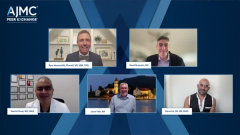
Without a head-to-head trial, comparing JAK inhibitors requires care. Dr. Rosmarin urges matching time points before drawing conclusions, while Jason explains how payers weigh incomplete data, member churn, and documentation when building coverage exceptions.
Advertisement
Episodes in this series
In "Cross-Trial Vitiligo Data: What Payers Can and Can't Compare," the panel compares cross-trial data directly and discusses what conclusions payers can and cannot draw from it.
Dr. Haumschild opens by citing topline response-rate figures from each pivotal trial, drawing attention to how the topical and oral programs were measured at different primary timepoints. Dr. Rosmarin insists that any comparison must align the same timepoint, arguing it is inappropriate to compare twenty-four-week data against a full year. Looking specifically at one-year data, he reports roughly fifty percent of ruxolitinib-treated patients achieving T-VASI50 and F-VASI75, compared to about twenty-five percent for upadacitinib, while cautioning that these come from different populations studied at different times.
He finds the ruxolitinib Phase 2 program particularly informative, since it allowed treatment on up to twenty percent body surface area, even in patients with more extensive disease overall, and produced results nearly matching the Phase 3 program. He wonders aloud whether payers might eventually permit off-label ruxolitinib use up to twenty percent BSA given that Phase 2 precedent, and whether monthly tube-quantity limits might also loosen to support it. He remains hopeful that a future meta-analysis comparing the five-to-ten percent overlap population across trials could sharpen understanding of relative efficacy, while maintaining that topical and systemic therapies likely serve largely separate patient populations rather than directly competing ones.
Jason responds that head-to-head comparisons, while ideal, are rarely available, forcing payers to work with what exists. Citing a fifteen percent annual member churn rate, he explains payers' reluctance to invest heavily in expensive early therapy for members likely to switch plans within a few years. Policy tends to follow the most conservative reading of FDA labeling, he says, though a documented, individualized medical exception pathway always remains available for patients whose presentation warrants it.
Our next episode, "Counseling Vitiligo Patients on Time to Repigmentation," features Dr. Desai and Dr. Lal on counseling patients through the long wait for repigmentation.
Advertisement
Related to this article

Cross-ancestry GWAS of more than 1.8 million people flags SERPINA1, SMAD3, and other bronchiectasis targets shared with COPD and chronic bronchitis.

The FDA approved bepirovirsen, the first antisense oligonucleotide for chronic hepatitis B, offering a new treatment with functional cure potential.
ALIS added to azithromycin and ethambutol raised culture conversion in new MAC lung disease, with rare resistance, in an ENCORE analysis at IDWeek 2026.

Insmed’s once-daily TPIP prodrug shows sustained lung vasodilation in PAH and PH-ILD, improving walk distance and other key measures.

Cosibelimab received an NCCN Category 2A preferred designation for locally advanced CSCC, supported by durable responses and low immune toxicity.

ASPEN links green sputum to neutrophils and exacerbations; brensocatib (DPP1) lowers purulence, while meta-analysis supports fewer flare-ups in bronchiectasis.

Experts at CHEST 2026 urge pulmonologists to keep lung cancer in mind for younger patients who never smoked, to order screening and biomarker testing themselves, and to advocate for patients' access to care.

Phentolamine 0.75% (Ryzumvi) won FDA approval for presbyopia based on the phase 3 VEGA-2 and VEGA-3 trials.
Advertisement
Advertisement
Trending on AJMC
1
Awareness Gaps Drive Narcolepsy, IH Delays: Logan Schneider, MD
2
Extension Studies in TPIP Show Promise in PAH, PH-ILD
3
Administrative Burden Keeps Clinicians From Bedside: Amy Morris, MD
4
International Panel Agrees on Framework for Tapering Psoriasis Biologics
5