

Opinion|Videos|February 25, 2026
Perioperative Immunotherapy Advances: Insights From CheckMate-77T and KEYNOTE-671
How EGFR, ALK and PD-L1 biomarker results shape neoadjuvant lung cancer therapy—and what CheckMate-816 means for survival.
Advertisement
Episodes in this series
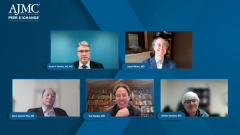
In Perioperative Immunotherapy Advances: Insights from CheckMate-77T and KEYNOTE-671, our panel delves into the following critical questions:
Now let’s move to the CheckMate-77T trial, which evaluated perioperative treatment of resectable NSCLC with the use of neoadjuvant nivolumab plus chemotherapy followed by adjuvant nivolumab after surgery. What was the trial design and key efficacy and safety data?
What did the KEYNOTE-671 trial demonstrate with pembrolizumab in terms of safety and efficacy?
Led by the moderator, the lung cancer experts discuss the phase 3 CheckMate 77T trial, which evaluated a perioperative strategy in patients with resectable stage IIA–IIIB NSCLC, randomizing them to neoadjuvant nivolumab plus platinum-doublet chemotherapy followed by surgery and adjuvant nivolumab versus neoadjuvant chemotherapy and surgery alone. The addition of nivolumab significantly improved event-free survival and increased pathologic complete response rates, supporting the benefit of extending immunotherapy into the adjuvant setting to reduce recurrence risk. Importantly, surgical feasibility was maintained, and the incidence of grade 3–4 treatment-related adverse events was comparable between arms, with immune-related toxicities consistent with the known safety profile of nivolumab. These results built upon prior neoadjuvant-only data by demonstrating that a perioperative immunotherapy approach can provide more durable disease control.
Similarly, the phase 3 KEYNOTE-671 trial showed that perioperative pembrolizumab combined with neoadjuvant chemotherapy followed by adjuvant pembrolizumab significantly improved event-free survival and pathologic complete response compared with chemotherapy alone in patients with resectable stage II–IIIB NSCLC. The safety profile was manageable, without new perioperative safety signals or meaningful delays to surgery, and immune-related adverse events were consistent with prior pembrolizumab experience. Together, these trials support perioperative chemoimmunotherapy as a new standard for appropriately selected patients with resectable NSCLC.
Throughout the conversation, the experts provide a comprehensive reflection on the field and the factors that may shape how clinicians approach care moving forward.
Our next episode, Integrating Durvalumab and Atezolizumab Into Neoadjuvant and Adjuvant Sequencing Strategies for Resectable NSCLC, the experts explore additional therapies for patients.
Advertisement
Related to this article
Michael Mina, MD, PhD, explains which adverse events drove VYD2311's edge vs an mRNA COVID-19 vaccine and who may benefit most.

Panelists engaged in a debate regarding using complement inhibitors in geographic atrophy, gauging public sentiment with a deciding vote.

A session at AAO 2026 highlighted how big data and minimally invasive glaucoma surgery (MIGS) could be utilized to help patients receive peak care.

Medicaid expansion was associated with lower colorectal cancer mortality, with the largest reductions in Hispanic patients and stage IV disease.
Cepheid's Connie Savor, MD, MBA, explains where its 13-pathogen respiratory panel fits in diagnostic stewardship and antibiotic decisions.

The FDA approves atezolizumab with a fluoropyrimidine and oxaliplatin as adjuvant therapy for stage III dMMR colon cancer based on the ATOMIC trial.
Michael Mina, MD, PhD, explains Invivyd's accelerated approval path for VYD2311 and how it could change the timing of COVID-19 protection.

Biomarker-driven care is advancing in mantle cell lymphoma, though cost and infrastructure limit access in community oncology, according to a review.
Advertisement
Advertisement
Trending on AJMC
1
MASH Fibrosis, Not Resolution, Predicts Mortality: Zobair Younossi, MD
2
5 Things to Know if Retatrutide Is Classified as a Biologic
3
Full POLARGO Data Reveal OS, Safety for Pola-R-GemOx in DLBCL
4
FDA Approves Once-Monthly Subcutaneous Olanzapine for Schizophrenia
5