

Conference Coverage
about 4 hours ago
Olanzapine/Samidorphan Tied to Longer Persistence in Schizophreniaabout 6 hours ago
IDWeek 2026 Recap: Care Gaps and Value of Collaborationabout 7 hours ago
Povetacicept Cuts Proteinuria in IgAN: Richard Lafayette, MD, FACPabout 9 hours ago
PCOC Recap: Seven Leaders Define Patient-Centered Oncology Careabout 11 hours ago
Payers, Health Systems Should Look Beyond the ICU: CHEST 2026 RecapLatest Content
Oct 27, 2026 | Feature
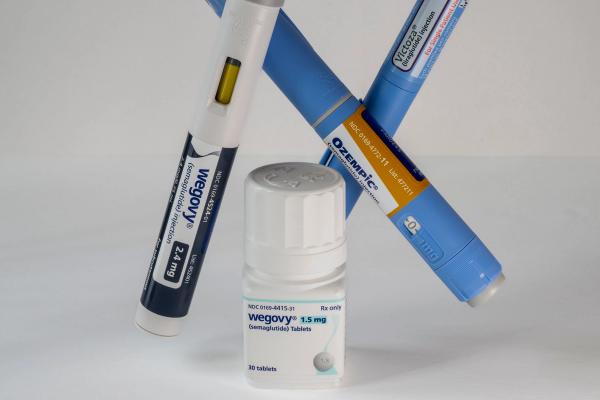
The DTC GLP-1 Boom Solved Access. Can It Solve Adherence?

Olanzapine/Samidorphan Tied to Longer Persistence in Schizophrenia
Oct 27, 2026

Review Finds MS Is an Underrecognized Cause of Acute Vertigo
Oct 27, 2026

FAQ: Ways Health Plans Can Assist Members in Medicaid Redetermination
Oct 27, 2026

Youths With Depression Face Higher Odds of Prescription Drug Misuse
Oct 27, 2026






Advertisement
Shorts

0:40
Choosing CLL Therapy With Patients: Adam S. Kittai, MD
5 days ago
by
Adam S. Kittai, MD(+1 more)
1:20
A Decade of Evolution in Managed Care Pharmacy: Susan Cantrell
7 days ago
by
Brooke McCormick(+1 more)

0:51
The Hidden Cost of Indefinite Myeloma Treatment: Prerna Mewawalla, MD
7 days ago
by
Prerna Mewawalla, MD(+1 more)

0:45
Helping Cancer Patients Thrive Throughout Survivorship
12 days ago
by
Bhavana (Tina) Bhatnagar, DO(+1 more)
0:33
Understanding Anemia and Dosing Control With Rusfertide
13 days ago
by
Andrew Kuykendall, MD(+1 more)

0:43
A Surprising Find on Vaccine Adverse Effects: Michael Mina, MD, PhD
14 days ago
by
Sabrina McCrear(+1 more)

0:48
The Word That Changes Parent Minds
14 days ago
by
Sabrina McCrear(+1 more)

1:41
CGDB vs EMR Overall Survival in Small Cell Lung Cancer: Dan Lin, PhD
15 days ago
by
Connie Buckmaster(+1 more)
0:30
Bispecifics Benefits Still Uncertain in CLL: Kerry Rogers, MD
15 days ago
by
Kerry Rogers, MD(+1 more)
0:48
The Implications of Value-Based Pricing in CMS: Peter Neumann, ScD
19 days ago
by
Connie Buckmaster(+1 more)
Personalized Expert Insights
Have a question about bispecific therapy? Connect with experts who have the answers.

Center on Health Equity & Access
Start seeing what truly shapes access and learn how you can redefine the landscape.

Stay Ahead of Clinical and Policy Change
AJMC's e-newsletter features payer-focused insights across priority disease areas.












Center on Health Equity & Access






Advertisement
All News
Advertisement

University of Virginia Health is tracking efgartigimod durability in generalized myasthenia gravis and how pharmacists help patients get past barriers.

NCCN now lists the brain-penetrant ROS1 inhibitor after progression on earlier TKIs, including as a preferred option for symptomatic brain progression.

KFF finds 4.3 million Medicare beneficiaries will lose their MA or stand-alone Part D plans at the end of 2026, as PDP options keep shrinking.

Anti-CGRP antibody exposure near conception was linked to higher spontaneous abortion risk in migraine, while propranolol was not, a cohort study found.

Combined MRI and ultrasound raised sensitivity for bowel and uterosacral ligament endometriosis but reduced specificity in a prospective cohort study.

The Cambridge Multimorbidity Score was adapted to ICD-10 and demonstrated better predictive performance than the Charlson Comorbidity Index in German primary care claims data.

Asia-Pacific Delphi Consensus updates alopecia areata clinical guidelines for trichoscopy, SALT Score severity, and first-line JAK inhibitors.

Biomarker testing, treatment sequencing, drug delivery, and rural access barriers were examined during an IVBM event in Salt Lake City.

Experts spot idiopathic hypersomnia when tests miss it, using symptom scales, targeted questions, wearables, and shared treatment choices.

At an AJMC® Stakeholder Interchange in New York, New York, leukemia specialists agreed that menin inhibitors fill a real gap in relapsed/refractory acute myeloid leukemia, but said that slow molecular testing, formulary rules, and thin community infrastructure still determine which patients get them and how fast.
Advertisement
Advertisement
Trending on AJMC
1
Higher Ropeginterferon Alfa-2b Exposure Liked to JAK2 Reductions in ET
2
FDA Approves Talazoparib Plus Enzalutamide for HRR-Mutated mHSPC
3
Medicare Plan Terminations Hit 4.3 Million as Part D Market Shrinks
4
From Functional to True Hepatitis B Cure: Jordan Feld, MD, MPH
5