
Opinion|Videos|September 14, 2026
Anti-Amyloid Therapy in Practice: Comparing Agents and Managing ARIA Safely
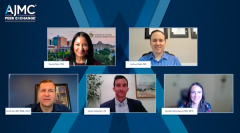
Led by the moderator, the panelists discussed how lecanemab and donanemab differ in trial efficacy, dosing schedule, and administration route, and how ARIA — while it can sound alarming to patients — is usually asymptomatic and stratifiable by a patient's APOE4 status, requiring the most intensive MRI monitoring in the first six months of treatment before rates drop off.
Advertisement
Episodes in this series
In 'Anti-Amyloid Therapy in Practice: Comparing Agents and Managing ARIA Safely,' the expert neurology and primary care panelists examined the following critical questions:
Lecanemab and donanemab are both approved for early Alzheimer's disease (AD) but have meaningful clinical differences. What do health systems need to understand about each agent when thinking about formulary design, and what has been your experience?
Amyloid-related imaging abnormalities (ARIA) is the safety signal that drives most of the clinical complexity around these therapies. What is ARIA, how serious can it be, and what does the monitoring protocol require from a health system and infusion program?
Led by the moderator, the panelists discussed how lecanemab and donanemab differ in trial efficacy, dosing schedule, and administration route, and how ARIA — while it can sound alarming to patients — is usually asymptomatic and stratifiable by a patient's APOE4 status, requiring the most intensive MRI monitoring in the first six months of treatment before rates drop off.
Throughout the conversation, the experts provided a comprehensive reflection on the field and the factors that may shape how clinicians approach care moving forward.
Our next episode, 'Building the Curriculum: Training Clinicians to Prescribe Anti-Amyloid Therapy,' further explores Alzheimer's disease, highlighting the competencies and credentialing pathways clinicians need to safely prescribe or co-manage patients on anti-amyloid therapy.
Advertisement
Related to this article

Hiddo Heerspink, PhD, discusses finerenone data in type 1 diabetes, FSGS and IgA nephropathy, and open questions on sequencing CKD therapies.

Insmed launches once-daily brensocatib in Japan, the country's only approved treatment for noncystic fibrosis bronchiectasis.
Advertisement
Advertisement
Trending on AJMC
1
Awareness Gaps Drive Narcolepsy, IH Delays: Logan Schneider, MD
2
Merck, Moderna Cancer Vaccine Cuts Melanoma Recurrence Risk by 42%
3
Povetacicept Cuts Proteinuria by 52% in IgA Nephropathy at Week 36
4
Nephrologists Weigh Wins, Losses From 5 Years of Value-Based Kidney Care
5