
Opinion|Videos|September 7, 2026
Expanding Access to Anti-Amyloid Therapy: The Case for Primary Care Prescribing
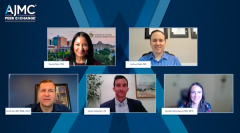
Led by the moderator, the expert neurology and primary care panelists examined the realities of delivering Alzheimer's disease care where specialists are scarce.
Advertisement
Episodes in this series
This episode, titled 'Expanding Access to Anti-Amyloid Therapy: The Case for Primary Care Prescribing,' featured panelists discussing the following critical questions:
How are you enhancing Alzheimer's disease care in a rural setting?
What role do you see for primary care providers in utilizing anti-amyloid therapies?
Led by the moderator, the expert neurology and primary care panelists examined the realities of delivering Alzheimer's disease care where specialists are scarce. Joshua Oaks, MD, described practicing in a rural area with 6- to 12-month neurology wait times, and shared how a patient's insistence led him to research and independently initiate amyloid-targeted therapy himself, illustrating how a motivated primary care physician can close access gaps. Dylan Gallacher, PA-C, and Jennifer Woodward, MD, MPH, argued that with streamlined diagnostic handoffs and adequate team-based support, primary care is capable of taking on anti-amyloid prescribing, drawing a parallel to how diabetes and heart failure management evolved into a shared specialist and primary care model. Scott Joy, MD, MBA, FACP, cautioned that infusion logistics, prior authorization staffing, and the need for navigators, pharmacists, and social workers remain real barriers, with both Dr. Joy and Dr. Woodward calling for updated reimbursement codes to support the added time primary care must invest.
Throughout the conversation, the experts provided a comprehensive reflection on the field and the factors that may shape how clinicians approach care moving forward.
In the next episode, 'Symptomatic Therapy Meets Disease Modification: Mapping the Alzheimer's Treatment Continuum,' panelists continue their discussion on Alzheimer's disease and highlight where lifestyle interventions, symptomatic medications such as cholinesterase inhibitors and memantine, and disease-modifying therapies fit together across the treatment continuum.
Advertisement
Related to this article

ASPEN links green sputum to neutrophils and exacerbations; brensocatib (DPP1) lowers purulence, while meta-analysis supports fewer flare-ups in bronchiectasis.

Experts at CHEST 2026 urge pulmonologists to keep lung cancer in mind for younger patients who never smoked, to order screening and biomarker testing themselves, and to advocate for patients' access to care.

Phentolamine 0.75% (Ryzumvi) won FDA approval for presbyopia based on the phase 3 VEGA-2 and VEGA-3 trials.

Satralizumab, a first-in-class IL-6 receptor inhibitor, was approved for adults with thyroid eye disease based on the phase 3 SatraGO program.

A higher PNR is associated with lower odds of MASLD and advanced liver fibrosis, but further studies are needed to validate findings.

Speakers at CHEST 2026 walked through the first CHEST guideline for non-CF adult bronchiectasis, including which preventive therapy to start first.

SaTScan detects an acute HCV outbreak cluster in California, showing the potential of automated surveillance, though real-time testing is needed.

Genetic analysis finds 125 loci shared by insomnia and CRP, with Mendelian randomization favoring an effect from insomnia liability to inflammation.
Advertisement
Advertisement
Trending on AJMC
1
FDA Approves Ryzumvi for Presbyopia, Expanding its Label
2
Patents, Rebates, and a Policy Patchwork Keep Inhalers Costly, Panelists Say
3
How Flatiron Health’s Network Chief Is Building the Future For (and With) Community Oncology Practices
4
CHEST: The Face of Lung Cancer Has Changed, but Screening, Care Have Gaps
5