
Featuring findings from the KEYNOTE-177, ARAURA, ASPEN, and CITYSCAPE trials, and new results from MURANO.

Maggie is a lead editor for The American Journal of Managed Care® (AJMC®), AJMC.com, and Evidence-Based Oncology, for which she produces written, video, and podcast content covering several disease states. She joined AJMC® in 2019, and she has been with AJMC®’s parent company, MJH Life Sciences®, since 2014, when she started as a copy editor.
She has a BA in English from Penn State University. You can connect with Maggie on LinkedIn.
Featuring findings from the KEYNOTE-177, ARAURA, ASPEN, and CITYSCAPE trials, and new results from MURANO.
“We’ve had advancements, but we need to go faster,” said ASCO President Howard A. "Skip" Burris III, MD, as he stressed the importance of advancing therapies for better patient outcomes by addressing obstacles to patients’ care. “Access to care, access to clinical trials, and access to information are really key.”

Because male breast cancer is such a rare disease, few strides have been made that convey advantages in its detection, incidence, and mortality. Most treatment guidelines have been extracted from studies performed among female patients.

Stress cardiomyopathy has presented in more patients with acute coronary syndrome during the coronavirus disease 2019 pandemic, despite none having positive antibody results for the virus, compared with several measured periods before the pandemic.

To effectively end the HIV epidemic in the United States, combination strategies should be tailored according to need, backed by evidence-based interventions, and scaled according to location, report study results in The Lancet HIV.

Breast cancer diagnosed in the year following a negative result after a mammogram has now been associated with an increase in mortality compared with breast cancer detected at a screening, report JAMA Network Open study results.

There was a greater incidence of heart disease, both cardiovascular and ischemic, among women and men who survived childhood maltreatment, according to study results published Monday from the United Kingdom.

A pair of late-breaking abstracts presented during AIDS 2020, this year’s virtual meeting of the International AIDS Society, detailed the effects that the coronavirus disease 2019 pandemic has had on trends in at-risk sexual behaviors and pre-exposure prophylaxis (PrEP) use, both in the United States and in Australia, due to shelter-in-place orders and social distancing.
Palliative medicine consultations for heart failure were linked with increased rates of advance directives being included in a patient’s electronic medical record, according to study results published this month in Journal of Maine Medical Center.
According to the World Health Organization, self-care is “the ability of individuals, families, and communities to promote and maintain health, prevent disease, and cope with illness with or without the support of a health care provider.”
“We need to maintain our focus on key populations to ensure that we're focusing on each and every key population—from men who have sex with men to sex workers to people who inject drugs to our trans community—to make sure every single community has access to both prevention and treatment services and that we’re meeting each of the community members where they are to ensure that they can achieve viral suppression,” said Ambassador Deborah Birx, MD, on day 4 of AIDS 2020.
A panel of experts came together on day 3 of AIDS 2020 to discuss their experiences with telehealth during the first few months of the coronavirus disease 2019 (COVID-19) pandemic in attempting to not disrupt the continuum of care for their patients with HIV, those at risk for the virus, and their care teams, as well as to give advice moving forward in continuing to offer the service.

Smoking history can both increase the risk of cancer and create a hypoxic environment within the body, leading to poor outcomes, including less-effective treatment, among patients who undergo radiotherapy.
Individuals with severe mental illness are notoriously difficult to engage and retain in HIV care due to fragmented health care policies and systems that perpetuate stigma, according to an electronic poster presentation today at AIDS 2020.
“We find ourselves in a very unusual situation, and now is a good time for me to lay some common denominator principles that I think can be applicable to many, if not all, the countries beset with an HIV epidemic,” said Anthony Fauci, MD, director of the National Institute of Allergy and Infectious Diseases, in a special live session on day 2 of AIDS 2020.
Higher rates of HIV can be seen within specific communities, particularly minority communities, along with a systematic bias taking place in policy and medical settings, noted Greg Millet, vice president at the Foundation for AIDS Research (amFAR) and director of amFAR’s Public Policy Office, on day 2 of AIDS 2020.
The US government's Ending the HIV Epidemic: A Plan for America, is founded on 4 pillars: diagnose, treat, prevent, respond. The goals of this program are to reduce new HIV infections by 75% by 2025 and by 90% by 2030.
Following implementation of several major provisions of the Affordable Care Act (ACA) in 2014, health insurance coverage for HIV-positive individuals increased, leading to sustained viral suppression in some instances and improving their ability to increase access to often life-saving services.
This year marks the 23rd International AIDS Conference, AIDS 2020, and the 30th anniversary of the first conference held in San Francisco in 1990 amid the first few years of the AIDS epidemic. The theme for this year’s conference is “Resilience,” and that certainly holds true for this global undertaking, which is happening in a virtual setting for the first time in the conference’s history due to the current coronavirus disease 2019 pandemic.

Previously associated with elite controller status, having an inherent low viral reservoir is now possibly linked to individuals with chronic HIV infection who initiate treatment with antiretrovirals more than 6 months after becoming infected.

At the 5-year mark, half of patients hospitalized for heart failure typically have died. These study authors set out to determine if a wearable sensor can better predict who is at risk for heart failure so that the risk can be modified.

Despite ongoing disparities in the use of health care services among races/ethnicities and ages, as well as by insurance status, African American women with advanced breast cancer benefited the most following implementation of the Affordable Care Act in states that chose to expand Medicaid coverage.

Plant-based diets have been shown to improve both ejection fraction and cardiac remodeling in patients with heart failure among a recent review of interventional studies, thereby lessening the adverse effects of obesity, hyperlipidemia, hypertension, and diabetes.

The FDA approved Phesgo (pertuzumab/trastuzumab/hyaluronidase-zzxf) as a subcutaneous (SC) treatment for adult patients with metastatic human epidermal growth factor receptor 2 (HER2)-positive breast cancer or early-stage HER-2 positive disease. The treatment combines 2 monoclonal antibodies in a single SC injection.

Being on an antiretroviral treatment (ART) regimen of tenofovir disoproxil fumarate/emtricitabine may lower the risk of HIV-positive individuals contracting coronavirus disease 2019 (COVID-19).

Results from an analysis of patients with breast cancer and coronavirus disease 2019 (COVID-19), from Institut Curie hospitals in France, show that mortality is determined more by comorbidities than previous or current treatment for the cancer.
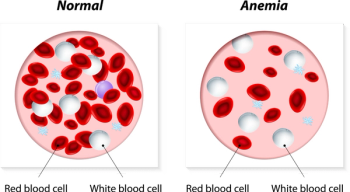
A worse prognosis in patients with heart failure has possibly been linked to having at least 1 anemic episode, or a drop in hemoglobin levels, as was a greater risk of hospitalization and mortality.

Individuals who self-report a problem with drugs, especially opioids, are more likely to have uncontrolled HIV, to not be adherent to antiretroviral therapy, and to engage less in primary care for their infection but more in risky behaviors, including sharing needles and having multiple concurrent sexual partners.

Elevated insulin levels, which have been shown to promote tumor growth, due to insulin resistance may be linked to a greater prevalence of invasive breast cancer among black women compared with white women.

Compared with amoxicillin, azithromycin was shown in a recent study to increase both the relative and absolute risks of cardiovascular death among patients being treated on an outpatient basis.