



Dermatology
Latest News
Advertisement
Latest Videos
Advertisement
More News

Matthew Mansh, MD, FAAD, discusses inequities faced by transgender and gender-diverse patient populations.

The findings are based on survey responses and focus group transcripts reflecting the experiences of nine patients.

Past research shows no meaningfully increased risk of venous thromboembolism (VTE) in patients with more common chronic inflammatory skin diseases.

The incidence rate of melanoma in situ (MIS) has sharply risen since 1975.

Findings are based on a retrospective, multicenter study carried out in Spain.

Lower socioeconomic status (SES) was not linked with hidradenitis suppurativa (HS) in minors, but was associated with obesity and tobacco use in this age group.

The approval makes the drug Europe’s first and only interleukin (IL)-17A inhibitor approved for the condition.

With surveys demonstrating that care disparities in atopic dermatitis (AD) may exist among pediatric patients with the chronic skin condition, investigators set out to determine AD’s prevalence by sociodemographic subgroup.

Although acne and rosacea treatment are widely covered, treatment for other types of skin conditions are not covered at all, a new report shows.

Melinda Gooderham, MD, MSc, FRCPC, Peterborough Regional Health Centre in Ontario, Canada, discusses recent trials and studies that have been conducted on emerging therapies for patients with atopic dermatitis.

The study, using an adaption of the World Health Organization framework for adherence, characterized strategies built into the design, conduct, and reporting of melanoma trials, offering insights into potential improvements for skin self-examination in research.

Common treatments for acne are known to be unsafe for pregnant women, but alternative treatments exist that are safe for use; however, actual treatment patterns within this patient population are unclear.

Reducing disparities in the treatment of atopic dermatitis (AD) was the focus of a session of the final day of the Revolutionizing Atopic Dermatitis 2023 conference.

Andy Blauvelt, MD, MBA, president of Oregon Medical Research Center, discusses the use of systemic therapies vs biologics and why adherence is so important when treating patients with atopic dermatitis (AD).

Larry Eichenfield, MD, professor of dermatology and pediatrics and vice chair of the Department of Dermatology at the University of California San Diego School of Medicine and chief of pediatric and adolescent dermatology at Rady Children's Hospital San Diego, discusses the use of different treatments and biologics for atopic dermatitis (AD) in infants, which he presented at the Revolutionizing Atopic Dermatitis conference.

A panel held at Revolutionizing Atopic Dermatitis 2023 reviewed therapies to expect within the next year for the treatment of atopic dermatitis (AD) as well as investigational therapies currently undergoing trials.

Melinda Gooderham, MSc, MD, FRCPC, dermatologist and clinical researcher at Peterborough Regional Health Centre, discusses emerging topical and biologic therapies expected to be available later this year.

Robert Sidbury, MD, MPH, professor of pediatrics at Seattle Children's Hospital, discusses treatment approaches for atopic dermatitis of the face in infancy, which he presented at the Revolutionizing Atopic Dermatitis conference.
Janus kinase (JAK) and phosphodiesterase-4 (PDE-4) inhibitors were primary topics covered at the third symposium at the Revolutionizing Atopic Dermatitis fifth annual conference.
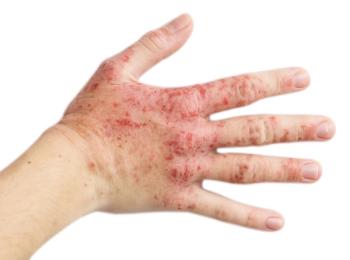
In posters presented at the Revolutionizing Atopic Dermatitis conference, ruxolitinib cream was found to be both safe and effective in treating atopic dermatitis (AD).

Jonathan Silverberg, MD, PhD, MPH, professor of dermatology and director of clinical research and patch testing at the George Washington University School of Medicine and Health Sciences, and chair of the Revolutionizing Atopic Dermatitis (RAD) conference, discusses some of the symposia and events at this year's conference that he is looking forward to the most.

In this phase 1 trial, researchers sought to investigate whether ruxolitinib cream is safe and tolerable in children aged 2 to 17 with atopic dermatitis (AD).

The Revolutionizing Atopic Dermatitis conference, set to begin on April 29 in Washington, DC, promises to offer symposia on emerging therapies and new insights into treating atopic dermatitis (AD).

A new literature review underscores how acne is separate from acne vulgaris and requires a comprehensive clinical approach unique from those for active acne.
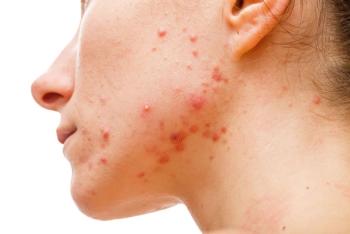
Although many topical or systemic antibiotics exist to treat acne vulgaris, the common inflammatory skin disease is not fully treatable.
Advertisement
Advertisement
Trending on AJMC
1
MASH Fibrosis, Not Resolution, Predicts Mortality: Zobair Younossi, MD
2
FDA Approves Once-Monthly Subcutaneous Olanzapine for Schizophrenia
3
Multi-Hit TP53 Linked to Shorter Survival in Chronic-Phase MPN Cohorts
4
Navigating GLP-1 Access & Prior Authorizations: Amanda Velazquez, MD
5