
Prior authorizations can affect both health system operations and worsen physician burnout.
Prior authorizations can affect both health system operations and worsen physician burnout.

Social inequalities significantly impact COPD and PH outcomes, highlighting the need for systemic health care solutions, emphasizes Lucilla Piccari, MD, PhD, Hospital del Mar.

Hope Krebill of the Masonic Cancer Alliance at the University of Kansas Medical Center outlines patient navigation models that improve outcomes and reduce missed appointments.

The MajesTEC-5 trial shows teclistamab's impressive efficacy in achieving MRD-negative status in newly diagnosed transplant-eligible patients, explains Marc S. Raab, MD, PhD.

Research reveals strong connections between muscle strength and cognitive function in patients with COPD, highlighting the potential for rehabilitation strategies.
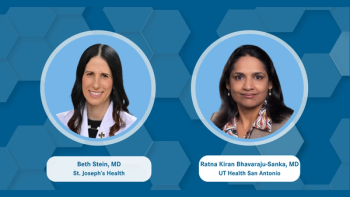
Ratna Kiran Bhavaraju-Sanka, MD, and Beth Stein, MD, explore how understanding MG subtypes and patient characteristics enhances targeted therapy and personalized treatment.

Research exploring protective mechanical ventilation strategies for acute respiratory distress syndrome was presented at the ERS Congress by Luca Menga, MD, University of Toronto.

Michaela Nuttal, MS, explores the complex culture of smoking among nurses, highlighting challenges and motivations for quitting within health care settings.

Nerandomilast for idiopathic pulmonary fibrosis potentially improves survival and slows disease progression, explains Justin Oldham, MD, PhD, MS, FIBRONEER steering committee member.

Laxmi Patel urges rural hospitals to align leadership early and build logic models to show how transformation funds can drive access, equity, and sustainability.

David Mitchell, PharmD, MBA, UC Davis, shares how collaboration between health systems and manufacturers is transforming patient access and outcomes for rare disease treatments.

Emma Guttman, MD, PhD, discusses the promising potential of rocatinlimab in targeting the OX40-OX40 ligand pathway for atopic dermatitis treatment.

Expanding community-based cancer services brings advanced treatments closer to home and addresses social determinants of health, says Kathy Oubre, MS.

Davey Daniel, MD, shares strategies to prevent bias in artificial intelligence (AI) and outlining future opportunities for its adoption in precision oncology.

Christopher Carlin, MBChB, PhD, explores the potential of AI-driven insights to enhance COPD care and identify candidates for biologic therapy.
Hope Krebill, MSW, BSN, RN, discusses the challenges rural hospitals face in delivering therapies like CAR T and bispecifics.

Research reveals that a high-fruit diet may protect women's lung function from air pollution, according to Pimpika Kaewsri, MSc.
Laxmi Patel explains how providers can meet potential new Medicaid documentation requirements without harming patient access.

Integrating these care services can enhance patient QOL and address unmet needs in serious respiratory illnesses, explains Natasha Smallwood, BMedSci, MBBS, MSc, Monash University.

Oncology stakeholders are navigating new policies as the landscape quickly evolves, according to Ryan Haumschild, PharmD, MS, MBA, CPEL.

The executive order signed in July features policy shifts that would put states in charge of funding for encampment sweeps, among other policy shifts.
Laxmi Patel urges hospitals to embed financial screening and simplify payment options to prepare for rising levels of uninsured patients from Medicaid changes.

Teamwork between primary care providers and oncologists helps patients get needed care and achieve better results, according to Mark Fendrick, MD, at the Patient-Centered Oncology Care (PCOC) conference.
Kathy Oubre, MS, discusses opportunities for community cancer centers to expand service lines without sacrificing care quality.
Broader integration of artificial intelligence (AI) in precision oncology depends on overcoming barriers such as trust and transparency, according to Davey Daniel, MD.

Patients with hematologic malignancies face ongoing survivorship challenges as providers struggle to coordinate care, according to Brian Koffman, MDCM, DCFP, FCFP, DABFP, MSEd.

Consolidation in oncology is creating access and cost challenges, whereas advocacy helps improve patient care and treatment availability, according to Sucharu "Chris" Prakash, MD.

Oncology utilization management often frustrates patients and payers, but collaboration and artificial intelligence can streamline processes and improve care quality, according to Vishnukamal Golla, MD, MPH.

Stacy Knox, PharmD, BCPS, BCACP, DPLA, discusses how centralized pharmacy teams and electronic health record integration streamline prior authorizations, enhance provider efficiency, and offer patients transparent, real-time updates.

Jeremiah J. Duby, PharmD, BCPS, BCCCP, describes supporting pharmacy residents at the University of California (UC), Davis, in his role as a research advisor.