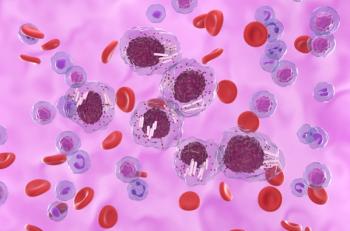
Trastuzumab deruxtecan (T-DXd) was effective in patients with HER2-positive (HER2+) metastatic breast cancer, with no new safety profiles observed.

Trastuzumab deruxtecan (T-DXd) was effective in patients with HER2-positive (HER2+) metastatic breast cancer, with no new safety profiles observed.

Disparities continue in younger patients, raising the need for novel interventions to mitigate challenges associated with younger age at diagnosis.

The work might take long, but cancer advocate and survivor Matthew Zachary drove home the importance of advocacy to continue improving the lives of patients with cancer and provide them better options.

Speakers at the 2024 meeting of ERS—The European Respiratory Society Congress share their favorite parts of the conference.

Matthew Zachary, founder of Stupid Cancer, and keynote speaker at the Patient-Centered Oncology Care® (PCOC) 2024 meeting advocated for addressing provider burnout and mental health, arguing that it is essential for delivering quality patient-centered care.

Lalan Wilfong, MD, senior vice president at Thyme Care, highlights the substantial advantages of patient navigation in enhancing patient outcomes and the need for balancing cost and performance when integrating these services into payment models.

In a session at AIDS 2024, the International AIDS Conference, global leaders and community advocates gathered to discuss why stigma and shame continue to attach themselves to an HIV diagnosis and why policy efforts to overcome both must persist.

Sarah Hogue, PharmD, director of oncology services at St. Luke's Cancer Institute, discusses trends of pharmacists and technicians taking on more clinical responsibilities in oncology, improving patient care, and efficiency.

During the first fireside chat at the Patient-Centered Oncology Care® meeting, Alyssa Schatz, MSW, of National Comprehensive Cancer Network, discussed work being done to improve care for patients with cancer.

Heather Wakelee, MD, Stanford University, discusses the pros and cons of different durations of immunotherapy in non-small cell lung cancer (NSCLC) and the future outlook for patient-specific care.

During ESMO Congress 2024, sessions will focus on hot topics in therapeutic areas, such as antibody-drug conjugates; the latest trial data; health policy; and advances in technology.

Policy changes, such as banning spread pricing and promoting transparency, are necessary to realign the pharmacy benefit manager (PBM) market and ensure that health care resources benefit patients and providers rather than being diverted by middlemen, according to panelists at the Community Oncology Alliance Payer Exchange Summit.

Matthew Smeltzer, PhD, University of Memphis, shares insights into his team's quality-of-care initiative to identify and combat gaps in care for patients with early-stage non–small cell lung cancer (NSCLC).

A new report based on patient focus groups suggests many clinicians can do more to help patients with sickle cell disease (SCD) feel heard and understood.

Speakers at the 2024 World Conference on Lung Cancer discussed the considerations that must go into designing and performing clinical trials in the early-stage lung cancer space, ranging from selecting an end point to empowering participants.

The need for improved collaboration between payers and providers is key to successfully implementing value-based care initiatives that address patient needs, ensure measurable outcomes, and overcome challenges, according to panelists at the Community Oncology Alliance Payer Exchange Summit.

Biomarker testing is critical for determining optimal therapy early in the non–small lung cancer (NSCLC) treatment process, but research shows uneven insurance coverage of these tests and inconsistent uptake in cancer centers.

Klaus Rabe, MD, PhD, chest physician and professor of medicine, University of Kiel, shares the latest clinical discoveries from the BOREAS trial on type 2 inflammation in patients with chronic obstructive pulmonary disease (COPD).

Luca Richeldi, MD, PhD, outlined crucial lessons from recent idiopathic pulmonary fibrosis (IPF) trial failures, advocating for adaptive trial designs, rigorous statistical methods, and a focus on patient-relevant outcomes to enhance future research.

Bellinda King-Kallimanis, PhD, LUNGevity Foundation, reflects on her experiences in patient-focused research to discuss the current state of patient education, the importance of patient advocates, and mediating barriers to health care access.

Lung cancer is tied to tobacco smoking in the public consciousness, but a significant proportion of cases are driven by factors like indoor and outdoor air pollution or ancestral genetic variants.

A panel discussion at the Community Oncology Alliance (COA) Payer Exchange Summit highlighted the tension between state regulation of pharmacy benefit managers (PBMs) and the Employee Retirement Income Security Act (ERISA) preemption, emphasizing the need for reforms to balance employer uniformity with addressing PBM practices.

John Heymach, MD, PhD, The University of Texas MD Anderson Cancer Center, discusses exciting developments in HER2-targeted therapies that he foresees making a difference in the treatment of non–small cell lung cancer (NSCLC).

There are concerns that the negotiated drug prices under the Inflation Reduction Act (IRA) are leading to large provider reimbursement cuts, explained Nick Ferreyros, managing director, Community Oncology Alliance.

Sulthiame demonstrated significant reductions in respiratory pauses and improvements in oxygen levels during sleep, offering hope for patients with obstructive sleep apnea who cannot use continuous positive airway pressure machines.

Panelists at the Community Oncology Alliance Payer Exchange Summit 2024 agreed that overcoming health care challenges will depend heavily on collaboration and active engagement from multiple stakeholders in the policy and regulatory process.

Ana Baramidze, MD, PhD, Todua Clinic, Tbilisi, Georgia, details exciting findings from the EMPOWER-Lung 1 trial regarding cemiplimab and patients with non–small cell lung cancer (NSCLC).

Eva Otter, president of Pulmonary Hypertension Association Europe, discusses the significance of shared decision-making for patients with pulmonary arterial hypertension.

Data presented in the second Presidential Symposium at the 2024 World Conference on Lung Cancer showed encouraging responses to novel agents among patients with HER2-mutated non–small cell lung cancer (NSCLC).

Samyukta Mullangi, MD, MBA, medical director at Thyme Care, explained her excitement to meet with industry leaders, share best practices, and learn about new innovations in oncology care at Patient-Centered Oncology Care® (PCOC) 2024.