






Center on Health Equity & Access
Latest News
Advertisement
Expert Insights
Hear what thought leaders have to share about the Center on Health Equity & Access.
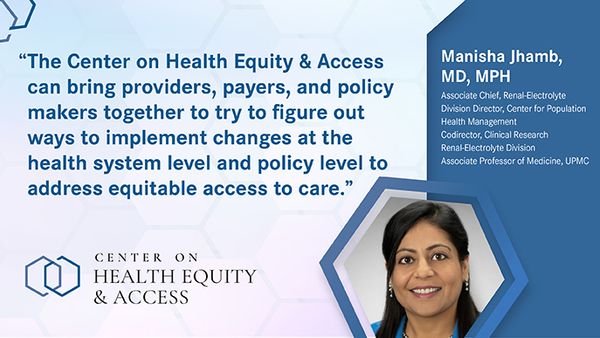
Expert Insights
Hear what thought leaders have to share about the Center on Health Equity & Access.
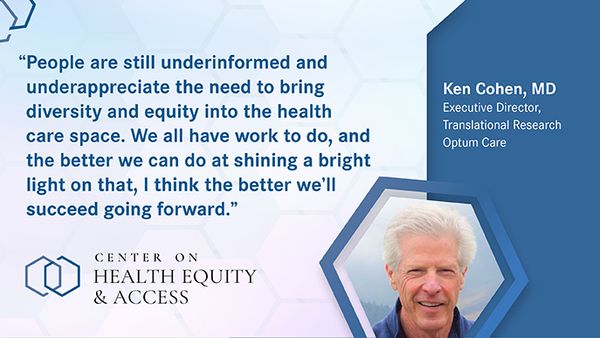
FDA Denies MDMA-Assisted Therapy Despite Promising Trial Results
Leaders respond to the complete response letter issued by the FDA, seeking answers and calling for more progress to aid the veteran community and others experiencing PTSD. Learn more with the full article from AJMC®!
Latest Videos







Advertisement
More News

Confusion around how to verify work hours could leave millions unenrolled after the passing of the One Big Beautiful Bill Act.

A JAMA study found 30-day outpatient follow-up decreases hospital readmissions, especially for patients with heart failure and heart attack.

Young and frequently incarcerated individuals living with HIV require discharge planning and post release support to maintain viral suppression outcomes.

Michael Hassett, MD, MPH, discusses the rise of oral therapeutics in breast cancer care, emphasizing patient support, education, and overcoming financial barriers for better outcomes.

Breast cancer is the most researched disease globally, yet there are still significant gaps in equity and access to care and treatments.

Guideline-directed medical therapy used with remote monitoring can potentially reduce hospitalization in patients with heart failure with ejection fraction.

Experts discuss the evolution of cancer care, emphasizing value-based approaches, precision oncology, and the importance of multidisciplinary collaboration for improved patient outcomes.
A new analysis from Komodo Health pinpointed significant disparities by age and insurance in antibody-drug conjugate (ADC) treatment rates for metastatic breast cancer.

Lisa Taylor-Swanson, PhD, explains how including Indigenous and Hispanic women in conversations around menopause care helps fine-tune interventions.

As open enrollment begins November 1, 2025, millions are signing up under enhanced subsidies that are set to expire at the end of this year.

Individuals with both low incomes and health problems were more likely to gain employment when covered by Medicaid.

Marcus Flores, PharmD, BCPS, BCOP, discusses the vital role of pharmacists in multidisciplinary cancer care, exploring collaboration, patient-centered strategies, and AI.

Innovative payer approaches and holistic support could help expand GLP-1 use and improve obesity care outcomes, experts claimed.

PBM legislation is rising nationwide, which experts emphasize could increase costs and hinder patient care.

Experts at AMCP Nexus 2025 highlighted how real-world data can improve CAR T-cell therapy access and outcomes.

The antiretroviral (ART) regimen Biktarvy showed higher 1-year ART persistence and lower switch rates among people with HIV.

In the midst of a government shutdown, former House Speaker Paul Ryan urges clear policies, AI innovation, and patient-focused solutions to build a sustainable US health care system.
Discover how the Hearing Loss Association of America advocates for hearing loss awareness and hearing health integration through a dialogue with Barbara Kelley, executive director.

Posters presented at AMCP Nexus 2025 found especially low oral HIV PrEP uptake among transgender individuals and those facing insurance challenges.

AI can transform health care by processing vast data, enhancing decision-making, and addressing biases, but needs remain for transparency and human oversight.

Experts at CHEST 2025 highlight rising costs, insurance complexity, and workforce shortages as major barriers to health care access in the US.

New research highlights rising opioid use disorder (OUD) diagnoses among youth, emphasizing the need for improved screenings and mental health support.

National data show adults struggling to afford energy bills face over twice the odds of depression and anxiety.

Panels held throughout the conference emphasized both how far the specialization has come but also how far it has yet to go.

The AMCP Nexus 2025 conference will bring together professionals to discuss drug access and policy, as well as the future of pharmacy.
Advertisement
Advertisement
Trending on AJMC
1
Delayed Dupilumab Raises Asthma Costs 32%: Nicola Hanania, MD
2
Regorafenib Prescribing in Advanced GIST Deviates From Guidelines
3
FDA Expands Finerenone Approval to CKD Associated With Type 1 Diabetes
4
Secondary T-Cell Cancers After CAR T: Rare, Real, and Worth Watching
5