



Center on Health Equity & Access
Latest News

Advertisement
Expert Insights
Hear what thought leaders have to share about the Center on Health Equity & Access.
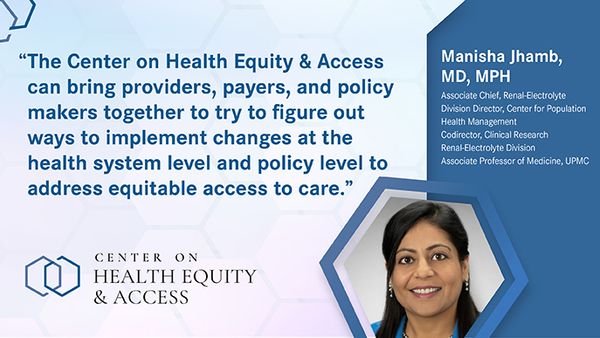
Expert Insights
Hear what thought leaders have to share about the Center on Health Equity & Access.
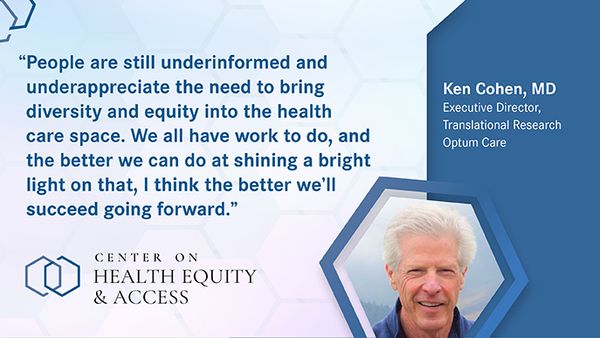
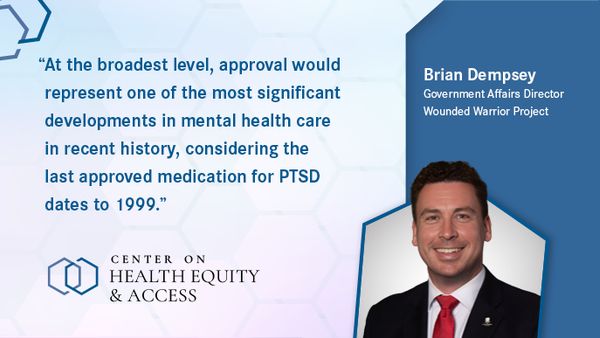
FDA Denies MDMA-Assisted Therapy Despite Promising Trial Results
Leaders respond to the complete response letter issued by the FDA, seeking answers and calling for more progress to aid the veteran community and others experiencing PTSD. Learn more with the full article from AJMC®!
Latest Videos






Advertisement
More News

Data reveal a growing burden of early-onset type 2 diabetes, highlighting disparities and increased cardiometabolic risk

The Rural Health Transformation Program invests $50 billion to enhance health care access and quality in rural America.

This commentary calls for health care systems to deliver equitable care for people living with obesity by addressing weight bias and updating standards in obesity care.

A new study highlights the epidemiological, humanistic, and economic impact of pediatric psoriasis, with findings showing greater challenges in moderate to severe cases.
Ovarian and uterine cancers linked to high body mass index (BMI) have steadily increased among women of reproductive age, with the greatest burden observed in low- and middle-sociodemographic index regions.

In 2025, each issue of Population Health, Equity & Outcomes will feature a profile of a health system leader transforming care in their area of expertise. This issue spotlights a conversation with Marisa Rogers, MD, MPH, chief medical officer at Oak Street Health.

From 2017 to 2023, women were especially underrepresented in trials in arrhythmia, coronary heart disease, acute coronary syndrome, and heart failure.

Adults with food insecurity report higher rates of long COVID and lower recovery, with Supplemental Nutrition Assistance Program (SNAP) participation and employment status affecting these associations.

A new report from the National Alliance calls for data transparency and PBM reform to combat rising care costs, enhance equity, and improve well-being.

Experts discuss innovative strategies to enhance dental care access in underserved Pennsylvania communities, emphasizing collaboration and cultural sensitivity in outreach efforts.

New guidelines and advocacy enhance myasthenia gravis treatment access, promoting proactive management and improved insurance coverage for diverse patient populations.

Despite overall growth in the radiology workforce, the proportion of pediatric radiologists specifically decreased from 2016 to 2023.

Extended hospital stays among Medicare Advantage beneficiaries translated to an estimated 1.8 million additional hospital bed days in 2022.

Disparities in lung cancer biomarker testing show barriers that delay diagnosis and treatment for lower-income patients, according to Sandip P. Patel, MD.

While body mass index (BMI) accurately identified excess adiposity in nearly all children and adolescents with obesity, it failed to detect many of those without obesity who still had excess body fat.

Patients with ovarian cancer who undergo BRCA testing face higher health care resource utilization (HCRU) and costs but are more likely to receive genomically targeted therapies and progress to later lines of treatment (LOT).

Jack Tsai, PhD, MSCP, emphasized that comparing the methods of different jurisdictions can aid decision-making as the new executive order is enacted.

Social determinants of health were associated with a younger age of first hospitalization for heart failure in Black and Hispanic patients when compared with Asian and White patients.

Ovarian cancer deaths remain uneven across age, geography, and racial and ethnic groups, highlighting the need for targeted interventions.

Kristen R. Choi, PhD, PMHNP-BC, FAAN, discussed how the new executive order aimed at addressing homelessness could result in adverse consequences.

Jorge Nieva, MD, explores the challenges of translating biomarker testing into treatment decisions for non–small cell lung cancer (NSCLC), the role of repeat testing in detecting resistance mutations, and the importance of equitable access to molecular diagnostics in value-based care settings.
UPMC Health Plan's Dental Care Management Program enhances oral health access and literacy, focusing on education and community engagement for underserved populations.

There are significant health care disparities in overdose recovery resources, emphasizing the need for better connections between opioid treatment programs and recovery centers.

Patients with chronic obstructive pulmonary disease (COPD) who smoke were less likely to receive tobacco dependence treatment (TDT) if they lived in rural areas or had longer travel times to care, highlighting persistent geographic disparities in access.

A global analysis showed that absolute deaths and disability-adjusted life-years related to smoking-attributable rheumatoid arthritis have continued to rise since 1990.
Advertisement
Advertisement
Trending on AJMC
1
Delayed Dupilumab Raises Asthma Costs 32%: Nicola Hanania, MD
2
Regorafenib Prescribing in Advanced GIST Deviates From Guidelines
3
A Patient-Centered Reconstruction of 340B in Oncology: Transparency, Equity, and Site-of-Care Accountability
4
FDA Expands Finerenone Approval to CKD Associated With Type 1 Diabetes
5