






Clinical
Latest News
Advertisement
Latest Videos





Advertisement
More News

Key opinion leaders discuss the most significant unmet needs in the current treatment landscape for multiple sclerosis.

Key opinion leaders provide a concise overview of the atopic dermatitis (AD) treatment landscape, focusing on the role of topical therapy, and highlight the current unmet needs in AD management.
Casey Butrus, PharmD; Michael Cameron, MD, FAAD, and Brittany Craiglow, MD, address the critical clinical challenges in treating atopic dermatitis (AD) patients and discuss current trends in biologics use for AD.

Researchers have identified a link between psoriasis and the autoimmune diseases hypothyroidism and alopecia areata.

Experts share their biggest takeaways from the European Hematology Association (EHA) 2024 Congress.

Enthusiasm abounded at the recent European Hematology Association 2024 Congress about whether European regulators will begin to consider minimal residual disease (MRD) as an end point.

Atopic dermatitis significantly impairs female patients' sexual function, reproductive desires, and overall quality of life.

The phase 3 GENEr8-1 study demonstrated that valoctocogene roxaparvovec, an AAV5-vectored gene therapy, effectively enabled endogenous FVIII production in adults with severe hemophilia A without developing clinically meaningful FVIII inhibitors.

Patients with stage IV epithelial ovarian cancer (OC) treated with surgery and chemotherapy exhibit the best prognosis.

People receiving hypomethylating agent (HMA) therapy spent 33 more days at home than people receiving anthracycline-based therapy in the first year after diagnosis.

Pfizer’s investigational mini-dystrophin gene therapy, fordadistrogene movaparvovec, did not meet its primary end point of improvement in motor function in ambulatory patients with Duchenne muscular dystrophy (DMD).

Medical experts highlight unmet needs in the PNH treatment landscape and considerations for utilizing eculizumab.
Dr Haumschild continues leading a discussion surrounding management of PNH, emphasizing the impact of complement inhibitors.

Determining the roles that various inflammatory markers and pathways play in lower-risk myelodysplastic syndromes (MDS) could lead to therapies that keep disease progression at bay.

This study provides a comprehensive review of both established and emerging prognostic markers in chronic lymphocytic leukemia (CLL), and their role in predicting disease, treatment response, and overall survival.

Study findings show eculizumab is effective and well tolerated in reducing disease burden in adolescents with refractory anti-acetylcholine receptor antibody–positive generalized myasthenia gravis.

Encouraging trends were seen with osimertinib and platinum-pemetrexed chemotherapy in patients with EGFR-mutated advanced non–small cell lung cancer (NSCLC) in the phase 3 FLAURA2 study.
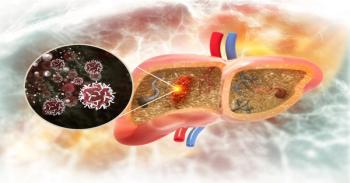
The albumin-bilirubin score is a reliable predictor of treatment response for hepatocellular carcinoma (HCC) after yttrium 90 transarterial radioembolization (TARE).

The treatment regimen not only significantly improved progression-free survival (PFS) for patients with advanced stage classic Hodgkin lymphoma but was also better tolerated compared with a 20-year-old regimen being used.
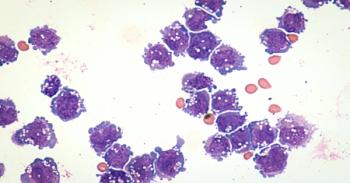
With its recent approvals around the world to treat newly diagnosed and relapsed/refractory diffuse large B-cell lymphoma (DLBCL), the antibody-drug conjugate polatuzumab vedotin is changing regimens for current and future patients, with manageable adverse effects.

A recent review found that benzene exposure due to work may be linked to the development of colorectal cancer.

The late-breaking oral session at the European Hematology Association (EHA) 2024 Congress featured new data from abstracts submitted after the deadline, including both interventional and foundational science.
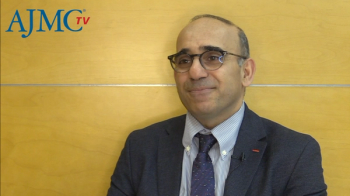
Mohamad Mohty, MD, PhD, of Saint-Antoine Hospital and Sorbonne University, highlights how immunotherapies are offering various effective treatment options for patients with multiple myeloma and improving quality of life for relapsed/refractory patients.
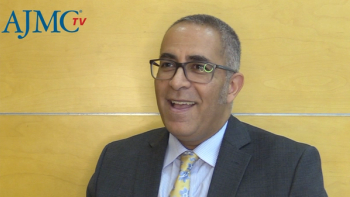
Joseph Mikhael, MD, MEd, FRCPC, FACP, of the International Myeloma Foundation, HonorHealth, and TGen, notes that US physicians have more flexibility when treating patients with early relapsed/refractory multiple myeloma, whereas those in Europe must follow stricter protocols.

At a session of the European Hematology Association 2024 Congress, presenters shared updates from trials of treatment strategies for newly diagnosed multiple myeloma (MM).
Advertisement
Advertisement
Trending on AJMC
1
TrumpRx Launch Brings Savings—and Uncertainty
2
As Cencora Closes With OneOncology, Patton Says Terms Show “Trust”
3
Benefits, Tradeoffs of Medically Integrated Dispensing in Oncology Care: Katherine Tobon, PharmD, BCOP
4
Asundexian Reduces Risk of Stroke Recurrence in Phase 3 OCEANIC-STROKE Trial
5