



Oncology
Latest News
Advertisement
Latest Videos





Advertisement
More News

Aimee Tharaldson, PharmD, a senior clinical consultant in Emerging Therapeutics for Express Scripts, discusses specialty drugs that have recently been approved, and which we will likely see approved in the remainder of the year.

Sean C. Dowdy, MD, chair, division of gynecologic surgery, department of obstetrics and gynecology, Mayo Clinic, discusses identified factors that cause prolonged delays between discovering an improved treatment or practice and the application of it.

Every week, The American Journal of Managed Care® recaps the top managed care news of the week, and you can now listen to it on our podcast, Managed Care Cast.

This week, the top managed care stories included a report that insurance coverage gains are reversing; a deal to lower the cost of Praluent for Express Scripts members; findings that synthetic opioids are playing a bigger role in overdose deaths.

Funding is the biggest challenge scientists and clinical investigators face when trying to find successful therapies to treat advanced bladder cancer, explained Donna Hansel, MD, PhD, of University of California, San Diego, School of Medicine.

Coverage of our peer-reviewed research and news reporting in the healthcare and mainstream press.

Practices increasingly need to use technology to deliver care in an increasingly value-based world, said Charles Saunders, MD, CEO of Integra Connect.

Tisagenlecleucel, sold as Kymriah, has gained its second indication following the FDA's approval of the chimeric antigen receptor T-cell therapy for the treatment of adult patients with relapsed or refractory large B-cell lymphoma, the most common form of non-Hodgkin lymphoma.

The chimeric antigen receptor T-cell therapy tisagenlecleucel has been approved for a second type of blood cancer; the National Institutes of Health has started recruiting individuals for a database that will include data on more than 1 million people; Kansas’ request to impose a 3-year lifetime limit on Medicaid benefits is testing just how open the Trump administration is to allowing states flexibility.

The FDA and the FTC issued 13 warning letters Tuesday to manufacturers, distributors, and retailers for selling e-liquids used in e-cigarettes, or vaping devices, with labeling or advertising that bears stark resemblances to kid-friendly food products, such as juice boxes, candy, or cookies.

Communication is critical in providing integrated, comprehensive care, said Mark Soberman, MD, MBA, FACS, former president of the Association of Community Cancer Centers (ACCC).

CMS has released the first round of reconciliation data from the Oncology Care Model (OCM) bundled payment program. Interestingly, some of the practices that did well were surprised to learn they they’d achieved savings, and some participants were pleased to find out that their level of performance met expectations.

The FDA has granted priority review to Merck’s supplemental Biologics License Application for pembrolizumab (Keytruda) in combination with pemetrexed (Alimta) and platinum chemotherapy as first-line treatment for patients with metastatic nonsquamous non–small cell lung cancer (NSCLC). The FDA is set to make a decision by September 23.

We’ve done a lot of work on quality improvement, such as enhancing recovery, reducing intestinal injury during and after surgery, and reducing infections after surgery, explained William Cliby, MD, consultant, division of gynecologic surgery, department of obstetrics & gynecology, Mayo Clinic.
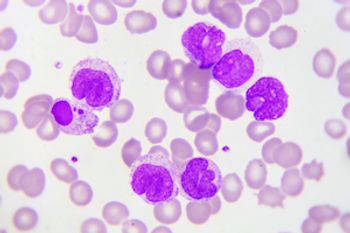
Researchers have identified a new gene that may predispose individuals to develop acute lymphoblastic leukemia (ALL). In addition, variants in the gene can influence patient response to treatment.

Former Ambassador Nancy Brinker, founder of Susan G. Komen, talks about the stigma that used to surround breast cancer and how she brought awareness to the disease.

Men are 3 times less likely to receive cancer genetic testing, owing largely to hereditary breast and ovarian cancer testing.
Mark Soberman, MD, MBA, FACS, explains why he chose to focus on creating the next generation multidisciplinary team in cancer care during his 1-year tenure as president of the Association of Community Cancer Centers (ACCC).

I think the hardest thing about advanced and recurrent endometrial cancer is that the outcomes are still fairly poor, explained Victoria Bae-Jump, MD, PhD, associate professor, gynecologic oncology, University of North Carolina Lineberger Comprehensive Cancer Center.

Researchers from Mexico recommend conducting a pulmonary function test in patients with non–small cell lung cancer (NSCLC) undergoing concurrent chemoradiotherapy to assess their susceptibility to developing radiation pneumonitis.

We have a number of biomarkers that we have shown are associated with a better response to certain new therapies, said Oliver Dorigo, MD, PhD, associate professor, obstetrics and gynecology, Stanford University Medical Center.
The current issue of Evidence-Based Oncology™, a publication of The American Journal of Managed Care®, examines how new reimbursement models are making cancer care more patient-centered, but making those models sustainable is challenging.
Dr Alvarnas is editor-in-chief and director of Value-Based Analytics at City of Hope, Duarte, California.

The partnership will aid patients in an era of high-deductible health plans, which call on patients to make more of their own healthcare decisions.

A new blood test could negate the need for bone biopsies to diagnose a variety of cancers, including multiple myeloma. The test uses a small, low-cost plastic chip that delivers the same diagnostic information of a biopsy through a simple blood draw.
Advertisement
Advertisement
Trending on AJMC
1
5 Things to Know About the One Big Beautiful Bill Act
2
Coroner Reports Pennsylvania's Sixth Measles-Associated Death
3
PBM Reform and Supportive Care Needs: Nicolas Ferreyros
4
Genetic Analysis Links Insomnia Liability to Higher Inflammation Marker
5