



Technology
Latest Content

Stronger Community Connections, Fewer Barriers Are Keys to Better Trials
By Mary Caffrey
Advertisement
Finding the Best Path Forward for Adoption of Prescription Digital Therapeutics
Delve into the current state of prescription digital therapeutics (PDTs) adoption and uncover strategies for increasing payer approval and achieving widespread coverage of PDTs.

Latest Videos







Advertisement
More News

The insulin delivery system was linked with a reduction in hypoglycemia among adults and a decrease in hyperglycemia in both adults and children.

Between coverage years 2017 and 2019, racial-ethnic disparities in diabetes technology use worsened among Medicare beneficiaries with type 1 diabetes.

Findings about the willingness of primary care providers to prescribe artificial pancreas systems have positive implications for increasing access to and reducing disparities around this technology by alleviating the need to see a specialist.

Researchers at the University of Rochester are analyzing facial muscle movements through videos taken over webcams or smartphones to train a machine learning algorithm with the hope that it can predict Parkinson disease at an earlier stage.

Participation in education sessions and frequent web-based monitoring predicted 1-year outcomes of asthma control for adolescents with partly controlled and uncontrolled asthma.

The findings, said the researchers, are an important step toward achieving glucose control with a fully automated closed-loop system for patients with type 1 diabetes.

Results of a systemic review found evidence potentially supporting the use of smart phone applications among mothers with gestational diabetes.

Aaron Lee, MD, an associate professor of ophthalmology at the University of Washington, explains why raising the standard of medical knowledge of artificial intelligence (AI) in ophthalmology is important.

There has been significant use of digital tools in specialty pharmacy during the COVID-19 pandemic, but it remains to be seen if that move will remain permanent in addition to other offerings, in a less acute setting of care, said Lance Grady, market access practice director, Avalere Health.

Lower indirect costs and a lower incidence of serious complications offset the higher cost of the advanced hybrid closed-loop insulin system.

The field of ophthalmology had already been moving toward telehealth and artificial intelligence (AI) before the COVID-19 pandemic, but these changes are being accelerated now, making it crucial for ophthalmologists to learn to adapt.
Aaron Lee, MD, an associate professor of ophthalmology at University of Washington, describes how artificial intelligence (AI) is used in ophthalmology now and how it could be utilized in the future.

Certain ophthalmic subspecialties were more well suited for telemedicine use based on what tends to get covered in patient visits, said Darren Chen, MD student at Weill Cornell Graduate School of Medical Sciences.

Specialty pharmaceuticals have a lot of promise, but patients have to go through hoops to get them. Technology can improve interoperability and create a better patient experience, said Jim Adams, chief innovation officer, AllianceRx Walgreens Prime.

Specialty pharmacy was well positioned during the pandemic because it has a history of embracing digital solutions, said Heather Bonome, PharmD, director of pharmacy at the accreditation agency URAC.

This analysis of health insurance claims data demonstrates rapid increase and sustained high utilization of telemedicine services during the COVID-19 pandemic.

At the fully in-person meeting of the Asembia 2021 Specialty Pharmacy Summit, held in Las Vegas, Nevada, attendees will get multiple sessions looking into the future of specialty pharmacy, as well as sessions on hot topics like telehealth and health equity.

Using data from a nationally representative sample, investigators sought to determine trends in insulin device use.

Researchers conducted a randomized clinical trial to test the efficacy of a hybrid closed-loop (HCL) system among pediatric patients with type 1 diabetes (T1D).
Researchers tested the feasibility of remote monitoring for patients with pulmonary arterial hypertension via smartphones and smartwatches.

Sepsis is poorly understood, difficult to identify, and even harder to predict. Consistent stakeholder involvement may be key to identifying precisely where and how a sepsis early warning system could improve the team-based response to the condition.

The study aimed to identify the usefulness of telemonitoring to detect and manage acute exacerbation of COPD (AECOPD).

Artificial intelligence (AI) was used to predict response of high-grade extrauterine serous carcinoma (HGSC) to adjuvant platinum chemotherapy.

Anemia, fevers, dehydration, and other side effects from cancer treatment are all candidates for targeting with predictive analytics in an effort to care for patients are home instead of the hospital, said Elizabeth Kwo, MD, MBA, MPH, the deputy chief clinical officer at Anthem BCBS, and a speaker at the 10th anniversary of Patient-Centered Oncology Care® conference.
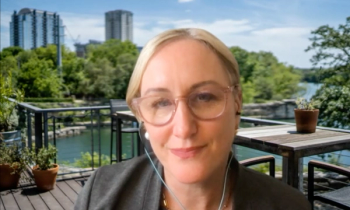
The pandemic has acted as a catalyst to increase the use of digital health and telemedicine, allowing providers to continue to deliver great care and even reach their rural patients, said Debra Patt, MD, PhD, MBA, executive vice president of Texas Oncology.
Advertisement
Advertisement
Trending on AJMC
1
Nephrologists Weigh Wins, Losses From 5 Years of Value-Based Kidney Care
2
Merck, Moderna Cancer Vaccine Cuts Melanoma Recurrence Risk by 42%
3
Povetacicept Cuts Proteinuria by 52% in IgA Nephropathy at Week 36
4
IDWeek Studies Tie RSV, Flu, and COVID-19 to Harm After Acute Illness
5