Value-Based Care
Latest News

Advertisement
Latest Videos





Advertisement
More News
Electronic health records are changing the way your family doctor does business, with most now able to view lab results or send a prescription online, a change that advocates say will improve efficiency and lead to fewer medical errors.
Under PPACA, in every interaction between patients, doctors, insurers, manufacturers and researchers, the incentive to control costs and provide better service is replaced with the decree to do so.
Implementation of ICD-10, or the International Statistical Classification of Diseases and Related Health Problems, 10th revision, is on the horizon. This significant, next-generation change in the health information technology field will be used for everything from billing and measuring quality to managing population health.
Hospitals will face growing pressure to reduce costs and improve outcomes as transparency programs reveal comparative performance.
Qualifying for ACOs a tough challenge for rurals.
As the coming year approaches, more vendors are working toward meeting Stage 2 meaningful use in electronic health record (EHR) products.
As the end of 2013 closes in, most federal certification bodies are noticing an uptick in the number of vendors who are applying to become certified under the 2014 criteria - the same criteria that will be required for the EHR products providers must use to attest to meaningful use Stage 2.
For many, a bill for more than a quarter million dollars is nothing to scoff at-but while treating those with cancer, these costs are all too common.
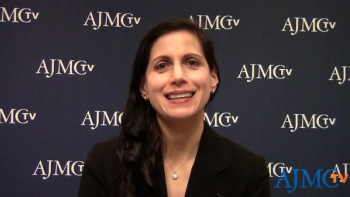
Katherine Baicker, PhD, professor of health economics, Department of Health Policy and Management, Harvard School of Public Health, says that Medicare Advantage Plans still hold promise to deliver high-value, better-tailored care to beneficiaries.

Not surprisingly, Thomas Merrill, lead researcher, Center for Accountable Care Intelligence, Leavitt Partners, LLC, said that cost is a major work flow challenge associated with Accountable Care Organizations.

Since 2010, the growth and proliferation of accountable care organizations (ACOs) has increased, and the rise of this collaborative care model is not without reason. Lack of consumer engagement, lack of competition, and misaligned incentives have made care less affordable.

Richard Stefanacci, DO, chief medical officer, The Access Group, said that it is necessary for retail pharmacists to break out of their silo. Dr Stefanacci noted that retail pharmacists are being utilized within practices and stepping out of their normal roles.
Hospital CEOs' pay isn't linked to their hospital's benefit to the community. Nor is it linked to the quality of care the hospital provides, a new study found.
The success of accountable care organizations (ACOs) and patient-centered medical homes (PCMHs) will depend upon physicians who embrace the concept of managing care across the care continuum and leading teams of professionals committed to evidence-based medicine while delivering on continuous quality improvement.
ACOs are groups of providers that have been assigned a projected budget per patient. If the cost of caring for the patient comes in below that level, the group shares the savings. The idea is that doctors will better coordinate care to prevent wasteful or ineffective treatment. Pilot programs suggest the jury is still out on ACOs' ability to drive this kind of behavior.
The nation's largest health plans say they are rapidly moving toward transparency and away from paying doctors and hospitals on a fee-for-service basis, four insurance executives said this morning at Forbes Healthcare Summit 2013.
Expansion or not, it is obvious that states must consider how to make their Medicaid programs more sustainable.

Joseph Antos, the Wilson H. Taylor Scholar in Health Care and Retirement Policy, American Enterprise Institute, says the federal Medicare program not only has a spending problem, but a delivery system problem that the fee-for-service model has not solved.
In five markets around the country, accountable care organizations were providing care to more than half the Medicare patients in the traditional fee-for-service program, a new study found. In addition, ACOs were more likely to be found in markets with greater consolidation by hospitals and doctors.
In the past few years, efforts to lower costs and improve care have proliferated.
Having access to a computer and the Internet may seem like a basic commodity for most Americans, but for the economically challenged, this is not always the case.

Melanie Bella, director, Medicare-Medicaid Coordination Office, Centers for Medicare & Medicaid Services, says the sole focus of the Medicare-Medicaid Coordination Office is to increase coordination and access to services from many fronts.
The concept of the Patient-Centered Medical Home (PCMH) has received plenty of attention, but its foundation is built on understanding who will be the repeat customers. Finding the best yardstick to determine that is the subject of a study published this month by The American Journal of Managed Care.
While more than 35 million people worldwide are living with dementia, that number is expected to reach more that 115 million by 2050.
Access to affordable, quality healthcare for poor Americans varies dramatically among the states, according to a new study that found a wide disparity in measures of health between states with the best healthcare systems and those with the worst.
Advertisement
Advertisement