
Opinion|Videos|December 23, 2025
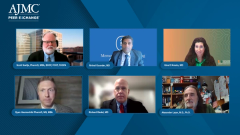
Optimizing Patient Care and the Potential of Artificial Intelligence
Experts discuss the challenges of diagnosing rare diseases and the potential role of AI in improving patient management and treatment outcomes.
Advertisement
Episodes in this series
Panelists discuss the questions below in this video.
- How can community and academic centers best work together to optimize the care of patients with desmoid tumors? Does artificial intelligence currently have any role in the management of patients with desmoid tumors? How do you see its role evolving in the future?
Advertisement
Related to this article
Michael Mina, MD, PhD, explains which adverse events drove VYD2311's edge vs an mRNA COVID-19 vaccine and who may benefit most.
The FDA approves atezolizumab with a fluoropyrimidine and oxaliplatin as adjuvant therapy for stage III dMMR colon cancer based on the ATOMIC trial.
Michael Mina, MD, PhD, explains Invivyd's accelerated approval path for VYD2311 and how it could change the timing of COVID-19 protection.

Biomarker-driven care is advancing in mantle cell lymphoma, though cost and infrastructure limit access in community oncology, according to a review.

Fibrosis stage, not MASH resolution, best predicts mortality, which should shape trial end points, says Georgetown's Zobair Younossi, MD, MPH.
Remibrutinib (Rhapsido; Novartis) is the only treatment with approved uses in both chronic spontaneous urticaria and symptomatic dermographism.
Lean MASLD shows milder histology than overweight and obese MASLD but similar mortality and event risk, with fibrosis tied to prognosis.

Hepatitis reports after vaccination were more often serious in children, but the data lack dose counts and cannot show vaccine-specific risk.
Advertisement
Advertisement