
Opinion|Videos|September 17, 2026
Weighing Efficacy and Safety Data for an Emerging Hepatitis B Therapy
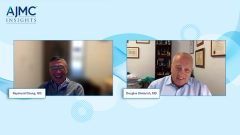
Author(s)Raymond Chung, MD, Robert G. Gish, MD
A roughly 20% functional cure rate is meaningful, but it comes with a safety profile that demands scrutiny in patients already doing well on suppressive therapy. This episode weighs that tradeoff.
Advertisement
Episodes in this series

"Weighing Efficacy and Safety Data for an Emerging Hepatitis B Therapy" takes up how the panel balances a promising cure rate against a real safety signal.
Dr. Chung notes that data across two trials pointed to a functional cure rate of roughly 20% in this patient group and asks Dr. Gish to react to those findings and weigh the efficacy signal against safety considerations in a population that is already well suppressed and feeling well on long-term nucleoside therapy.
Dr. Gish describes himself as the optimist in a class that is one-third full or two-thirds empty, noting that nearly every patient he sees with hepatitis B asks when they might be able to stop treatment. He believes most patients already understand the functional cure concept and considers this therapy a genuine leap forward, though not yet approved and still pending FDA review. He compares the side effect profile to interferon therapy, an agent he and Dr. Chung both have extensive experience treating. He notes that 70% of patients on placebo in the Be-Well studies also experienced significant adverse events, suggesting hepatitis B itself, as a disease, contributes meaningfully to how patients feel. He considers grade 3 adverse events the more meaningful safety threshold, occurring in 16% of bepirovirsen recipients versus 3% on placebo, likely reflecting an immunologic response tied to ALT flares that he views as probably beneficial. He adds that kidney and bone marrow monitoring will be necessary, requiring meaningful clinical infrastructure.
Asked which patients he sees as the best candidates once the therapy is approved, Dr. Gish points to three criteria: non-cirrhotic status, a favorable surface antigen window, and patient motivation, noting that more than half of his patients are already asking about this emerging data and preparing for that conversation.
The next episode in this series, "Capsid Assembly Modulators and the Case for Combination Therapy," shifts to a different class of investigational therapy.
Advertisement
Related to this article
Michael Mina, MD, PhD, explains which adverse events drove VYD2311's edge vs an mRNA COVID-19 vaccine and who may benefit most.

Biomarker-driven care is advancing in mantle cell lymphoma, though cost and infrastructure limit access in community oncology, according to a review.
Fibrosis stage, not MASH resolution, best predicts mortality, which should shape trial end points, says Georgetown's Zobair Younossi, MD, MPH.
Remibrutinib (Rhapsido; Novartis) is the only treatment with approved uses in both chronic spontaneous urticaria and symptomatic dermographism.

Lean MASLD shows milder histology than overweight and obese MASLD but similar mortality and event risk, with fibrosis tied to prognosis.
Hepatitis reports after vaccination were more often serious in children, but the data lack dose counts and cannot show vaccine-specific risk.

The Autus Size-Adjustable Valve, which can be expanded as children grow, may reduce the need for repeat open-heart surgeries for congenital defects.

Phase 3 wins for ianalumab and dazodalibep bring targeted therapies closer for Sjögren disease as patients face diagnostic delays and high costs.
Advertisement
Advertisement
Trending on AJMC
1
Predoc and Nebraska Cancer Specialists: Not Letting the Fax Be the Fumble
2
CMS Moves TIC Reporting to Quarterly, Sets Drug File Timeline
3
Postvaccine Hepatitis Reports More Often Serious in Children vs Adults
4
Will Cancer Care Come Home by 2030? PCOC Panelists Differ on Strategy
5