
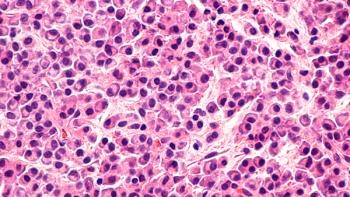
It’s rare for a patient to be diagnosed with both acute myeloid leukemia and multiple myeloma at the same time, but a new case study suggests there are options to treat both diseases at the same time in such cases.
Jared is a freelance writer for The American Journal of Managed Care® (AJMC®), and previously worked as a senior editor for HCPLive® at MJH Life Sciences®.
He has an MA from University of Sioux Falls. You can connect with Jared on LinkedIn.
It’s rare for a patient to be diagnosed with both acute myeloid leukemia and multiple myeloma at the same time, but a new case study suggests there are options to treat both diseases at the same time in such cases.

Patients who are treated with tyrosine kinase inhibitors (TKIs) for chronic myeloid leukemia are at a higher risk of a secondary malignancy. A new case study suggest the list of potential secondary malignancies should include lymphoplasmacytic lymphoma.

A new study based on interviews with families and patients undergoing chronic transfusion therapy for sickle cell disease finds that the therapy affects the families in ways that extend beyond health.

A new analysis of patients with early multiple sclerosis (MS) suggests they universally carry antibodies for Epstein-Barr virus, a virus increasingly thought to be linked to MS.
New data suggests white patients who are deficient in vitamin D have lower rates of survival when diagnosed with multiple myeloma. The phenomenon was not seen, however, in African American patients.

A new report on 3 rare cases of patients with myeloproliferative neoplasms who developed T-cell malignancies sheds light on red flags clinicians should look for.
A new large-scale study of patients with myeloproliferative neoplasm finds they are at twice the risk of mortality from respiratory disease.

New research suggests disparities in incidence and survival rates in multiple myeloma may have a lot to do with healthcare quality and access to care.

Clinicians treating patients with multiple myeloma have a number of factors to consider as they treat patients in an era of high-risk COVID-19 infection.
New research could make it easier to find out which patients are mostly likely to go on to develop multiple myeloma. The findings could have implications for therapeutic interventions.

Chronic lymphocytic leukemia/small cell lymphoma (CLL/SLL) is rare, making it difficult to differentiate from other types of lymphoma. A new study helps explain key unique traits.

A new review article finds patients who suffer from psoriatic arthritis (PsA) face a higher risk of type 2 diabetes (T2D), though the exact reasons for the linkage are not yet clear.
A new pooled analysis of rituximab/bendamustine and rituximab/cytarabine in transplant-eligible patients with mantle cell lymphoma (MCL) finds it leads to durable positive results in most patients.

Investigators still have a lot to learn about the links among psoriatic arthritis, inflammation, and depression, but a growing body of evidence suggests significant interplay.

Artificial intelligence and deep learning have advanced to the point where they can play a significant role in cancer care, but fully integrating the technology into the clinic remains a challenge.

A new article outlining the experience of a patient with a history of multiple myeloma (MM) who contracted coronavirus disease 2019 (COVID-19) shows the interleukin-6 receptor inhibitor tocilizumab was an effective therapy.

A range of new research is helping scientists better understand psoriasis while also raising new questions. One approach is looking at how the gut microbiome affects the disease.
Patients with lymphoma have better odds of survival now than they did 20 years ago, according to new research. The data also help explain which types of cancer continue to be the most challenging.

A number of advances have been made in recent years in our understanding of the genetics of psoriatic diseases and psoriatic arthritis specifically. However, those advances have yet to translate into clinically meaningful insights.

A new study based on treatment of patients with chronic lymphocytic leukemia (CLL) in mostly community settings challenges earlier findings about the superiority of a common therapeutic approach and also makes a strong case for ibrutinib.

As more patients with heart disease live longer, physicians need better tools to assess frailty in those with heart failure. New study results suggest a multidimensional assessment approach is preferable to one that focuses only on physical metrics.
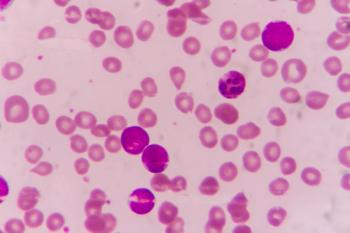
Investigators trying to find a way to stop antigen loss following CD19 CAR T cell therapy found an approach simultaneously targeting CD19 and CD22 is safe and feasible.

The study, with a small sample size, said most patients who take infliximab for more than 6 years report continued efficacy.
New research evaluates bortezomib and carfilzomib in an attempt to understand the causes of neurotoxicity in the former. They found the mitochondrial pathway is likely not the problem.

A new study shows patients with a history of lymphoma benefit from early detection of lung cancer, and are often good candidates for resection surgery.

Patients with certain inflammatory and senescence markers appeared to progress more quickly in their Parkinson disease, according to new research.

Patients with high-risk multiple myeloma tend to have significantly worse prognoses compared to those in the standard-risk category. A new study offers a potential solution.

A major study of patients with osteosarcoma suggests new pathogenic and likely pathogenic germline variants associated with the bone cancer.

Investigators used virtual reality to better understand the particular vision difficulties of patients with glaucoma.

Ibrutinib has been successful at fighting chronic lymphocytic leukemia (CLL), but new research finds interruptions in treatment with the drug can have a negative impact on patient outcomes.