
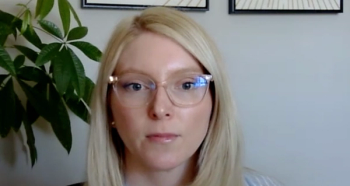
Caitlin Kindberg, patient advocate in Nashville, Tennessee, discusses her lived experience as an individual with idiopathic hypersomnia, and how the sleep disorder impacts her day-to-day life.
Caitlin Kindberg, patient advocate in Nashville, Tennessee, discusses her lived experience as an individual with idiopathic hypersomnia, and how the sleep disorder impacts her day-to-day life.

The relationships among bipolar disorder, sleep, and circadian rhythms were emphasized in a panel held at SLEEP 2024.

This new analysis of nivolumab presented at ASCO 2024 shows the immune checkpoint inhibitor did not convery benefit when added to a regimen of neoadjuvant carboplatin, paclitaxel, and radiation.

The session held at SLEEP 2024 focused on the challenges of collecting data on sleep and circadian rhythms in adolescents, as well as the difference between home and lab measurements.
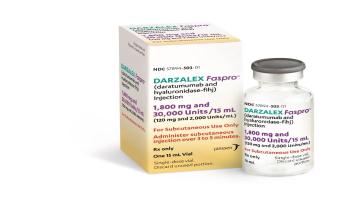
An in-depth analysis of minimal residual disease (MRD) negativity results from the PERSEUS trial shows patients whose treatment regimen included subcutaneous daratumumab had responses that deepened over time.

Christopher Depner, PhD, professor of health and kinesiology, University of Utah, shares the challenges of measuring sleep with wearable devices due to nonadherence and the need for metrics like the Sleep Regularity Index.
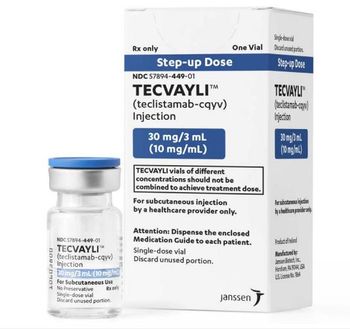
Results for the first 10 patients offer promising signs for giving patients with multiple myeloma a prophylactic dose of tocilizumab before they are treated with the bispecifc antibody teclistamab.

The findings can help reduce barriers that delay the onset of recommended palliative care in advanced cancer.
The idea that patients could get better responses with shorter courses of therapy runs counter to the current standard of care in melanoma.

Within the GAIN-S model, geriatric care assessments among older patients with cancer are combined with care interventions, and it is delivered soon before patients have an intervention on their cancer therapy, says William Dale, MD, PhD, FASCO, City of Hope.
A pair of late-breaking trials, LAURA and ADRIATIC, promise practice-changing news in lung cancer.

The BE-a-PAL study investigated potential of an algorithm-based default palliative care referral among patients who have stage III or IV lung or noncolorectal gastrointestinal cancer.
Attendees packed a session on multicancer early detection (MCED) on the first day of the 2024 American Society of Clinical Oncology annual meeting.
The annual session on newly approved drugs reviewed adverse effects, mechanisms of action, and real-world experiences.

Glofitamab is currently being investigated in a phase 1/2, multicenter, open-label, dose-escalation study as monotherapy and in combination with obinutuzumab, following 1-time fixed-dose pretreatment with obinutuzumab for B-cell non-Hodgkin lymphoma, of which mantle cell lymphoma (MCL) is a rare type.

The TROPiCS-02 trial studied sacituzumab govitecan vs physician’s choice of chemotherapy for HR+/HER2– breast cancer.
Surya Bhatt, MD, MSPH, of the University of Alabama at Birmingham, discussed the challenges of diagnosing chronic obstructive pulmonary disease (COPD) with type 2 inflammation, as well as the promising efficacy of dupilumab in treating this condition.

Presenters from CMS and the CDC explored the importance of standardizing health equity data collection at the 2024 CMS Health Equity Conference.

The annual conference taking place from June 1 to June 5, 2024, will feature sessions on the relationship between mental health and sleep, artificial intelligence in sleep, and different sleep conditions.
Leda Mannent, MD, global project head, Immunology and Inflammation, Sanofi, shares findings on the use of a novel treatment for patients with moderate to severe asthma.
Topics at the upcoming meeting of the American Society of Clinical Oncology include the impact of artificial intelligence and the best way to deliver palliative care.

In this interview ahead of the 2024 American Society of Clinical Oncology annual meeting (ASCO), Ravin Ratan, MD, MEd, The University of Texas MD Anderson Cancer Center, discusses study data he is excited to hear more about on the combination of trabectedin and low-dose irinotecan for relapsed/refractory Ewing sarcoma.
Melissa B. Jones, MD, staff neuropsychiatrist, Michael E. DeBakey VA Medical Center; assistant professor of psychiatry, Baylor College of Medicine, shares what she is looking forward to at this year's SLEEP 2024 conference.
Expert speakers at the American Thoracic Society (ATS) 2024 international conference share their favorite parts of the event and the key takeaways they will leave the conference with.

Among the many topics discussed at the American Thoracic Society 2024 International Conference (ATS 2024), the majority touched on barriers to health equity and access, regardless of the key focus of each talk or study. Experts examined this within the field, emphasizing the importance of enhancing data diversity, modernizing diagnostic tools, and revising regulatory standards to promote equitable health outcomes for diverse populations.

The Center on Health Equity & Access offered novel insights on transgender health and pulmonary medicine with late-breaking data and expert interviews from the American Thoracic Society annual meeting.

Two abstracts presented at the American Thoracic Society 2024 International Conference analyzed the phase 3 LIBERTY COPD BOREAS trial, finding that dupilumab improves pre- and post-bronchodilator lung function measures in patients with chronic obstructive pulmonary disease (COPD) and type 2 (T2) inflammation.

In a scientific session at the American Thoracic Society (ATS) 2024 International Conference titled "An Inconvenient Truth: Health Disparities and Health Care Inequality in Respiratory Medicine," a number of experts discussed the various areas within the field that are impacted by disparities.

Monica Kraft, MD, ATSF, contributed to research on preexisting asthma and the influence it may have on the severity of long-term COVID-19 symptoms, with some patients with asthma experiencing worse respiratory symptoms but better physical functioning compared with patients without asthma.

Study authors shared late-breaking data in a session on clinical trial results in pulmonary medicine at the American Thoracic Society 2024 International Conference.