

Canopy remote therapeutic monitoring with ePROs cuts hospitalizations and extends time to discontinuation in metastatic cancer, saving millions.
Canopy remote therapeutic monitoring with ePROs cuts hospitalizations and extends time to discontinuation in metastatic cancer, saving millions.

MASH cirrhosis treatment, fibrosis reversal, and population screening were cited by experts as hepatology's biggest gaps.
Chemotherapy decisions for young women with HR+ breast cancer and low recurrence scores reveal testing disparities that health systems must address.

An AI-driven review of oncology trials reveals that diversity progress over 30 years is largely an illusion driven by Asian enrollment growth.
Alexa Simon Meara, MD, MS, discusses breaking down silos between academic and community oncology to improve immunotherapy care and irAE management.

Longer-term data support pimicotinib as an effective, well-tolerated option for a rare benign tumor that can cause significant joint disability.
From cardiovascular risk to missed toxicity grading, Igor Puzanov, MD, MSCI, outlines what is failing in checkpoint inhibitor toxicity management.

ASCO 2026 clinicians highlighted unmet needs from navigating complex treatment decisions and overcoming translation gaps, to optimizing regimens.
GLP-1s, care standards updates, nutritional guidance, and AI adoption in diabetes management are just a few of the hot topics to be presented and debated.

OLYMPIA-3 trial at ASCO 2026 shows odronextamab plus CHOP in higher-risk B-cell lymphoma delivers strong MRD-negative CRs with fewer visits.

Data presented at ASCO support wider use of prophylactic therapy to prevent cytokine release syndrome as efforts expand to promote bispecifics in treatment of multiple myeloma.

Data confirm the use of daratumumab, bortezomib, lenalidomide, and dexamethasone as the standard of care in newly diagnosed multiple myeloma.
ADC targeting both PSMA and STEAP1 with a topoisomerase payload showed a 15-month PFS signal in heavily pretreated prostate cancer—far above historical chemotherapy benchmarks.
Updated SUNMO phase 3 data show Mosun-Pola cuts progression risk by 62% vs R-GemOx, with a 75% ORR and 61% CR rate in second-line R/R LBCL at 28-month follow-up.

An entirely new approach to treating one of the most intractable cancers could turn it into a chronic disease.

Adding the anti-CD19 monoclonal antibody and lenalidomide to the classic combination drove superior PFS, with a positive trend in OS. Higher rates of adverse events offset the positive survival results in an area of great unmet need.
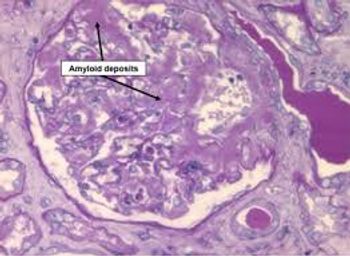
Early data for LINKER-AL2 show linvoseltamab drives rapid and deep responses following relapse after frontline treatment for AL amyloidosis, which has no approved therapies.
ARACOG trial data highlight cognitive effects of ARPIs in prostate cancer, showing less cognitive decline with darolutamide than enzalutamide, notes Alicia Morgans, MD, MPH.
Updated toxicity criteria improve immunotherapy toxicity management in melanoma, spotlighting rapid action for rare cardiotoxicity, says Igor Puzanov, MD, MSCI, FACP.
According to the ROADS trial, GammaTile cesium-131 brachytherapy boosts local control and survival in brain cancer treatment, matching SRT safety while avoiding radiation delays.
Early palliative care integration in oncology boosts symptom alleviation and quality of life, but access, workforce shortages, and institutional barriers slow referrals.

Teclistamab bispecific from Johnson & Johnson boosts early-line multiple myeloma outcomes, fueling safer outpatient therapy options.

Twice-yearly depemokimab reduced exacerbations and improved quality-of-life outcomes in type 2 asthma and CRSwNP studies.

Resmetirom boosts MASH cardiovascular protection, lowering LDL cholesterol and Lp(a) even on statins, and pushes routine Lp(a) testing.

New data showed durable hepatitis D virus RNA suppression through 96 weeks with tobevibart plus elebsiran, while higher BMI appeared to affect ALT normalization.

Two posters presented at EASL 2026 clarify where peginterferon alfa-2b fits in therapy for patients with chronic hepatitis B.

Heiner Wedemeyer, MD, offered an unflinching assessment of viral hepatitis medicine, celebrating landmark breakthroughs while issuing a clear warning that the field is failing the populations it set out to protect.

Mezigdomide, a powerful CELMoD, doubles PFS in relapsed or refractory multiple myeloma, offering hope when IMiDs stop working.
Week 96 SOLSTICE data show tobevibart plus elebsiran deepens durable hepatitis D virus (HDV) and HBsAg suppression, beating monotherapy.
Elliot Tapper, MD, explains how digital health, precise screening, and direct hepatology care can treat alcohol-associated liver disease and mental health.