

Nancy Lin, MD, explores MMAI validation needs, turnaround advantages, equity implications, and how payers should approach AI-based diagnostics.
Nancy Lin, MD, explores MMAI validation needs, turnaround advantages, equity implications, and how payers should approach AI-based diagnostics.

The conference, set to take place in Baltimore, Maryland, will feature 4 days of sessions focusing on sleep medicine and how it affects overall health.

Final results of the CLL14 study reveal the efficacy of 1-year venetoclax-obinutuzumab therapy for chronic lymphocytic leukemia.

Rilvegostomig plus T-DXd achieved 57% pCR in HR+/immune+ HER2-negative breast cancer in I-SPY 2.2, potentially enabling surgery without chemotherapy.
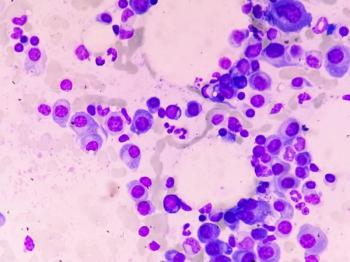
Longer patient survival times require a shift toward earlier surrogate end points, with measurable residual disease (MRD) providing robust evidence of its utility for accelerating access to myeloma treatment.

ADA 2026 spotlighted triple incretin therapy, intensive LDL lowering, and the equity gaps that keep advances from reaching all patients.

SC isatuximab via OBI earned EU approval in multiple myeloma, showing less than 1% IRR rates, strong reliability, and potential for at-home use.

A thriving gut microbiome is associated with better clinical outcomes after CAR T-cell therapy for lymphoma and myeloma.

Shannon L. Maude, MD, PhD, highlighted promising long-term disease-free survival and MRD negativity with tisagenleucel in high-risk pediatric ALL.

Ziftomenib plus intensive chemotherapy produced high response and MRD negativity rates with manageable safety in newly diagnosed AML.

Long-term LUNA3 data showed rilzabrutinib delivered durable platelet responses, reduced bleeding and fatigue, and maintained safety in ITP.
Nancy Lin, MD, explains how an AI model compares with genomic classifiers in HR+/HER2- early breast cancer, with implications for cost and access.

Re-engagement strategies for hepatitis B show promise in the US, but data gaps and structural barriers are slowing progress toward WHO elimination targets.

At ADA 2026, experts explored how GLP-1 receptor agonists are reshaping treatment for obesity, osteoarthritis, nutrition, and muscle preservation.

New ADA 2026 data show diabetic ketoacidosis hospitalizations rising 24%, driven by poor ketone monitoring and symptom recognition gaps across all ages.

PROTEUS results reshape high‑risk localized prostate cancer care, adding apalutamide plus androgen deprivation before surgery as a new option.

The dual glucagon/GLP-1 receptor agonist is also being studied in the SYNCHRONIZE-2, SYNCHRONIZE-CVOT, LIVERAGE, and LIVERAGE-Cirrhosis trials.

By controlling for ovarian suppression, OPTIMA shows Prosigna works equally well in pre and postmenopausal high-risk early breast cancer.

Research from Samuel Shangwu Wu, PhD, presented as an ADA Presidents' Select Abstract, proposes a better way to measure beta-cell preservation.

Remote therapeutic monitoring with ePROs powered by AI cuts hospitalizations and boosts therapy time—now a key oncology leader promotes guidelines and reimbursement to make it standard of care.

Four experts examine what updated dietary and obesity guidelines mean for diabetes care, and why personalized, equitable nutrition is now essential.

Anne Komé, PharmD, explains that diabetes drug development is shifting to concurrent testing of metabolic effects.
ADA 2026 research showed how oral ketones, irisin, and SGLT2 inhibitors may reveal new metabolic pathways beyond glucose control.

Phase 3 data show survodutide normalized liver fat in 61% of patients with MASLD while reducing weight, visceral fat, and metabolic risk factors.
ADA 2026 data show survodutide cut visceral fat by 34% and liver fat by 63%, suggesting metabolic benefits beyond weight loss in phase 3 trials.

Diet quality, carbohydrate quantity, and macronutrient composition may influence gestational glycemia, with consequences well into the postpartum period.

The next frontier, according to Igor Puzanov, MD, MSCI, FACP, includes improving immune toxicity recognition and long-term care.

Two new studies reveal how social determinants shape cognitive risk in prediabetes and type 2 diabetes, complicating the path to prevention.

Diabetes disparities drive unequal CGM access and amputation risk, highlighting the need to address social, provider, and policy barriers to equitable care.
At ADA 2026, Alyson K. Myers, MD, explains why knowing your community—and meeting patients where they are—is key to better diabetes outcomes and lower costs.