



Multiple Myeloma
Latest News


Astera Cancer Care Shows How Community Oncology Can Innovate Both in the Clinic and in Contracting
By Mary Caffrey

End-of-Life Care in Multiple Myeloma Still Requires Fine-tuning, Despite Improvements
By Rose McNulty
Advertisement
Latest Videos



Advertisement
More News

This new study shows how using electronic health record (EHR) data can objectively quantify patient treatment burden among individuals who have multiple myeloma (MM) compared with patient-reported outcomes, which can be subject to recall bias.

Joseph Alvarnas, MD, vice president of government affairs at City of Hope and chief clinical adviser of AccessHope in Duarte, California, spoke on how the California Cancer Care Equity Act will allow oncologists to escalate the care of patients with advanced cancers toward established centers that can better meet their needs, as well as implications from the decision to exclude genomic testing coverage in the bill.

The study highlights a need for further research into potential contributors, including the possibility that sicker patients may receive more prompt treatment.

Bhavesh Shah, RPh, BCOP, chief pharmacy officer and director of specialty and hematology/oncology pharmacy at Boston Medical Center, talks about what oncology agents in the pipeline he hopes to see become available.

The FDA’s approval of teclistamab for relapsed/refractory (R/R) multiple myeloma makes it the first bispecific T-cell engager antibody to enter the treatment landscape.

Although exercise during cancer treatment is encouraged, multiple myeloma can present special challenges, since there is an increased risk of bone fractures, pain, and other deformities.
The model was found to be predictive and may help identify patients with multiple myeloma at a high risk of early disease progression.
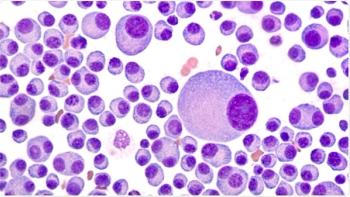
Within a selection of therapies showing efficacy over a placebo, lenalidomide-carfilzomib was a standout against the rest of the group.
Researchers highlighted the opportunities primary care providers (PCPs) have to promote favorable outcomes through prompt diagnosis as well as help reduce racial disparities in multiple myeloma.

Regular assessments of patient-reported outcomes (PROs) are important to deliver the best clinical care, including the monitoring health-related quality of life (HRQOL), researchers reported.

Being able to use minimal residual disease (MRD) negativity to make treatment decisions, such as stopping maintenance therapy, can have savings related to cost and quality of life (QOL) for patients, said Ajay Nooka, MD, MPH, FACP, associate professor, Winship Cancer Institute.
Chimeric antigen receptor (CAR) T-cell therapies may help patients with otherwise refractory cases of multiple myeloma, but patients must overcome significant hurdles to access the therapy.

For several years, investigators have examined the potential for allogenic natural killer (NK) cells as an alternative for “off-the-shelf” chimeric antigen receptor (CAR) treatments. New study results presented at the International Myeloma Society (IMS) meeting showed CD38 CAR-NK cells significantly reduced the tumor burden—and improved survival
Everyone agrees that minimal residual disease (MRD) is the best prognostic tool for multiple myeloma, but there is disagreement on how to use the MRD results, said Ajay Nooka, MD, MPH, FACP, associate professor, Winship Cancer Institute.
Minimal residual disease (MRD) testing is used to understand the depth of response, but currently the data at Emory are not used to make treatment decisions, said Ajay Nooka, MD, MPH, FACP, associate professor, Winship Cancer Institute.
Patients receiving the quadruplet therapy have continued to show improved responses and higher rates of minimal residual disease (MRD) negativity.

This retrospective chart review investigated outcomes among patients who are White or Black on a daratumumab regimen for multiple myeloma (MM).

A tool used to identify primary concerns of patients was helpful in identifying main worries about time, as it related to quality of life (QOL), and held value for patients and clinicians.

Ide-cel is a B-cell maturation antigen (BCMA)-directed CAR T-cell therapy, which uses the process of genetically modifying a patient’s T cells and infusing them back into the patient to attack the cancer.

In this case report, a 50-year-old female patient, with a family history of lung cancer, received a diagnosis of multiple myeloma (MM) following presentation with an apical lung mass.

Previous studies have produced heterogeneous results on next-generation flow (NGF)-based minimal residual disease (MRD) detection, despite improvements to the method’s reproducibility and sensitivity, prompting the present authors to investigate its clinical utility.
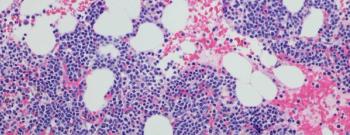
Authors explained how multiple myeloma emerges from earlier clinical phases and the tumor’s microenvironment in the early course of the disease plays a critical role in the survival of myeloma cells.

A study in Blood Advances highlights the toll that a terminal diagnosis can have on everyone around a patient.

Results looking at acceptance of minimal residual disease (MRD) status found that 60% of participants “would change at least one decision based on an MRD result,” and 54% would use both MRD status and disease risk to make decisions.
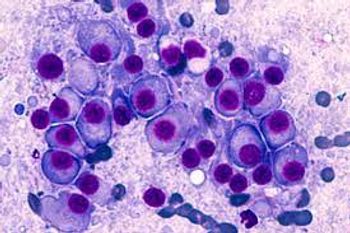
Results from a registry study of patients from Australia and New Zealand show that 9.1% of patients with a new diagnosis of multiple myeloma die within a year of diagnosis, and infection contributed to early death in 38% of cases in which a cause of death was reported.
Advertisement
Advertisement
Trending on AJMC
1
COVID-19 May Follow a Different Seasonal Pattern Than Influenza, RSV
2
Upcoming 2026-2027 Vaccine Season: Deals, Data, and an FDA Vote
3
House Passes Bill to Ease Medicare ACO Digital Quality Reporting Burden
4
Pediatric Cancer Carries Greater Financial Toxicity Than Adult Disease, Driving Calls for Systemic Change
5