



Precision Medicine in Oncology
Latest News

Advertisement
Latest Videos






Advertisement
More News

In the latest Oncology Value Coalition webinar, experts from City of Hope and Highmark discussed designing genomic testing in cancer care.

Christopher Arendt, PhD, head, Oncology Therapeutic Area Unit, Takeda, speaks on the efficacy data of mobocertinib in patients with EGFR exon 20 mutations within metastatic non–small cell lung cancer (NSCLC) and its potential significance for these patient populations.

Years of research has shown that in cancers like melanoma, liquid biopsy enables the detection of biomarkers, such as circulating tumor cells, circulating tumor DNA, and exomes.

Based on the prognostic value observed in the study, the researchers suggest that evaluating circulating tumor DNA (ctDNA) status as early as within a week of surgery could aid in risk stratification of patients and decision-making for postoperative management.
Minimal residual disease, overall response rate, complete response rate, and stringent complete response may be useful as surrogate end points to estimate progression-free survival (PFS) benefit for patients with newly diagnosed multiple myeloma.
Christopher Arendt, PhD, head of the Oncology Therapeutic Area Unit at Takeda, discusses pathogenesis and characteristics of EGFR exon 20 mutations in metastatic non–small cell lung cancer (NSCLC).

New research presented at the 2021 American Society of Clinical Oncology Annual Meeting is painting a clearer picture of what drives differences in mortality and outcomes for patients with prostate cancer. Black men with prostate cancer have higher incidence of both.

Favorable genetic characteristics may be able to predict which patients with relapsed/refractory chronic lymphocytic leukemia (R/R CLL) who were treated with venetoclax-rituximab will attain undetectable minimal residual disease (MRD).

Camille Hertzka, vice president and head of Oncology, US Medical, AstraZeneca, speaks about the real-world data collection of durvalumab to assess applicability in patients not involved in the PACIFIC trial, and the importance of diversity and inclusion in clinical trials moving forward.
The study explores data on liquid biopsy approaches outside of circulating tumor DNA—a commonly used approach for liquid biopsy—and includes novel methods like non-coding RNA.

Antoine Italiano, MD, PhD, head of Early Phase Trials and Sarcoma Units at Institut Bergonié, Bordeaux, France, addresses findings of an extended follow-up of larotrectinib in patients with TRK fusion cancer that indicated prolonged progression-free survival in those undergoing the NTRK inhibitor.

ASCO officials characterized the results as practice changing and said they highlighted the need for genetic testing in patients who receive a diagnosis of high-risk breast cancer.

Researchers underscored the importance of addressing these barriers, as artificial intelligence may offer improvements in clinical decision making, broaden access to care, and improve clinical efficiency.

Recent coverage from Targeted Oncology® highlights how combination therapies are impacting the treatment spectrum for chronic lymphocytic leukemia (CLL).
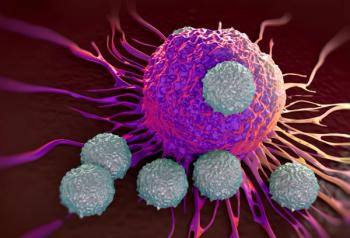
Researchers say increase in immunotherapy was significant over the study period between 2016 and 2018.

Stakeholders identify the value elements of comprehensive genomic profiling (CGP) they find most important, as well as options for innovative contracts.
Despite expanded use of precision medicine, there remain a myriad of barriers hindering its implementation in day-to-day practice.

Using biomarkers to guide treatment decisions are increasingly being leveraged across various cancers, and metastatic colorectal cancer (mCRC) is no exception. However, the positivity rates of these biomarkers can differ across different patient characteristics, according to a recent study.

Biomarkers are being used in patients with cancer to target treatments that will work best. Interviews with OncLive® highlight how biomarkers are being used in colorectal and bladder cancer.

The literature review included 25 studies related to diagnostic impact of liquid biopsies versus tissue biopsies and 3 studies that assessed the economic impacts of the 2 biopsies.

AJMC®TV interviews let you catch up on what’s new and important about changes in healthcare, with insights from key decision makers—from the clinician, to the health plan leader, to the regulator. When every minute in your day matters, AJMC®TV interviews keep you informed. Access the video clips at ajmc.com/interviews. These interviews have been edited lightly for clarity.


Interest in therapies that target DDR genes has increased since 2015, when basic science in this area won the Nobel Prize in Chemistry.
Advertisement
Advertisement
Trending on AJMC
1
EHA 2026 Late Breakers Deliver Practice-Shifting Phase 3 Data and Novel CAR T Approaches Across Hematology
2
Paul Richardson, MD, Calls Mezigdomide “CAR T in a Pill” for Patients With R/R Multiple Myeloma
3
MRD-Guided CLL Treatment Duration: Personalization or Malpractice?
4
Type 5 Diabetes: A Long-Ignored Condition Gets Its Moment
5