





Center on Health Equity & Access
Latest News
Advertisement
Expert Insights
Hear what thought leaders have to share about the Center on Health Equity & Access.
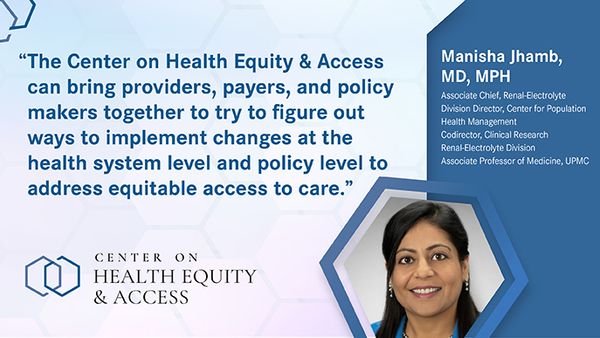
Expert Insights
Hear what thought leaders have to share about the Center on Health Equity & Access.
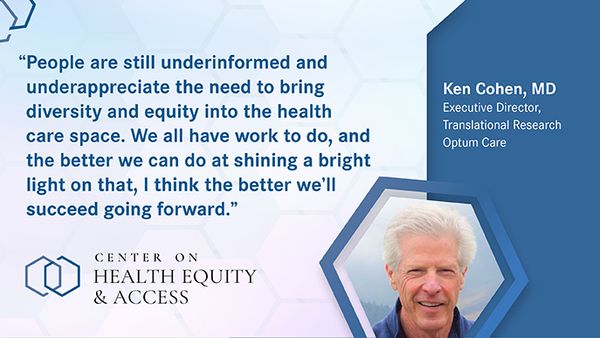
FDA Denies MDMA-Assisted Therapy Despite Promising Trial Results
Leaders respond to the complete response letter issued by the FDA, seeking answers and calling for more progress to aid the veteran community and others experiencing PTSD. Learn more with the full article from AJMC®!
Video Series
Latest Videos







Shorts

0:47
What PCSK9 Inhibitors Reveal About Innovation, Access: Deepak Bhatt, MD, MPH, MBA
a day ago
by
Pearl Steinzor(+1 more)

1:27
Translated Financial Assistance Documents Are Critical to Reducing Care Barriers: Erin L. Duffy, PhD, MPH
16 days ago
by
Brooke McCormick(+1 more)
0:46
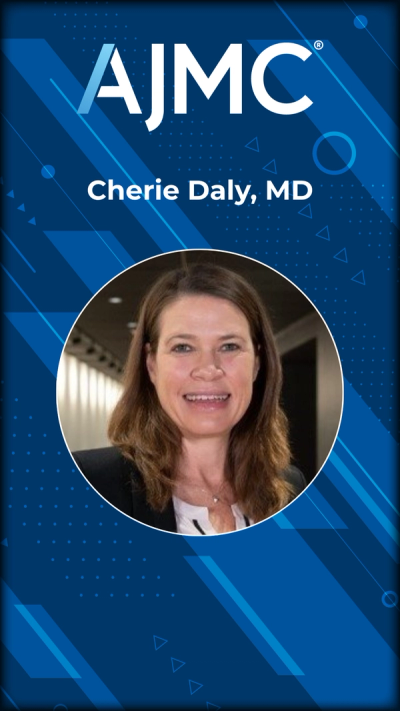
Supporting Families Requires Recognizing the Full Financial Impact of Pediatric Cancer: Cherie Daly, MD
19 days ago
by
Brooke McCormick(+1 more)

1:57
Policy, Technology Misalignment Slows NSCLC Genomic Testing: Robert Kratzke, MD
21 days ago
by
Brooke McCormick(+1 more)

0:41
Human-Centered Approach Needed to Reduce Pediatric Cancer Financial Toxicity: Danielle Fragalla, MSE
22 days ago
by
Brooke McCormick(+1 more)
1:02
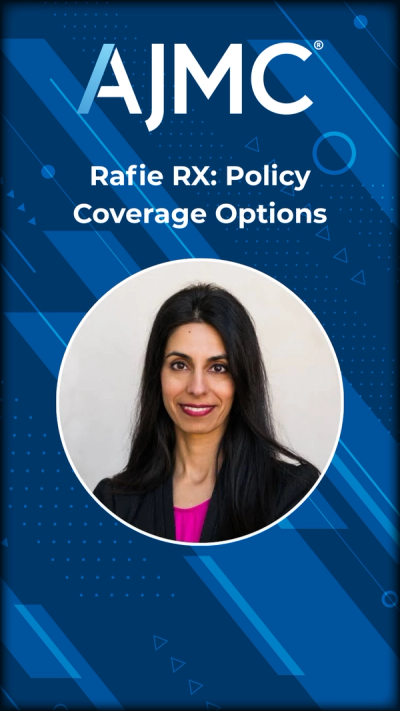
Health Plan Policies Can Expand Access to Pharmacy-Based Contraceptive Care: Sally Rafie, PharmD
a month ago
by
Sally Rafie, PharmD(+1 more)

0:44
Why You Should Be Getting a 12-Month Supply of Birth Control: Sally Rafie, PharmD
a month ago
by
Sally Rafie, PharmD(+1 more)

0:39
How States Are Increasing Access to Contraception: Sally Rafie, PharmD
a month ago
by
Sally Rafie, PharmD(+1 more)

1:01
Better Early-Onset CRC Survivorship Care Hinges on Cardiometabolic Risk Understanding: Meng-Han Tsai, PhD
2 months ago
by
Brooke McCormick(+1 more)

1:28
Active vs Passive Outreach for Hepatitis B Reengagement: Helen Nde, MPH
2 months ago
by
Laura Joszt, MA(+1 more)
Podcasts
Advertisement
More News

This discussion will appear in the August issue of Evidence-Based Oncology.
A July AJMC study found metastatic cancer diagnoses significantly increase Medicaid spending, highlighting the potential budget benefits of earlier detection.

Everyday discrimination was associated with delayed care, greater emergency department use, and lower preventive care use among US adults.

Agentic AI can fix behavioral health referral overload by matching patients to the right providers and boosting follow-through, cutting early dropout.

Closed-loop social care networks move beyond referrals, proving statewide scale can cut ED use and Medicaid costs while tracking real outcomes.

New cancer drugs reached patients fastest, but overall access timelines remained lengthy across the US, France, Germany, and Switzerland.

CMS value-based payment models underrepresent Black, Hispanic, dual-eligible, and disadvantaged Medicare beneficiaries compared with the broader population.

Clinicians say workflow changes, not education alone, are closing screening and treatment gaps in cardio-kidney-metabolic (CKM) care.

Doug Francis of Rhythm Healthcare on what's driving respiratory and mobility care out of facilities and into patients' homes
June delivered 5 FDA firsts; FDA panel weighs peptide access; dermatology absorbs PA costs; Trump sets tariff timeline; digital QI trims LDL-C.
June 2026 brought 5 FDA firsts across infectious disease, oncology, and rare disease, expanding treatment options and addressing unmet patient needs.

The Pharmacy Compounding Advisory Committee meets July 23-24 to discuss whether pharmacies may dispense BPC-157, TB-500, and 5 other peptides.

Dermatologists spend 13 hours weekly on prior authorization as health plans tout an 11% reduction in requests.

Trump said imported generic drugs will face no tariff for 2 years starting August 1, then a 100% rate in 2028 and 200% in 2029, extending his trade fight to the drugs most Americans actually take.

A digitally enabled quality improvement strategy lowered LDL-C and boosted treatment intensification, though most patients still missed guideline targets.

Many rural and urban areas lack preferred pharmacies. Where preferred pharmacies were available, distances were generally minimal relative to the cost savings; however, rural-urban disparities persist.

Diagnostic delays and access barriers continue to affect patients with MS, especially in under-resourced areas, World Brain Day highlights.

Global early-onset CKD mortality declined from 1990 to 2021, but incidence rose, highlighting persistent disparities and prevention needs.

Hepatitis B and C prevention programs improve detection, treatment, and liver outcomes, but screening, care access, and implementation gaps remain.
Hospital-at-home meets inpatient safety, PBM insulin settlement lowers costs, SNAP narrows screening gaps, and execs warn innovation outpaces reimbursement.

Deepak Bhatt, MD, MPH, MBA, discusses how new evidence, prevention definitions, and imaging advances are reshaping how PCSK9 and SGLT2 inhibitors are used.

An analysis found no significant differences in care escalation, readmission, mortality, or guideline-directed therapy use between home-based and inpatient care.

FTC settles with CVS Caremark over insulin pricing, projecting $8.5 billion in patient savings over 10 years and mandating rebate and access reforms.

SNAP participation was linked to a smaller colorectal cancer screening gap among food-insecure US adults, ananalysis of 251,000 found.

Health system executives say Medicaid cuts, payer disputes, and misaligned incentives are driving the affordability crisis in 2026.