





Clinical
Latest News
Advertisement
Latest Videos



CME Content


Advertisement
More News

Researchers examined the safety and efficacy of erenumab in patients with episodic migraine for whom up to 4 previous treatments have been ineffective.

Two doses of the Moderna COVID-19 vaccine have reduced efficacy against the Omicron variant; a federal appeals court reinstates the Biden administration’s health care worker vaccine mandate in 26 states; a new combination therapy may reduce breast cancer progression.

Pulmonary arterial hypertension is a rare form of pulmonary hypertension that poses diagnostic challenges and often comes with a delayed diagnosis.
Subcutaneous (sub-Q) administration of isatuximab plus pomalidomide may provide survival advantages for patients with relapsed and refractory multiple myeloma, making it another treatment option for this patient group.

Investigators said pathologic complete response was higher with a molecularly selected subgroup of patients with early-stage breast cancer treated with a nonchemotherapy combination that included a trastuzumab biosimilar.

Results of a secondary analysis indicate anxiety, depression, physical quality of life (QOL), and sexual function in obese infertile woman with polycystic ovary syndrome (PCOS) seem to be more related to obesity rather than PCOS status.

In India, incidence of the deadly fungal infection grew throughout 2021, while supply chain shortages inhibited optimal treatment for each patient.
Bhavesh Shah, PharmD, and Mark Lebwohl, MD, elaborate on treatment effectiveness in patients with both psoriasis and metabolic syndrome.
Drs Lebwohl and Groves discuss patients with psoriasis and the increased risk they have for also being diagnosed with metabolic syndrome.

An abstract presented at the 63rd Annual American Society of Hematology Annual Meeting and Exposition shows that although daratumumab use in multiple myeloma holds great promise, challenges remain in the use of clinical pathways for treatment direction with the monoclonal antibody—which the investigators say may also present opportunities for change.
John Burke, MD, hematologist, Rocky Mountain Cancer Centers, discussed findings of the late-breaking abstract session POLARIX presented at ASH 2021, which compared pola-R-CHP with standard-of-care R-CHOP in patients with previously untreated DLBCL.

Results presented at the 63rd Annual American Society of Hematology Meeting showed that using polatuzumab vedotin instead of vincristine in R-CHOP improved progression-free survival in patients with newly diagnosed diffuse large B-cell lymphoma.

David Yeomans, PhD, associate professor of anesthesiology, perioperative, and pain medicine at Stanford University School of Medicine, outlines potential mechanisms underlying menstrual-related migraine.

Sattva S. Neelapu, MD, professor and deputy department chair in the Department of Lymphoma/Myeloma in the Division of Cancer Medicine at the University of Texas MD Anderson Cancer Center, discusses findings of the ZUMA-12 study examining axicabtagene ciloleucel (axi-cel) as a first-line treatment option for high-risk patients with large B-cell lymphoma.
Next-generation sequencing (NGS) may be a helpful tool for establishing how B cells migrate and maturate across the blood-brain barrier in multiple sclerosis (MS), potentially providing better insight into the pathophysiologic mechanisms involved in neuro-inflammation.
Bhavesh Shah, PharmD, and Mark Lebwohl, MD, explain the difficulties of patient adherence to psoriasis treatments.
Dr Mark Lebwohl explains disease burden for patients with plaque psoriasis and discusses the common comorbidities clinicians see.

Frederick L. Locke, MD, of Moffitt Cancer Center in Tampa, Florida, is the lead study author of the phase 3 ZUMA-7 trial, which examined the use of axi-cel in second-line treatment of patients with relapsed or refractory large B-cell lymphoma (R/R LBCL).
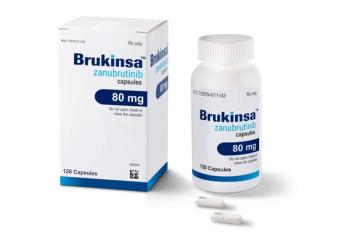
Zanubrutinib produced prolonged progression-free survival (PFS) compared with a combination of bendamustine and rituximab among treatment-naïve patients with chronic lymphocytic leukemia/small cell lymphocytic lymphoma (CLL/SLL).

Andre Goy, MD, MS, chairman and executive director of the John Theurer Cancer Center, speaks on molecular features of diffuse large B-cell lymphoma and how this explains differences in patient response for chemotherapy and chimeric antigen receptor (CAR) T-cell therapy.

Constantine S. Tam, MBBS, MD, consulting hematologist and associate professor, Peter MacCallum Cancer Centre, discusses the superior safety and progression-free survival outcomes from the SEQUOIA phase 3 trial, which compared zanubrutinib with bendamustine and rituximab combination therapy in treatment-naive chronic lymphocytic leukemia/small lymphocytic lymphoma.

Investigators discuss the humoral response to enzyme-replacement therapy in their review of the clinical picture and diagnostic confirmation of Fabry disease.

L. Elizabeth Budde, MD, PhD, oncologist and associate professor at City of Hope, discusses the use of mosunetuzumab in patients with relapsed/refractory follicular lymphoma (R/R FL) who have received 2 or more prior lines of therapy and addresses potential cost-related implications of the drug compared with CAR T-cell therapy.

The study demonstrated the heterogeneity of actionable alterations, PD-L1 expression, and mutational burden among the samples of metastatic lung adenocarcinomas (LUAD).

Investigators found anti-ribosomal P protein antibodies, a serological marker for systemic lupus erythematosus (SLE), were linked with higher ferritin levels, independent of interleukin 6 levels.
Advertisement
Advertisement
Trending on AJMC
1
TrumpRx Launch Brings Savings—and Uncertainty
2
As Cencora Closes With OneOncology, Patton Says Terms Show “Trust”
3
Exploring Identity, Appearance Experiences Among Patients With Alopecia
4
5 Things to Know About the Oral GLP-1 Era
5