



Elaine Siegfried, MD, professor of pediatrics and dermatology, Saint Louis University Health Sciences Center, speaks on safety considerations for the use of Janus kinase (JAK) inhibitors in pediatric patients with atopic dermatitis.
Elaine Siegfried, MD, professor of pediatrics and dermatology, Saint Louis University Health Sciences Center, speaks on safety considerations for the use of Janus kinase (JAK) inhibitors in pediatric patients with atopic dermatitis.

Investigators found quality of life (QOL) effects may be tied to patients’ perceptions of cognitive impairment, rather than objective measurements of impairment from systemic lupus erythematosus (SLE).

When it comes to making equity improvements and successes sustainable, leadership from the top levels are required, and that means finding champions who are bold, open to collaboration, and willing to explore new partnerships with an open mind, the panel agreed.

A machine learning approach identified age and several comorbidities, such as nasal polyps and asthma, as being associated with revision endoscopic sinus surgery among patients with chronic rhinosinusitis.

Nurse practitioners are increasingly meeting primary care demands in underserved areas and are more likely to deliver structural capabilities related to chronic disease management.

Future quality conversations must recognize what the pandemic has illustrated over the past 2 years—that patients who were in the most dire need of health care, including those with multiple chronic conditions, had the least amount of access, said Jonathan Blum, MPP, the principal deputy administrator and chief operating officer of CMS.

This approval of trastuzumab deruxtecan (Enhertu) follows the March release of data from the DESTINY-Breast03 trial on the anti-HER2 monoclonal antibody, also a HER2-directed antibody-drug conjugate, which indicated superior outcomes vs trastuzumab emtansine.

An overlapping comorbidity profile was observed among patients with plaque psoriasis and palmoplantar pustulosis, although risks of certain comorbid conditions varied between the 2 groups.

Investigators found 6 genes associated with cancer-associated fibroblasts that appear to correlate with response to anti-PD-1 immunotherapy.

In patients with liver involvement, intrahepatic cholangiocarcinoma was a common diagnosis among some patients with cancer of unknown primary (CUP).
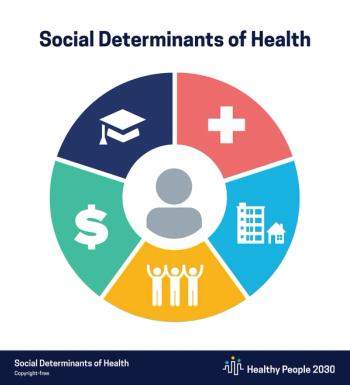
At the Pharmacy Quality Alliance (PQA) 2022 Annual Meeting Wednesday, participants heard about some unexpected insights arising from a workshop held this week between patients and pharmacists who are creating a patient-centered outcomes research agenda focused on addressing social determinants of health (SDOH) in the community pharmacy setting.

A recent review found that home-based pulmonary rehab had comparable short-term benefits to outpatient pulmonary rehab, although the outcome quality was low.

Atopic dermatitis was associated with the greatest burden of disease compared with 2 other types of dermatitis, in which high incidence and disability-adjusted life-years rates corresponded with high sociodemographic index areas.

Using socioeconomic status (SES) as their primary exposure, investigators from McGill University, University of Manitoba, Institut National de Santé Publique du Québec, and Laval University investigated reasons behind insulin pump uptake disparities in the Canadian provinces of Manitoba and Québec.

The drug, oteseconazole, is an azole antifungal indicated to reduce the incidence of recurrent vulvovaginal candidiasis in females who are infertile or postmenopausal.

Value-based payments were a benefit during the pandemic, but it remains to be seen if patients are interested in keeping those changes in care delivery as the pandemic recedes, said Jayson Slotnik, partner, Health Policy Strategies, Inc.

On this episode of Managed Care Cast, Ari D. Panzer, BS, lead author and researcher, then at Tufts Medical Center—now at Duke University—discusses the findings from his team’s investigation into coverage decisions by health plan insurers of the 66 drugs approved by the FDA in 2018.

Scott Gottlieb, MD, and Adam Fein, PhD, discussed potential fallout of the FDA Aduhelm approval and lessons learned from the COVID-19 pandemic.

Patients with aspirin-exacerbated respiratory disease (AERD) who initiated treatment with dupilumab as an add-on asthma or chronic rhinosinusitis with nasal polyps therapy reported rapid clinical improvement that was sustained after 3 months.

Of the 5800 patients included in study, 20% were Black, which the researchers say adequately represents disease incidence among the population.

These investigators wanted to better understand the reasons for the increased risk for acute myocardial infarctions among young women, who have the largest increase in hospitalization for heart attacks.

The Supreme Court may vote to overturn abortion rights; Washington state reaches a $518 million settlement with 3 opioid distributors; a new study finds 7 hours of sleep is the optimal total for people of middle and old ages.

Nicoleta Dascalu, founding member and advocacy manager of Asociaţia Română Anti-SIDA (ARAS; Romanian Association Against AIDS), discusses the status of care for persons living with HIV/AIDS (PLWH) in Romania, including health care coverage and lack of adequate medication access.

In his talk, "340B at 30 and the Impending Cliff on the Road to 40," Tim Paine outlines how the program came to be and what needs to happen to improve future implementation.

Although classic methods of risk stratification still hold value, the authors said genetic analysis holds significant promise.